
Pruning
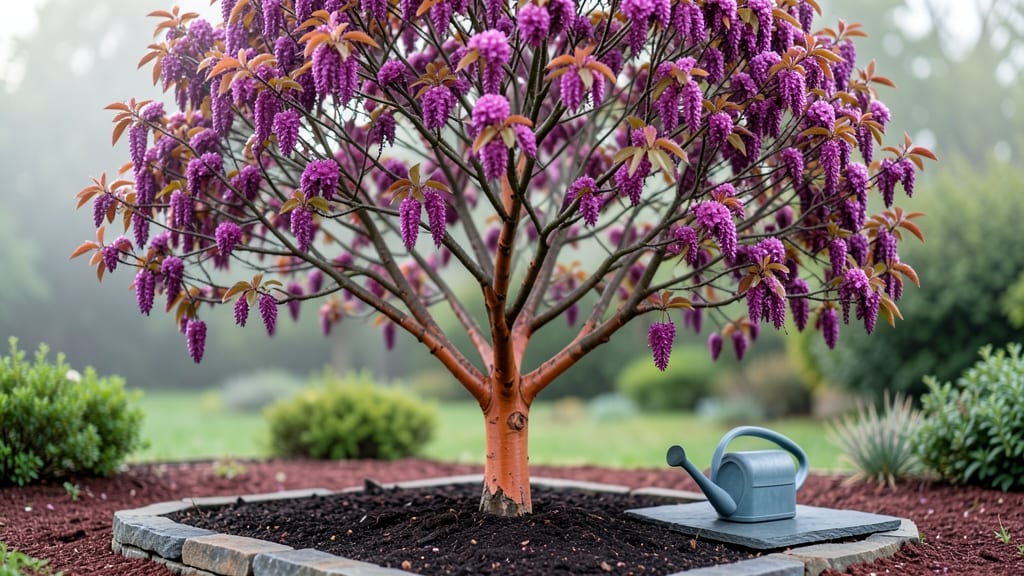
The Purple Pony flowering plum tree transforms Pacific Northwest winters into a dazzling purple spectacle—its dramatic blooms arrive earlier than most spring flowers and handle frost like a champ. 🌸 I planted mine against a cedar fence last year, and the way it backlit the evergreen made the whole yard feel like a storybook.
The secret to keeping it stunning isn’t just the right spot, but knowing when and how to prune for that perfect shape.
This tree thrives in zones 5-8, making it ideal for PNW climates where late frosts can ruin early bloomers. The pruning window is short—right after flowering, before new growth hardens—but the payoff is worth it: cleaner branches, better airflow, and blooms that appear even more dramatic each year.
You’ll need basic tools: sharp pruners, gloves, and a step ladder if your tree is taller than 6 feet.
When done right, your Purple Pony becomes the star of the garden, its branches heavy with lavender-pink blossoms that attract bees before other spring flowers even think about waking up.
Pair it with hellebores for early shade contrast or dwarf conifers to frame its height. The key is pruning lightly in summer to shape it without sacrificing next year’s show.
Whether you’re creating a focal point in a small yard or adding seasonal drama to a mixed border, this tree delivers year-round interest—from winter branches to summer foliage and fall fruit. The pruning techniques here will keep it healthy and show-stopping for decades.
📚 In This Guide
- What you need
- Instructions
- Tips and common mistakes
- Wrapping up and next steps
What you need
- ● Pruning shears: Bypass pruners (sharp, clean, and capable of cutting ¼-inch branches). Quantity: 1 pair.
- ● Loppers: Bypass or anvil-style (for thicker branches up to 2 inches in diameter). Quantity: 1 pair.
- ● Pruning saw: Curved or folding saw (for branches over 2 inches thick). Quantity: 1.
- ● Gloves: Heavy-duty, cut-resistant (to protect your hands from thorns and rough bark). Quantity: 1 pair.
- ● Disinfectant: 70% isopropyl alcohol or bleach solution (1 part bleach to 9 parts water) to sterilize tools between cuts.
- ○ Pruning sealant: Optional but helpful (e.g., tree wound paint) for larger cuts to prevent disease. Quantity: Small bottle.
- ● Ladder or step stool: Sturdy and tall enough to reach higher branches safely.
- ● Trash bags or bucket: For collecting pruned branches and debris.
- ● Hand saw: For precision cuts on stubborn branches.
- ● Extension pole pruners: For high branches without a ladder.
- ● Work gloves with grip: For extra comfort during long pruning sessions.
- ● Notebook & pen: To jot down notes on pruning decisions or tree health observations.
- ● Safety glasses: To protect your eyes from debris.
Step-by-step pruning guide for your Pacific Northwest Purple Pony flowering plum
This is the exact method I use to keep my Purple Pony thriving through PNW winters.
✂️ Step 1: Time Your First Cut for Late Winter Dormancy
Prune your Purple Pony 4-6 weeks before bloom time—typically in late February or early March when the tree is still dormant but frost threats have passed. Look for bare branches with no buds and check your local frost forecast. I wait until we've had at least three consecutive nights above 20°F to be safe.
Use sharp pruning shears to make clean cuts just above a bud or branch collar. Avoid leaving stubs—this prevents disease entry. The goal here is to remove any dead, crossing, or rubbing branches first. These are the weak points that invite pests and winter damage.
✂️ Step 2: Shape for Airflow and Light Penetration
Step back and examine the tree's structure. Your Purple Pony should have an open vase shape that lets light reach all branches. Remove any branches growing inward—these create dense areas where moisture lingers and flowers don't develop properly. I aim to reduce the canopy by about 20-25% total during this pruning.
Focus on removing water sprouts (thin, upright shoots) and branches that originate below the first main branch. These compete with the tree's energy and rarely produce flowers. Make your cuts at a 45-degree angle just outside the branch collar to prevent water from pooling.
✂️ Step 3: Thin Out for Next Year's Blooms
Here's where it gets strategic: select 3-5 main branches to keep as your primary scaffold. These should be evenly spaced around the tree. Remove any branches that are less than pencil-thick—they won't support good flower production. You'll see vigorous growth on these remaining branches that will translate to better blooms next spring.
Pay special attention to the outer third of the canopy. These are the branches that will produce the most visible flowers. If you see clusters of buds on a branch, consider keeping it—these are your future blooming points. After pruning, the tree should look like it has room to grow outward rather than crowding inward.
💧 Step 4: Post-Pruning Care for PNW Conditions
Water deeply right after pruning to help the tree recover. Give it 10-15 gallons of water spread evenly around the root zone. This encourages new root growth which is crucial for winter hardiness. I always add a 2-inch layer of mulch around the base (but keep it 6 inches away from the trunk) to protect roots from temperature swings.
Apply a balanced fertilizer (10-10-10) in early spring to support new growth. Avoid heavy nitrogen—this encourages leafy growth at the expense of flowers. Your pruned tree will show new growth within 3-4 weeks if everything is right. Watch for bright green leaves emerging from the buds you preserved.
Tips & tricks for perfect Pacific Northwest plum pruning
Here's what nobody tells you about keeping your Purple Pony flowering plum thriving through PNW winters.
Timing is Everything: The 4-6 week window before bloom is critical because that's when your tree starts allocating energy to flower production. I've learned the hard way—pruning too early means you risk removing next year's flower buds before they set. Mark your calendar for late February when you see those first bare branches with no buds, and double-check your frost forecast. That 20°F threshold is non-negotiable for safety.
Branch Collar Technique: When making cuts in Step 1, focus on the branch collar—the swollen area where the branch meets the trunk. This is where protective tissue forms to seal the wound. I've seen so many trees develop cankers because people leave stubs—always cut just outside that collar at a 45-degree angle. The angle helps water bead off rather than pool and rot.
Canopy Reduction Secret: That 20-25% canopy reduction in Step 2 might sound arbitrary, but it's based on how much sunlight your tree actually needs. I measure by holding my arms out—if branches are closer than my outstretched fingers, they're too dense. Thin from the inside out, and you'll see a dramatic difference in next year's bloom quality. The outer third gets priority because those branches get the most sunlight for flower production.
Post-Pruning Recovery: The 10-15 gallons of water right after pruning isn't just a suggestion—it's essential. I've seen trees struggle when people skip this step, especially in our dry PNW winters. Water deeply but evenly, and that 2-inch mulch layer acts like a blanket for roots. Just remember to keep it 6 inches away from the trunk to prevent rot. Your tree will thank you with vigorous new growth in 3-4 weeks.
Pro Tips for Purple Pony Flowering Plum Tree
- Here's what nobody tells you about keeping your Purple Pony flowering plum thriving through PNW winters.
- Timing is Everything: The 4-6 week window before bloom is critical because that's when your tree starts allocating energy to flower production.
- Branch Collar Technique: When making cuts in Step 1, focus on the branch collar—the swollen area where the branch meets the trunk.
Frequently asked questions
Got questions about your Purple Pony flowering plum tree? You’re not alone! Whether you’re a first-time pruner or just curious about this stunning PNW favorite, here are some of the most common concerns—answered clearly and concisely.
How cold-hardy is the Purple Pony flowering plum tree?
The Purple Pony is one of the toughest flowering plums, surviving USDA zones 5-9. It thrives in the Pacific Northwest’s chilly winters (down to -15°F/-26°C) and even handles light frost after bud break. Just avoid late spring frosts—young blooms are sensitive! For extra protection, mulch heavily in winter.
When is the best time to prune my Purple Pony?
Prune right after flowering (late spring) to avoid cutting off next year’s blooms. If you need to shape or remove dead wood, do it in early spring (before buds swell). Avoid heavy pruning in fall—it can stress the tree and leave wounds vulnerable to disease. Pro tip: Use sharp, sterilized tools to make clean cuts!
Can I prune my Purple Pony flowering plum tree in winter?
Light winter pruning (removing dead or crossing branches) is fine, but avoid heavy cuts. Winter pruning can stimulate new growth that may get damaged by late frosts. If you must prune in winter, do so mildly and only on dry days. Save major shaping for late spring.
Why aren’t my Purple Pony blooms as vibrant as last year?
Fewer or duller blooms often mean over-pruning, poor nutrition, or stress. Check for:
- Too much pruning—keep cuts to 10-20% of the canopy per year.
- Nutrient deficiency—apply a balanced fertilizer in early spring.
- Sunlight—ensure it gets 6+ hours of sun daily.
- Age—young trees (under 3 years) may bloom lightly.
What’s a good alternative if I want a low-maintenance flowering tree?
If the Purple Pony seems high-maintenance, consider these PNW-friendly alternatives:
Tree
Pros
Cons
Kwanzan cherry (Prunus serrulata ‘Kwanzan’)
Disease-resistant, stunning pink blooms, thrives in shade.
Shorter lifespan (~20 years), needs regular pruning.
Red twig dogwood (Cornus sericea)
Tough, multi-season interest, wildlife-friendly.
Smaller size (6-10 ft), less dramatic blooms.
Osoberry (Oemleria cerasiformis)
Native, fragrant white flowers, edible berries.
Slower growth, less showy than Purple Pony.
For zero-pruning options, try Amelanchier alnifolia (serviceberry) or Viburnum bodnantense (winter darling).
Wrapping up and next steps
The Purple Pony flowering plum tree is a stunning, low-maintenance addition to any Pacific Northwest garden—especially with its frost-resistant charm and vibrant blooms. 🌸 By mastering the art of pruning (timing, techniques, and tools), you’ll keep it healthy, encourage abundant flowers, and extend its lifespan for years to come.
Ready to give your tree the TLC it deserves? Grab your pruners, mark your calendar for late winter, and take the first step toward a showstopping spring display! Your future blooms will thank you.