
Flowers
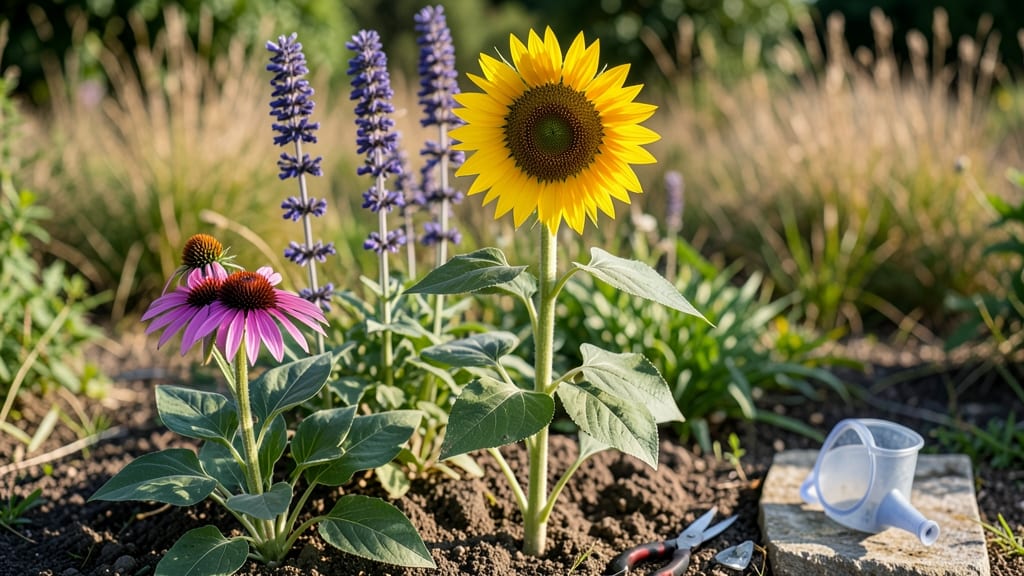
Mixing purple flowers with sunflowers creates a garden that pops like a summer sunset. 🌻 The deep violet hues of lavender, salvia, or cleome make sunflowers' bright yellows sing, while their contrasting heights add drama—tall sunflowers towering over mounded purple blooms.
This isn't just about looks; the pairing also attracts more pollinators and extends your season with staggered blooms.
The magic happens when you let the sunflowers anchor the back of your bed, their bold faces catching sunlight, while purple plants spill forward in waves. Containers work too—just tuck sunflowers in the center with trailing purple flowers spilling over edges.
For a wildflower meadow vibe, scatter purple cleome or salvia between sunflower rows for a cottage-garden feel that never feels crowded.
You'll get a show that starts in early summer with sunflowers and carries through fall with late-blooming purple flowers. The combination stays low-maintenance too—sunflowers handle heat, while purple perennials like salvia bounce back year after year.
Just snip dead blooms occasionally to keep things tidy, and you've got a border that wows without work.
Works in borders, containers, or meadow-style plantings—anywhere you want height and color drama. The key is balancing the two so neither plant feels lost in the mix. Let's make your garden the talk of the neighborhood!
📚 In This Guide
- What you need
- Instructions
- Tips and common mistakes
- Wrapping up and next steps
What you need
- ● Sunflower seeds or plants: Choose tall varieties like Mammoth (6–12 ft) or medium-height Teddy Bear (3–5 ft). Buy 5–10 seeds/seedlings for a full look.
- ● Purple flowering plants: Pick from cleome (spider flower), salvia, purple coneflowers, or lobelia. Plant 3–5 per sunflower for balance.
- ● Well-draining soil: Mix 1 part compost with 2 parts garden soil (or use potting mix for containers).
- ● Containers or garden space: For containers: 5–10 gallon pots (1 per sunflower + 1–2 for purples).
- ● For gardens: 6+ inches of depth and full sun (6+ hours/day).
- ● Watering can or hose: With a gentle spray nozzle to avoid disturbing seedlings.
- ● Planting tools: Trowel or small shovel
- ○ Gloves (optional but recommended)
- ● Mulch: Straw or shredded bark to retain moisture and suppress weeds.
- ● Fertilizer: Slow-release 10-10-10 granular fertilizer (1 tbsp per plant at planting).
- ● Stakes or cages: For tall sunflowers (3–4 ft stakes or tomato cages).
- ● Decorative accents: Garden stones, pebbles, or painted pots to elevate the vibe!
- ● Pruners: For trimming spent blooms and encouraging regrowth.
How to design a striking purple-and-gold sunflower border
Here's how to create bold height contrast using sunflowers and purple blooms—no advanced skills needed.
🌱 Step 1: Choose Purple Flowers That Complement Sunflowers
Select purple varieties with different heights and textures to create visual layers. Tall cleome (Cleome hassleriana) or purple coneflowers (Echinacea purpurea) work beautifully at 3-5 feet, while shorter salvias (Salvia nemorosa) or purple basil (Ocimum basilicum 'Purple Ruffles') add mid-level drama at 1-2 feet. I avoid planting anything that competes directly with sunflowers for nutrients—stick to low-maintenance perennials or annuals with similar water needs.
Sunflowers need full sun (6+ hours daily), so choose purple companions that thrive in the same conditions. Aster (Symphyotrichum) and purple portulaca (Portulaca grandiflora) are sun-loving and drought-tolerant, making them perfect partners. If your sunflowers are 6-8 feet tall, pair them with purple salvia at the base—its spiky blooms contrast beautifully against sunflower foliage.
☀️ Step 2: Plan Height and Spacing for Maximum Impact
Sunflowers grow fast, so place them at the back of your border where they won’t shade smaller plants. I like to position tall purple cleome (4-5 feet) in front of sunflowers to create a staggered effect—the sunflowers’ golden disks pop against the cleome’s airy purple spikes. For shorter borders, use purple basil or salvia in the front row, then sunflowers in the middle, and tall purple coneflowers at the back.
Space sunflowers 12-18 inches apart—they’ll spread as they grow. Place purple companions 6-12 inches apart, depending on their mature size. If you’re using purple portulaca, space them 8-10 inches apart for a lush, trailing effect along the border’s edge. This arrangement ensures no plant gets crowded, and the height contrast remains dramatic.
💧 Step 3: Plant in Well-Draining Soil with Mulch
Sunflowers and most purple flowers prefer loamy, well-draining soil with a pH of 6.0-7.0. Mix 2 inches of compost into the top 6 inches of soil before planting to improve fertility. If your soil is heavy clay, amend it with sand or perlite—sunflowers hate soggy roots, and purple salvia will wilt if waterlogged.
After planting, apply 2 inches of mulch (like straw or shredded bark) around the base of each plant. This keeps moisture in, suppresses weeds, and prevents soil-borne diseases from splashing onto leaves. Water deeply once a week (or more in 90°F+ heat) until plants establish roots—purple flowers usually need less water than sunflowers, so monitor soil moisture separately.
✂️ Step 4: Maintain with Strategic Pruning and Deadheading
Sunflowers don’t need pruning, but purple salvia and coneflowers benefit from light trimming. Once they finish blooming, cut back spent stems by half to encourage a second flush of flowers. For purple cleome, pinch back the tips when they’re 6 inches tall to promote bushier growth. This keeps the border full and vibrant all season.
Deadhead wilted sunflower blooms regularly to redirect energy into new growth. If you leave them, they’ll produce seed heads that can look messy—but save some for next year’s garden! For purple flowers, remove faded blooms as soon as they appear to prevent self-seeding (unless you want more next year). This ensures continuous color from early summer to frost.
🌿 Step 5: Extend the Season with Succession Planting
Sunflowers are annuals, but purple flowers like salvia and coneflowers often return yearly. To keep the drama going, plant a second batch of sunflowers in late summer—they’ll bloom just as the first batch finishes. Pair them with fall-blooming purple asters for a cool-season show. If you’re in a short growing season, opt for fast-maturing sunflower varieties (like Moulin Rouge or Autumn Beauty) that bloom in 60-70 days.
For longer-lasting color, interplant purple portulaca—it thrives in heat and blooms nonstop from spring to frost. This way, even when sunflowers fade, the purple accents keep the border lively. A little succession planning turns a one-season spectacle into a season-long masterpiece.
Tips & tricks for stunning purple-and-gold garden borders
Creating visual drama in your garden doesn't require advanced horticulture—just these strategic approaches to height and color contrast.
Height Layering Secret: In Step 2, when arranging your sunflowers and purple companions, think of the "rule of thirds" for garden design. Place your 6-8 foot sunflowers at the back, with 4-5 foot purple cleome in the middle tier, and 1-2 foot purple basil or salvia in the front. This creates a natural staircase effect that draws the eye upward. I've found the contrast between the sunflowers' broad yellow faces and the cleome's delicate purple spikes creates the most striking visual pop.
Soil Preparation Pro Tip: For Step 3, don't skip the soil test before amending. While the instructions recommend a pH of 6.0-7.0, I've seen purple salvia thrive in slightly alkaline soil (up to 7.5), while sunflowers prefer the neutral range. Test your soil first—if it's already in the ideal range, you can skip the compost amendment for sunflowers and focus on the purple companions. The 2 inches of compost is perfect for both, but targeted amendments can save you money and effort.
Watering Wisdom: The instructions mention watering deeply once a week, but I've learned to adjust this based on your specific purple flowers. Sunflowers are thirsty plants, but purple portulaca and salvia are drought-tolerant once established. After the initial planting phase, I water sunflowers deeply every 5-7 days, while my purple companions get water only when the top inch of soil is dry. This prevents overwatering while keeping all plants happy in the 90°F+ heat.
Season Extension Hack: For Step 5, consider adding purple ornamental grasses like 'Purple fountain grass' (Pennisetum alopecuroides) to your succession planting. These grasses provide year-round structure and contrast beautifully with sunflowers' seasonal drama. Plant them in late summer alongside your second batch of sunflowers—they'll add movement and texture that extends your border's visual interest well beyond the sunflowers' blooming season.
Pro Tips for Purple Flowers With Sunflowers
- Creating visual drama in your garden doesn't require advanced horticulture—just these strategic approaches to height and color contrast.
- Height Layering Secret: In Step 2, when arranging your sunflowers and purple companions, think of the "rule of thirds" for garden design.
- Soil Preparation Pro Tip: For Step 3, don't skip the soil test before amending.
Frequently asked questions
Got questions about pairing purple flowers with sunflowers? You’re not alone! Here are some of the most common queries gardeners have—plus quick, practical answers to help you create the perfect high-contrast garden drama.
What are the best purple flowers to pair with sunflowers?
Sunflowers pair beautifully with tall Salvia (like 'May Night'), deep Lantana, or bold Cleome. For shorter beds, try Petunias or Nasturtiums. Aim for flowers with contrasting textures—like spiky Salvia against sunflower’s fuzzy blooms—to maximize visual impact.
When is the best time to plant purple flowers with sunflowers?
Plant sunflowers after the last frost (spring) for summer blooms, then add purple companions 2–4 weeks later once soil is warm. For fall gardens, start purple flowers 8–10 weeks before frost—sunflowers thrive in cooler temps but may bolt in heat.
Can I mix purple flowers with sunflowers in containers?
Choose dwarf sunflowers (like 'Teddy Bear') and compact purples like Petunia 'Wave Blue' or Violas. Use a 1:2 ratio (1 sunflower per 2 purple flowers) to avoid overcrowding. Ensure containers have drainage holes—sunflowers hate soggy roots!
Why aren’t my purple flowers blooming near sunflowers?
Sunflowers can steal nutrients and shade smaller plants. Troubleshoot:
- Fertilize purple flowers with low-nitrogen feed (like 5-10-10).
- Space them 12+ inches apart to improve airflow.
- Deadhead spent blooms to encourage reblooming.
How can I create more contrast in my garden?
Play with height, color, and foliage:
- Tall contrast: Pair sunflowers with Delphinium or Hollyhock.
- Color pop: Add silver foliage (Artemisia) or chartreuse (Lime Zinnias).
- Texture: Mix fuzzy Lamb’s Ear or spiky Yarrow for dimension.
Wrapping up and next steps
Pairing purple flowers with sunflowers isn’t just about color—it’s about creating a showstopping garden that dances with height, texture, and drama. Whether you’re a seasoned gardener or just starting, this contrast adds depth and visual intrigue that’s hard to beat. 🌸✨
Now that you’ve got the inspiration and know-how, it’s time to grab those gardening gloves and bring your vision to life! Start small with a single bed or pot, experiment with different purple blooms, and watch your garden transform into a masterpiece.
Happy planting—your future garden will thank you! 🌻💜