
Shrubs
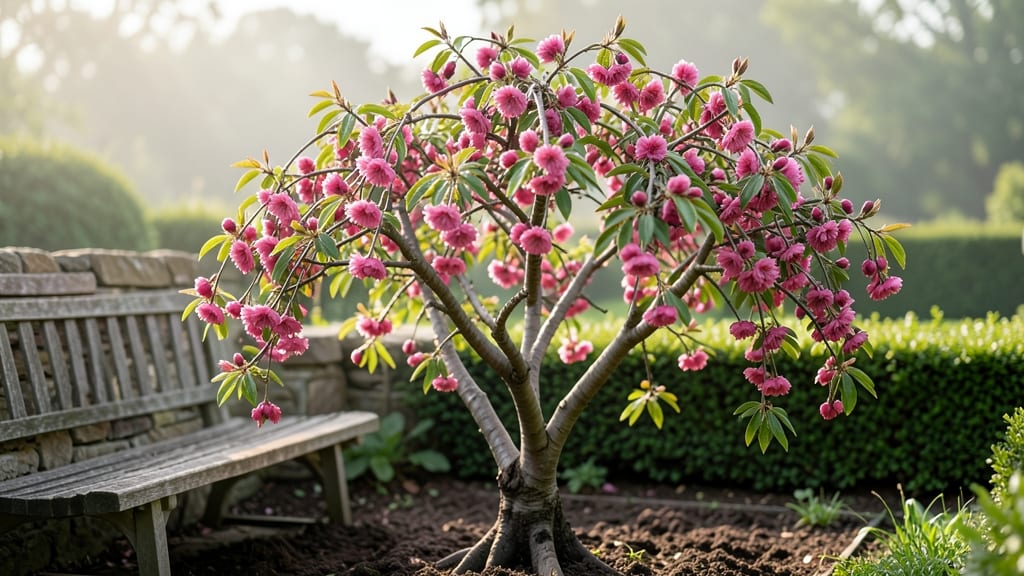
Flowering plum 'Newport' bursts into the Pacific Northwest's grayest months with vibrant pink blooms that turn winter into a showstopper—no deadheading required. 🌸 I planted mine against the fence last year, and neighbors kept asking what kind of magic I'd used to make winter look this cheerful. The secret? Its bold, long-lasting flowers and dark, glossy foliage that stay attractive even after blooms fade.
This shrub thrives in partial shade, making it perfect for urban yards or under trees where other plants struggle. Pair it with heuchera for contrasting foliage or dwarf conifers for structure—it handles both cottage charm and modern minimalism.
The 3-4 foot height lets it anchor borders without overwhelming small spaces, while its low-maintenance nature means you'll spend more time admiring than pruning.
By late winter, you'll have weeks of eye-catching color before spring even arrives. The flowers attract pollinators early, and the smooth bark adds winter interest long after blooms fade. It's the kind of plant that makes passersby pause and smile—exactly what we all want from our landscapes.
Works beautifully in containers for patios or as a focal point near entryways. The key is planting it where you'll see it year-round—not just when it's blooming. Let's make your winter garden as striking as the 'Newport' itself.
📚 In This Guide
- What you need
- Instructions
- Tips and common mistakes
- Wrapping up and next steps
What you need
- ● Flowering plum tree (choose a cold-hardy variety like ‘Snow Fence’ or ‘Worcester’ for Newport’s climate).
- ● Well-draining soil mix (3 parts native soil + 1 part compost + 1 part perlite or sand).
- ● 5-gallon container or planting hole (dig 2–3 times wider than the root ball for in-ground planting).
- ● Organic mulch (3–4 inches of cedar chips or bark to retain moisture and suppress weeds).
- ● Watering can or hose with gentle spray nozzle (for deep watering).
- ● Pruning shears (sterilized, sharp shears for shaping in late winter/early spring).
- ● Fertilizer (balanced 10-10-10 or slow-release organic fertilizer, applied in early spring).
- ● Soil pH test kit (ideal pH: 6.0–7.0; amend with lime or sulfur if needed).
- ● Tree stake & ties (for young trees in windy Newport areas).
- ● Drip irrigation system (for consistent moisture, especially in dry spells).
- ● Slow-release granular fertilizer (like Osmocote, for low-maintenance feeding).
- ● Decorative rocks or gravel (to enhance drainage and aesthetics around the base).
Instructions for planting and caring for flowering plum 'Newport' in the Pacific Northwest
This hardy cultivar thrives with minimal fuss—just follow these steps for vibrant winter blooms.
🌱 Step 1: Choose the Perfect Location and Prepare the Soil
Flowering plum 'Newport' demands full sun—at least 6 hours of direct sunlight daily—to trigger its spectacular winter blooms. In the Pacific Northwest's mild climate, a south-facing spot with afternoon shade works best. Avoid low-lying areas where cold air pools, as this can damage tender buds.
Test your soil's drainage first. 'Newport' despises soggy roots, so dig a 12-inch deep hole and fill it with water. If it doesn't drain within 4-6 hours, amend the soil with 2-3 inches of compost and a handful of perlite to improve aeration. The ideal soil pH for this cultivar is slightly acidic to neutral (6.0-7.0)—test with a soil kit if unsure.
🪴 Step 2: Plant at the Right Time and Depth
Plant your 'Newport' flowering plum in early fall or late winter, when the ground is workable but not frozen. This timing lets roots establish before summer heat arrives. Dig a hole twice as wide as the root ball but only as deep—never deeper—than the container's base. You'll see the original soil line on the roots; align this with ground level.
Gently remove the plant from its container and loosen any circling roots with your fingers. Place it in the hole, backfilling with native soil mixed with 1 part compost. Water deeply to settle the soil, then create a 2-inch deep watering basin around the base. Mulch with 3 inches of shredded bark to retain moisture and suppress weeds—just keep mulch 6 inches away from the trunk to prevent rot.
☀️ Step 3: Water Strategically for Winter Blooms
'Newport' needs deep, infrequent watering—about 1 inch per week during the growing season, more in summer heat. Check moisture by sticking your finger 2 inches into the soil; water only when it feels dry. Overwatering causes root rot, while underwatering stresses the plant and reduces bloom intensity.
Here's the thing—stop watering entirely in late fall once buds form. The plant enters dormancy, and consistent moisture can weaken winter hardiness. Resume watering in early spring as new growth appears. Fertilize lightly in early spring with a balanced 10-10-10 formula, but skip fertilizer after mid-summer to encourage bud formation for next winter's blooms.
✂️ Step 4: Prune for Health and Winter Display
Prune 'Newport' immediately after flowering (late winter/early spring) to shape the tree and encourage next year's blooms. Remove dead, crossing, or weak branches first, cutting just outside the branch collar. Then thin out 10-20% of the oldest wood to improve airflow and light penetration.
Never prune in fall or winter—this removes next year's flower buds. Use clean, sharp pruners and make cuts at a 45-degree angle about ¼ inch above an outward-facing bud. Seal larger cuts (over ½ inch) with pruning sealant to prevent disease entry. A well-pruned 'Newport' develops a strong, open canopy that showcases its blooms year after year.
Tips & tricks for perfect flowering plum Newport planting
Between us, the Pacific Northwest's climate can be tricky—but these small tweaks make all the difference for your 'Newport' plum's winter display.
Location Precision: That 6-hour sunlight minimum is non-negotiable for winter blooms, but here's the thing: in cloudy PNW winters, you'll need to compensate with a spot that gets the most direct sun available. I've seen 'Newport' thrive with 5 hours of direct sun plus 3 hours of bright indirect light—just watch for smaller blooms if you're cutting it close.
Soil Test Shortcut: Don't have a pH kit? Grab a handful of your native soil and mix it with equal parts vinegar and baking soda in separate containers. If it fizzes with vinegar, your soil is alkaline (raise pH with sulfur); if it fizzes with baking soda, it's acidic (add lime). The 6.0-7.0 range is your sweet spot for nutrient uptake.
Planting Timing Secret: Early fall planting gives roots 6-8 weeks to establish before winter, but if you're planting in late winter, wait until soil temperatures reach at least 45°F—cold soil shocks tender roots. I've found that planting after the first frost (when soil starts warming) gives the best early spring kickstart.
Watering Watch: That 2-inch soil moisture check is your best friend, but here's what nobody tells you—the first 2 inches of soil dry out fastest in PNW summers. Water deeply at the base (not over the leaves) to encourage deep root growth. The 1-inch weekly guideline works for average summers, but during heatwaves, you might need twice that.
Pro Tips for Flowering Plum Newport
- Between us, the Pacific Northwest's climate can be tricky—but these small tweaks make all the difference for your 'Newport' plum's winter display.
- Location Precision: That 6-hour sunlight minimum is non-negotiable for winter blooms, but here's the thing: in cloudy PNW winters, you'll need to compensate with a spot that gets the most direct sun available.
- Soil Test Shortcut: Don't have a pH kit?
Frequently asked questions
Got questions about your flowering plum in Newport? You’re not alone! Here are some of the most common queries—plus quick answers to keep your tree thriving.
When does a flowering plum in Newport typically bloom?
Flowering plums in Newport usually burst into color in late winter to early spring (February–March), often before leaves appear. Chilly Pacific Northwest nights and mild days trigger their stunning display—just in time for winter’s end! For best results, plant in full sun to encourage vibrant blooms.
Do I need to deadhead flowering plum blooms?
Nope!
Unlike many shrubs, flowering plums don’t require deadheading to rebloom. Their energy focuses on next year’s flowers and fruit (if pollinated). Simply enjoy the show—prune only to shape the tree in late spring/early summer after blooms fade.
How do I protect my flowering plum from Newport’s rain and wind?
Newport’s coastal winds and rain can stress young trees. Stake newly planted plums for the first year, and mulch around the base to retain moisture. Mature trees handle conditions well, but a lightweight burlap wrap during storms can prevent branch damage. Choose dwarf varieties if space is tight—they’re wind-resistant!
What if my flowering plum isn’t blooming?
Lack of blooms often stems from over-fertilizing (too much nitrogen = leafy growth, not flowers) or poor sunlight. Ensure it gets 6+ hours of sun daily and fertilize lightly in early spring with a low-nitrogen, high-phosphorus blend. If it’s young, be patient—some varieties take 2–3 years to flower!
Are there flowering plum alternatives for Newport’s climate?
If you love winter blooms but want variety, try:
- Camellia (thrives in shade, blooms fall–spring)
- Dwarf cherry (Prunus) (compact, cold-hardy, fragrant)
- Mahonia (evergreen, yellow flowers, drought-tolerant)
- Viburnum (low-maintenance, berries + flowers)
Wrapping up and next steps
The flowering plum Newport isn’t just a stunning addition to your Pacific Northwest garden—it’s a low-maintenance star that thrives in winter’s chill without fuss. With its vibrant blooms and minimal care needs, it’s the perfect way to bring color and life to your outdoor space year after year. 🌸
Ready to transform your garden? Start by choosing a sunny spot, prepping the soil, and planting your plum tree with confidence. Before you know it, you’ll be enjoying a breathtaking winter display that turns heads—and maybe even inspires your neighbors to plant one too!