
Flowers
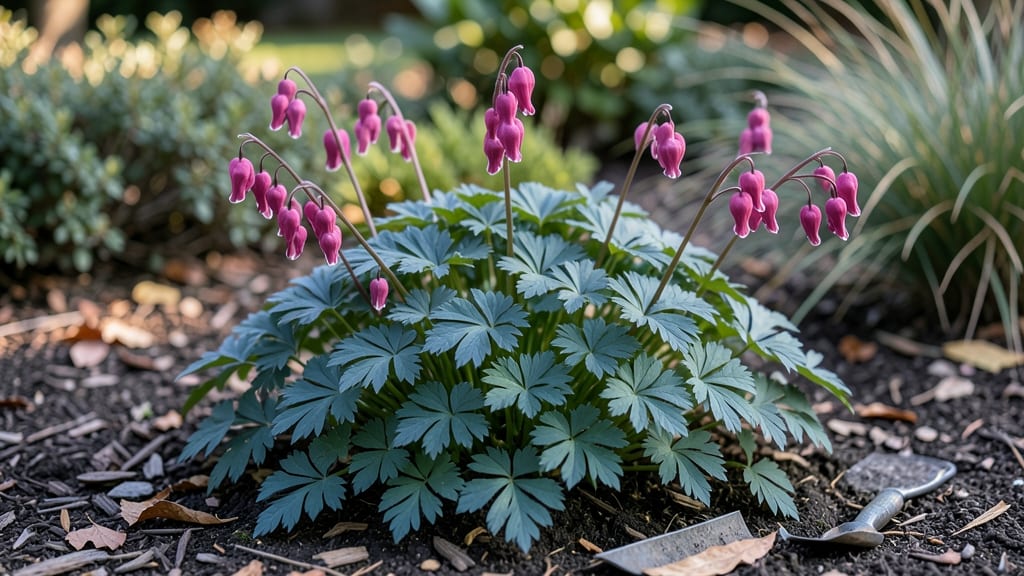
There's nothing quite like the romantic, heart-shaped blooms of purple-pink bleeding heart flowers in your Pacific Northwest garden. 🌿 These frost-resistant beauties thrive where many tender plants fail, and with the right care, they'll reward you with lush foliage and delicate flowers for years.
The secret lies in matching their natural habitat—moist, well-drained soil and partial shade—while protecting them from harsh summer sun.
You'll need just a few essentials to get started: a spot with 4-6 hours of morning sun, rich organic soil mixed with compost, and a watering routine that keeps the roots consistently moist but never soggy.
Bleeding hearts hate dry spells, so mulch heavily around the base to retain moisture and regulate soil temperature. The payoff? Vibrant foliage that stays lush even through our damp winters, followed by clusters of heart-shaped blooms that seem to float above the foliage.
Once established, these perennials are surprisingly low-maintenance. After flowering, simply trim back the old foliage in late summer to encourage fresh growth, and watch as new leaves emerge by early fall.
The plants will naturalize over time, spreading gently to form clumps of deep green that provide year-round interest—even when they're not blooming. That's the magic of bleeding hearts: they're beautiful when they're flowering, and beautiful when they're not.
They're perfect for shady garden corners, woodland edges, or even as underplantings for taller shrubs. In the Pacific Northwest's mild climate, they'll return year after year with minimal fuss, proving that some of the most stunning flowers grow where others struggle. Let's get those roots settled in the right spot!
📚 In This Guide
- What you need
- Instructions
- Tips and common mistakes
- Wrapping up and next steps
What you need
- ● Bleeding heart seeds or bare-root plants: Choose Dicentra spectabilis (classic bleeding heart) for vibrant purple-pink blooms.
- ● Quantity: 3–5 plants (or seeds) for a small patch; scale up for larger displays.
- ● Well-draining potting mix or garden soil: Amend with compost (20–30% by volume) for nutrient-rich soil.
- ● pH: Aim for 6.0–7.0 (slightly acidic to neutral).
- ● Organic mulch: 2–3 inches of shredded bark or wood chips to retain moisture and suppress weeds.
- ● Watering can or hose with a gentle spray nozzle.
- ● Garden gloves and trowel (for planting and soil prep).
- ● Location: A partially shaded spot (3–6 hours of morning sun, dappled light ideal).
- ○ Container (optional): 10–12" deep pots with drainage holes (if growing in containers).
- ○ Fertilizer (optional but helpful): Balanced 10-10-10 or fish emulsion (apply lightly in early spring).
- ● Pruners (for maintenance): Sharp, clean pair for trimming spent blooms.
Step-by-Step guide for planting and caring for Pacific Northwest bleeding hearts
Here’s how I’ve grown these delicate beauties successfully in rainy, cool climates.
🌱 Step 1: Choose the Right Location and Prepare the Soil
Bleeding hearts thrive in partial shade, where they get morning sun and afternoon dappled light. In the Pacific Northwest, this means planting them where tall trees filter sunlight or along the north side of your home. Avoid full sun—leaves will scorch, and flowers won’t last.
Dig a hole twice as wide as the root ball but only as deep. Amend the native soil with 2-3 inches of compost (the 3 gallons you’ve prepped) to improve drainage and fertility. Bleeding hearts hate soggy roots, so if your soil stays wet for days, mix in 1 part perlite to every 2 parts soil. Press the amended soil gently around the roots to eliminate air pockets.
🪴 Step 2: Plant with Care and Water Deeply
Place the plant so the top of the root ball sits 1 inch below soil level—this prevents crown rot, which is common in our damp climate. Spread the roots outward naturally, then backfill with soil, tamping lightly every 2 inches to settle it without compacting. Mulch with 2 inches of shredded bark (use the 2 cubic feet you’ve gathered) to retain moisture and protect roots from winter freezes.
Water deeply right after planting—soak the soil until it drains 6 inches down. You’ll know it’s enough when water pools on the surface for a few seconds, then disappears. Keep the soil evenly moist for the first 2 weeks, but avoid soggy conditions. Overwatering causes root rot, which kills these plants faster than any frost.
☀️ Step 3: Maintain Through Seasons with Minimal Fuss
Once established, bleeding hearts are low-maintenance. In spring and fall, water once a week if rainfall is light, but cut back to every 10-14 days in summer when the soil stays moist naturally. Fertilize lightly in early spring with a balanced 10-10-10 (use the 1 pound you’ve measured) to encourage new growth, but skip heavy feeding—they prefer lean soil.
Deadhead spent flowers in late spring to encourage a second bloom later in the season. Snip stems just above the first set of leaves with clean pruners. In fall, trim back any brown or damaged foliage but leave the stems—this protects the plant from winter winds. Bleeding hearts are fully frost-hardy, so no winter prep is needed beyond your existing mulch.
✂️ Step 4: Divide and Propagate Every 3-4 Years
These plants spread over time, so divide them in early spring before new growth appears. Dig up the clump, separate the sections with a sharp knife, and replant the strongest divisions. Each division should have 3-5 healthy shoots—smaller clumps struggle to establish. Space new plants 18-24 inches apart to give them room to grow.
Here’s the thing—bleeding hearts hate being disturbed once established. If you’re moving an existing plant, water it 2 days before digging to reduce root shock. After replanting, keep the soil consistently moist for 3 weeks while roots re-establish. You’ll see new leaves emerge within 2-3 weeks—that’s your signal everything’s working.
Tips & tricks for perfect Pacific Northwest bleeding hearts
These simple secrets will help your purple pink beauties thrive in our damp climate without the guesswork.
Soil Drainage is Everything: In Step 1, when you're amending that 3 gallons of compost, don't skip the perlite if your soil stays soggy. I've lost plants to root rot after heavy PNW rains—mixing in that 1 part perlite to 2 parts soil creates just the right drainage while keeping moisture. The key is to press soil gently around roots to eliminate air pockets without compacting too tightly.
Watering Wisdom for Damp Climates: That initial deep watering in Step 2 where you soak until water drains 6 inches down is crucial. Here's what I learned the hard way: after planting, check soil moisture every 2-3 days during the first 2 weeks. Stick your finger in—if it's dry below the surface, water again. Overwatering is the silent killer of bleeding hearts in our climate.
Mulching Matters More Than You Think: Don't just slap on that 2 inches of shredded bark—rake it out slightly from the stem to prevent rot. I've seen plants develop crown rot when mulch piles up against the stem. Also, in winter, add an extra inch of mulch to protect roots from our cold snaps while still allowing airflow.
Dividing Made Easy: When you're ready to divide those clumps every 3-4 years, here's my trick: dig up the plant when soil is moist (not wet) and separate sections while they're still in the hole. This prevents root damage. For each division, make sure you have those 3-5 healthy shoots—smaller sections take forever to establish in our cool climate.
Pro Tips for Purple Pink Bleeding Heart Flower
- These simple secrets will help your purple pink beauties thrive in our damp climate without the guesswork.
- Soil Drainage is Everything: In Step 1, when you're amending that 3 gallons of compost, don't skip the perlite if your soil stays soggy.
- Watering Wisdom for Damp Climates: That initial deep watering in Step 2 where you soak until water drains 6 inches down is crucial.
Frequently asked questions
Got questions about growing the stunning purple-pink bleeding heart flower? You’re not alone! Here are some of the most common queries—plus expert answers to help you cultivate these charming blooms with confidence.
What’s the best time to plant bleeding heart flowers in the Pacific Northwest?
The ideal window is early spring (March–April) or early fall (September–October). This gives roots time to establish before summer heat or winter frost. For container gardening, plant in spring to avoid root stress from winter’s chill. Pro tip: If planting in fall, water deeply before the first hard freeze to protect tender roots.
How cold-hardy are purple-pink bleeding hearts?
These beauties thrive in USDA Zones 3–9, making them perfect for the PNW’s frosty winters! They tolerate temps down to -25°F (-32°C), but young plants may need mulch (3–4 inches) for extra insulation. Evergreen foliage can scorch in harsh sun after snowmelt, so partial shade is key.
Why aren’t my bleeding heart flowers blooming?
Common culprits include:
- Too much sun: These shade-lovers wilt in hot afternoon rays. Aim for morning sun + dappled shade.
- Over-fertilizing: Too much nitrogen = lush leaves, fewer flowers. Use a balanced 10-10-10 fertilizer in early spring.
- Dormant period: They bloom in spring/early summer—if planted recently, give them 1–2 years to mature.
Can I grow bleeding hearts in containers? If so, what’s the best setup?
Choose a 12–18-inch pot with drainage holes and a well-draining potting mix (add perlite or orchid bark). Use a larger container for multi-year plants to prevent root binding. Move pots to shaded patios in summer and shelter from wind in winter. Bonus: Mix in compost for nutrients and water consistently—containers dry out faster!
Are there alternatives to purple-pink bleeding hearts for shade gardens?
If you love the romantic, heart-shaped blooms but want variety, try:
- Dutchman’s breeches (Dicentra cucullaria): White, fern-like flowers; native to the PNW.
- Lungwort (Pulmonaria): Spotted foliage + pink/purple blooms; thrives in shade.
- Japanese anemone (Anemone × hybrida): Late-summer pink/purple blooms; deer-resistant.
- Astilbe: Feathery plumes in pink, red, or white; loves moisture.
Wrapping up and next steps
The purple-pink bleeding heart flower isn’t just a stunning addition to your Pacific Northwest garden—it’s a resilient, low-maintenance star that thrives in your region’s unique climate.
With the right soil, shade, and a little seasonal care, you’ll enjoy its heart-shaped blooms year after year, bringing whimsy and color to your outdoor space. 🌸
Ready to transform your garden? Grab your gloves, mark that planting spot, and start small—whether it’s a single plant or a full border. Watch your garden bloom with confidence, and soon, neighbors will be asking for your secrets! 🌿✨