
Shrubs
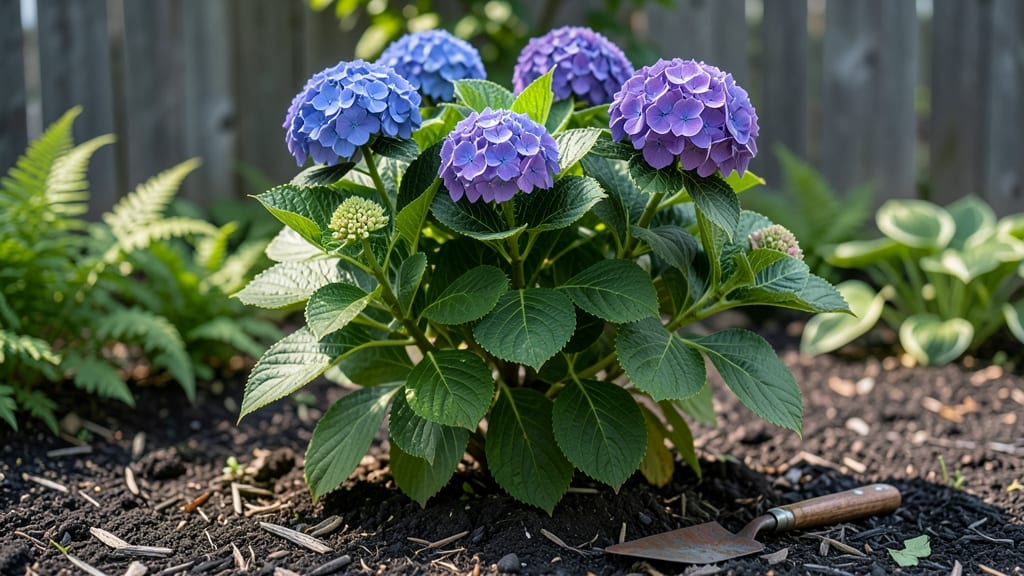
Hydrangeas flowering shrubs transform your yard into a living watercolor painting—if you prune them right. 🌸 I learned the hard way that cutting at the wrong time means skipping next summer’s blooms entirely. The secret isn’t just when you prune, but how you shape the plant for its specific variety.
Start with the basics: mopheads need late-spring cuts, panicles bloom on old wood, and lacecaps thrive with minimal trimming. Soil should be slightly acidic (5.2–6.0 pH) and rich in organic matter, while morning sun keeps flowers vibrant without scorching leaves. Water consistently—hydrangeas hate drought stress.
By mastering these steps, you’ll see lush clusters of blooms from early summer through frost. The color shifts with soil pH too—blue in acidic soil, pink in alkaline. Prune correctly, and your shrubs will reward you with bold, long-lasting color that outshines any seasonal display.
Works for containers, borders, or focal points—just adjust pruning timing based on your climate zone. Let’s get those blooms popping!
📚 In This Guide
- What you need
- Instructions
- Tips and common mistakes
- Wrapping up and next steps
What you need
- ● Pruning shears: Bypass pruners (sharp, 6-8" blades) for clean cuts—1 pair.
- ● Loppers: For thicker stems (1.5-2" blades)—1 pair.
- ● Garden gloves: Heavy-duty, cut-resistant—1 pair.
- ● Disinfectant: 70% isopropyl alcohol or bleach solution (1:9 ratio) for tools.
- ○ Pruning sealant: Optional for large cuts (e.g., Tanglefoot Tree Wound Pruning Sealer).
- ● Garden twine: For temporary support if needed—small roll.
- ● Well-draining soil: Mix 1 part peat moss or compost with 2 parts native soil.
- ● Mulch: 2-3" layer of pine bark or shredded leaves to retain moisture.
- ● pH test kit: To adjust soil acidity (hydrangeas thrive in pH 5.2–6.2).
- ● Fertilizer: Slow-release acid-loving plant fertilizer (e.g., Miracle-Gro Azalea/Camellia).
- ● Watering can/hose: With a gentle spray nozzle for hydration.
- ● Stake kit: For young shrubs in windy areas.
- ● Aluminum sulfate: To lower pH for blue blooms.
- ● Lime: To raise pH for pink blooms (if needed).
- ● Pruning saw: For stubborn, thick branches.
Step-by-step guide to pruning hydrangeas for season-long blooms
Mastering hydrangea pruning transforms chaotic shrubs into showstopping floral displays—here's how I do it.
✂️ Step 1: Identify Your Hydrangea Type and Bloom Time
Hydrangeas bloom on old wood (last year's growth) or new wood (current season's growth), and pruning wrong can mean no flowers. Bigleaf hydrangeas (H. macrophylla) bloom on old wood, while panicle and smooth hydrangeas bloom on new wood. Check your plant's blooms now—if they're on last year's stems, prune after flowering; if on current stems, prune in late winter.
Here's the thing—I always double-check by looking for brown, woody stems with flower buds along last year's growth. If you see those, you're dealing with old-wood bloomers like Endless Summer. New-wood types like Limelight have buds only on current season's growth. This distinction is everything.
✂️ Step 2: Time Your Pruning for Maximum Impact
For old-wood bloomers, prune immediately after flowers fade in late summer or early fall—never in winter. You'll remove up to 1/3 of the oldest stems right at the base, cutting back to the first set of healthy buds or outward-facing buds. This encourages strong growth for next year's blooms while maintaining the shrub's shape.
New-wood types get their pruning in late winter or early spring before new growth starts. Cut back stems by 1/3 to 1/2 their height, always making cuts just above a set of buds. I like to make clean cuts at a 45-degree angle about 1/4 inch above a bud—this prevents water from pooling and rotting the stem.
🌿 Step 3: Shape and Thin for Airflow and Light
After removing dead or damaged stems, focus on creating an open center. Hydrangeas need airflow to prevent fungal diseases like powdery mildew. Step back and visualize the plant as a vase shape—taller in the center, gradually shorter toward the edges. Remove any crossing or rubbing branches first; these compete for energy and create weak points.
I always thin out crowded stems by cutting them back to the base rather than just trimming the tips. This might seem drastic, but it forces the plant to put energy into fewer, stronger stems. You'll know you're doing it right when you see new growth emerging from the base within weeks of pruning.
☀️ Step 4: Feed and Water for Post-Pruning Recovery
After pruning, spread 2-3 inches of compost around the base (but not touching the stems) and water deeply to help roots recover. Hydrangeas are heavy feeders, especially after pruning, so I mix in a balanced 10-10-10 fertilizer in early spring for new-wood types or acid-loving plant food for old-wood types like blue hydrangeas.
Watch for new leaves emerging within 3-4 weeks—this is your signal the plant is recovering. If leaves appear yellow or wilted, it's a sign of over-pruning or stress. In that case, reduce watering slightly and avoid fertilizing until the plant shows signs of vigorous new growth.
⏰ Step 5: Monitor and Adjust Through the Seasons
Check your hydrangeas monthly for signs of stress—yellowing leaves, wilting, or no new growth. Old-wood types may produce fewer blooms the year after heavy pruning, but this is normal. New-wood types should bloom heavily the first year after pruning if done correctly. If blooms are sparse, you might have pruned too late or too aggressively.
Here's where it gets fun—adjust your approach each year based on what you see. If stems get leggy, prune earlier next time. If blooms fade quickly, your plant might need more afternoon shade. The key is observing and adapting. With each season, your hydrangeas will reward you with bigger, more vibrant blooms.
Tips & tricks for perfect hydrangea pruning
These game-changing insights will help you transform your hydrangeas into lush, blooming powerhouses year after year.
Pruning Timing Precision: The late summer/early fall window for old-wood bloomers is non-negotiable—this is when the plant is storing energy for next year's flowers. I've learned the hard way that pruning too early can remove next year's buds before they form. For new-wood types, mark your calendar for late winter when dormancy is complete but before buds swell. This timing ensures you're cutting back stems that have already produced flowers.
Cutting Technique Matters: Always make your cuts at a 45-degree angle about 1/4 inch above a bud. This angled cut prevents water from pooling on the stem, which can lead to rot. I use sharp bypass pruners for clean cuts—dull blades crush stems and create entry points for disease. For thicker stems, I make two cuts: first to remove most of the stem, then a final cut at the correct angle. This two-step method gives you better control over the final cut position.
Shape with Purpose: When creating that open vase shape, think about sunlight penetration. The center should be slightly taller than the edges to allow light to reach all parts of the plant. I visualize the plant as a series of concentric circles—each layer should be slightly shorter than the one inside it. This creates the perfect stage for your hydrangeas to showcase their blooms while maintaining airflow that prevents fungal issues.
Recovery Signals: Watch for those first signs of new growth within 3-4 weeks after pruning—they're your plant's way of saying "thank you." I pay special attention to the color of new leaves: vibrant green means recovery is on track, while yellow or purple hues indicate stress. If you see yellowing, it's often a sign of over-pruning or nutrient deficiency. In that case, hold off on fertilizing until you see vigorous new growth.
Pro Tips for Hydrangea Flowering Shrubs
- These game-changing insights will help you transform your hydrangeas into lush, blooming powerhouses year after year.
- Pruning Timing Precision: The late summer/early fall window for old-wood bloomers is non-negotiable—this is when the plant is storing energy for next year's flowers.
- Cutting Technique Matters: Always make your cuts at a 45-degree angle about 1/4 inch above a bud.
Frequently asked questions
Got questions about keeping your hydrangeas blooming beautifully? Here are some of the most common ones—plus quick answers to help you grow with confidence!
When is the best time to prune hydrangeas?
Timing depends on your hydrangea type! For mophead and lacecap varieties (which bloom on old wood), prune right after flowering (late summer/early fall). For panicle or oakleaf types (which bloom on new wood), prune in late winter or early spring before buds swell. Always avoid pruning in fall for new-wood bloomers!
Why aren’t my hydrangeas blooming?
Several factors could be at play! Check these first:
- Pruning mistakes: Cutting back old-wood bloomers too early (or too late) can remove next year’s flower buds.
- Light needs: Some varieties (like Endless Summer) need 6+ hours of sun; others thrive in partial shade.
- Soil pH: Blue hydrangeas love acidic soil (pH 5.5–6.0); pink blooms prefer neutral (6.0–7.0).
- Age: Young shrubs (under 3 years) may need patience—they focus on root growth first!
Can I change my hydrangea’s flower color?
Yes! For mophead and lacecap hydrangeas, adjust soil pH with:
- Blue flowers: Add sulfur or pine needles to lower pH.
- Pink flowers: Mix in lime or wood ash to raise pH.
- Purple/lavender: Aim for a neutral pH (around 6.0).
How do I protect hydrangeas in winter?
Most hydrangeas are hardy, but young plants or tender varieties (like H. paniculata ‘Limelight’) benefit from:
- Mulching with 3–4 inches of shredded bark or leaves around the base (but not touching the stem).
- Wrapping burlap or frost cloth loosely around the shrub in extreme cold (<10°F).
- Avoiding heavy snow buildup—gently brush it off to prevent stem damage.
What’s a good alternative if I want year-round color?
If hydrangeas need more maintenance than you’d like, try these low-fuss, long-blooming shrubs:
- Abelia (‘Kaleidoscope’): Blooms spring to fall with fragrant white/pink flowers.
- Butterfly Bush (‘Lavender Lady’): Purple blooms from summer to frost and attracts pollinators.
- Weigela (‘Wine & Roses’): Pink/red flowers spring through summer with minimal pruning.
- Dwarf Fothergilla (‘Mount Airy’): Stunning fall foliage + spring blooms in white.
Wrapping up and next steps
Transforming your garden into a year-round hydrangea paradise is simpler than you think! With the right pruning precision and care, these stunning shrubs will reward you with vibrant blooms and lush foliage.
Start by choosing the perfect variety for your climate, then master the art of seasonal trimming—whether it’s renovating old growth or encouraging fresh new shoots.
🌸 Ready to get started? Grab your pruners, pick a sunny weekend, and give your hydrangeas the love they deserve! For extra confidence, review the FAQs or explore essential tools to make pruning a breeze. Your garden’s next masterpiece is just a cut away! 🌿