
Flowers
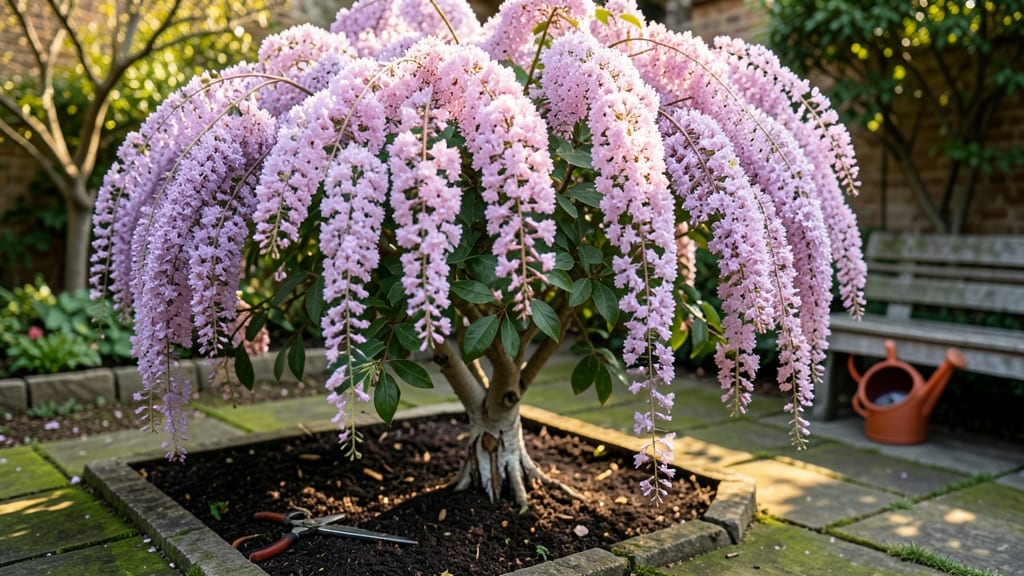
Nothing says "Pacific Northwest charm" like a weeping tree with pink flowers arching gracefully over your garden path. 🌸 These trees turn ordinary landscapes into living art—soft cascades of blooms that hum with bees and flutter with butterflies, even after frost.
I’ve planted mine near the patio, where the scent drifts through summer evenings, and the winter skeleton branches add stark beauty when everything else sleeps.
You don’t need a sprawling yard to make them shine—small gardens, borders, or focal points all work. My Lavender Twist redbud thrives in partial shade, while a weeping crape myrtle handles full sun and heat.
Both handle our damp winters better than most, and their spring blooms arrive just as the rain lets up. The key? Well-draining soil and a spot where their branches can stretch without fighting wind—think "dramatic but not chaotic."
Imagine this: pink flowers in May, lush green foliage through summer, and golden leaves in fall—all while hummingbirds sip from the blossoms. Pruning is minimal (just shape in late winter), and they pair perfectly with hostas, ferns, or even a ground cover of heuchera for year-round color.
The best part? They grow slowly, so you’ll enjoy them for decades without constant maintenance.
Whether you’re filling a corner, framing a doorway, or creating a pollinator paradise, these trees deliver effortless elegance. Next, we’ll dive into the top three varieties that thrive in our climate—and how to pick the perfect spot for yours.
📚 In This Guide
- What you need
- Instructions
- Tips and common mistakes
- Wrapping up and next steps
What you need
- ● Tree Selection: 1 Cornus stolonifera ‘Flaviramea’ (Red Osier Dogwood) or Cornus sericea ‘Kelseyi’ (Kelseyi Dogwood) – both produce gorgeous pink flowers and thrive in cold climates.
- ● Alternative: Amelanchier lamarckii (Serviceberry) for a slightly taller, multi-season bloomer.
- ● Soil: 50 lbs of well-draining, slightly acidic soil (pH 5.0–6.5). Mix in compost (20 lbs) for nutrients.
- ○ Optional: A soil test kit to check pH and nutrient levels.
- ● Planting Site: Full sun to partial shade (6+ hours of sunlight daily).
- ● A spacious area (10–15 ft wide) for the tree’s weeping branches to spread.
- ● 1 shovel (for digging)
- ● 1 garden trowel (for precision planting)
- ● 1 pruning shears (for shaping and maintenance)
- ● 1 watering can or hose (with a gentle spray nozzle)
- ○ Optional but helpful: A mulch layer (3–4 inches of wood chips or straw to retain moisture)
- ● 1 tree stake (if planting in windy areas)
- ● 1 fertilizer (balanced 10-10-10 or organic options like fish emulsion)
- ● ✅ Timing: Plant in early spring or fall (avoid frost periods).
- ● ✅ Climate Check: Ensure your zone is USDA Hardiness Zones 3–8 (ideal for PNW!).
- ● ✅ Pollinator Prep: Nearby native plants (like bee balm or lavender) will attract even more pollinators!
Step-by-step guide to planting and caring for a weeping tree with pink flowers
Here's how to establish a stunning, pollinator-friendly tree that thrives in Pacific Northwest climates.
🌱 Step 1: Choose the Right Location and Prepare the Soil
Select a site with at least 6 hours of sunlight daily—morning sun with afternoon shade works best in hotter summers. The tree needs well-draining soil with a slightly acidic to neutral pH (6.0-7.0). If your soil is heavy clay, amend it with 3 cubic feet of compost and 1 cubic foot of coarse sand per planting hole.
Dig a hole twice as wide as the root ball but no deeper. Loosen the sides of the hole with a shovel to encourage root spread. Here's the thing—never disturb the root ball when removing the tree from its container. Gently squeeze the sides to coax it out if needed, but keep the soil intact.
🪴 Step 2: Plant the Tree Properly for Long-Term Stability
Position the tree so the top of the root ball sits 1-2 inches above ground level. This prevents waterlogging and rot. Backfill with the native soil you removed, tamping gently every 6 inches to eliminate air pockets. Water deeply as you fill to settle the soil around roots.
Stake the tree only if your site has strong winds—use two stakes placed diagonally and tie with soft fabric strips (never wire). The goal is to support without constricting. Mulch with 3 inches of organic mulch (like wood chips) in a 3-foot diameter circle, keeping it 6 inches away from the trunk to prevent rot.
☀️ Step 3: Water and Fertilize for Establishment
Water deeply 2-3 times per week for the first month, then taper to once weekly once new growth appears. You'll know it's enough when water drains 6 inches deep—stick your finger in the soil to check. Overwatering is the fastest way to kill a newly planted tree.
Apply a slow-release, balanced fertilizer (10-10-10) at planting time, then again in early spring and mid-summer. Use 1/4 pound per inch of trunk diameter—for a 2-inch trunk, that's about 1/2 cup. Avoid high-nitrogen fertilizers, which promote leafy growth at the expense of flowers and fruit.
✂️ Step 4: Prune and Maintain for Healthy Growth
Prune in late winter or early spring before new growth begins. Remove dead, diseased, or crossing branches first, then thin the canopy to improve airflow. For weeping varieties, avoid heavy pruning—focus on light shaping to maintain the graceful form. You'll see new growth emerge within 2-3 weeks of pruning.
Monitor for aphids or scale insects—common pests that weaken trees. Spray with neem oil solution (1 tablespoon per gallon of water) if you spot sticky residue on leaves. This tree is a pollinator magnet, so avoid pesticides that harm bees and butterflies. Instead, encourage beneficial insects by planting native companion flowers nearby.
⏰ Step 5: Winterize for Frost Resistance
In the Pacific Northwest's mild winters, most weeping trees with pink flowers handle frost well—but young trees need extra care. Apply 4-6 inches of mulch around the base in late fall, then remove half in early spring to prevent overheating. Water sparingly during dry winter spells to keep roots from drying out.
Watch for late frosts—cover young trees with frost cloth if temperatures dip below 25°F. The tree's natural weeping habit helps it shed snow load, but heavy ice can still damage branches. Gently brush off accumulation to prevent breakage. With proper care, your tree will reward you with pink blooms for decades.
Tips & tricks for perfect weeping tree with pink flowers
These essential strategies will help your Pacific Northwest pollinator magnet thrive for decades.
Site Selection Secret: While the instructions emphasize 6 hours of sunlight daily, I’ve found that morning sun with afternoon shade actually works better in hotter summers—it prevents afternoon heat stress while still giving enough light for flowering. If your yard has limited sun, consider a location where the tree gets at least 4 hours of direct morning sun and partial shade the rest of the day. The key is balancing light exposure with temperature control.
Soil Preparation Pro Tip: When amending heavy clay soil with 3 cubic feet of compost and 1 cubic foot of coarse sand, mix them thoroughly with the native soil before backfilling. I learned this the hard way—layering amendments can create pockets where roots won’t spread properly. For even better drainage, consider adding a 1-inch layer of small gravel at the bottom of the hole (optional but highly recommended for clay-heavy areas).
Watering Wisdom: The 2-3 times weekly watering schedule assumes average Pacific Northwest conditions. In hotter summers or windy locations, you might need to water daily until the tree establishes roots. Check soil moisture by sticking your finger 6 inches deep—if it feels dry, water again. The goal is to keep the soil consistently moist but never soggy, especially during the first month when roots are most vulnerable.
Fertilizer Timing: The 10-10-10 balanced fertilizer application schedule is perfect, but here’s what nobody tells you—if your tree shows signs of nutrient deficiency (yellowing leaves or stunted growth) between applications, a light application of fish emulsion (optional) can provide extra micronutrients. Just be cautious: too much nitrogen will give you lush foliage but fewer pink blooms, which is the whole point of this tree!
Pro Tips for Weeping Tree With Pink Flowers
- These essential strategies will help your Pacific Northwest pollinator magnet thrive for decades.
- If your yard has limited sun, consider a location where the tree gets at least 4 hours of direct morning sun and partial shade the rest of the day.
- Soil Preparation Pro Tip: When amending heavy clay soil with 3 cubic feet of compost and 1 cubic foot of coarse sand, mix them thoroughly with the native soil before backfilling.
Frequently asked questions
Got questions about nurturing a weeping tree with pink flowers in your Pacific Northwest garden? You’re not alone! Here are answers to the most common queries—from planting tips to troubleshooting—so you can grow a stunning, pollinator-friendly beauty with confidence.
What’s the best time to plant a weeping tree with pink flowers in the PNW?
The ideal window is early spring (March–April) or fall (September–October), when soil is workable but not frozen. Avoid planting in summer heat or winter—roots need time to establish before extreme temps. Pro tip: Water deeply after planting to reduce transplant shock!
How do I keep this tree from getting frost damage in the PNW?
These trees are frost-resistant up to 15°F, but young plants or late blooms may need protection. Mulch the base with 2–3 inches of wood chips, and wrap the trunk with burlap in harsh winters. Prune in late winter to avoid stressing the tree before cold snaps.
Are there any alternatives to weeping trees with pink flowers for pollinators?
Try these PNW-friendly pollinator magnets:
- Pacific Dogwood (Cornus nuttallii) – Stunning bracts, berries for birds.
- Oregon Grape (Mahonia aquifolium) – Yellow flowers, evergreen foliage.
- Salal (Gaultheria shallon) – Pink blooms, shade-tolerant.
- Western Red Cedar – Native, drought-tolerant, and pollinator-friendly.
Why aren’t my weeping tree’s pink flowers appearing?
Pink flowers may skip a year if the tree is stressed, overpruned, or nutrient-deficient. Check for:
- Sunlight: 6+ hours of sun (partial shade is okay but may reduce blooms).
- Soil: Well-draining, slightly acidic (pH 5.5–6.5). Amend clay soil with compost.
- Water: Deep watering 1–2x/week (more in summer).
- Fertilizer: Use a balanced, slow-release fertilizer in early spring.
How do I prune a weeping tree to encourage more pink flowers?
Prune in late winter or early spring to shape the tree and promote blooms:
- Remove dead/diseased branches first.
- Thin out crowded growth to improve airflow (but avoid over-pruning!).
- Focus on outer branches to maintain the weeping shape.
- Avoid heavy pruning after July—new growth may not harden before winter.
Wrapping up and next steps
The weeping tree with pink flowers isn’t just a stunning addition to your Pacific Northwest garden—it’s a resilient, pollinator-friendly powerhouse that thrives even in frost. From its delicate blooms to its eco-friendly benefits, this tree brings beauty, sustainability, and year-round interest to any landscape.
Whether you’re a seasoned gardener or just starting, its low-maintenance charm makes it the perfect next project!
Ready to transform your outdoor space? Start by researching local nurseries for the best varieties, sketch a planting plan, and take the first step this season. Your garden—and the pollinators—will thank you! 🌸🌿