
Pruning
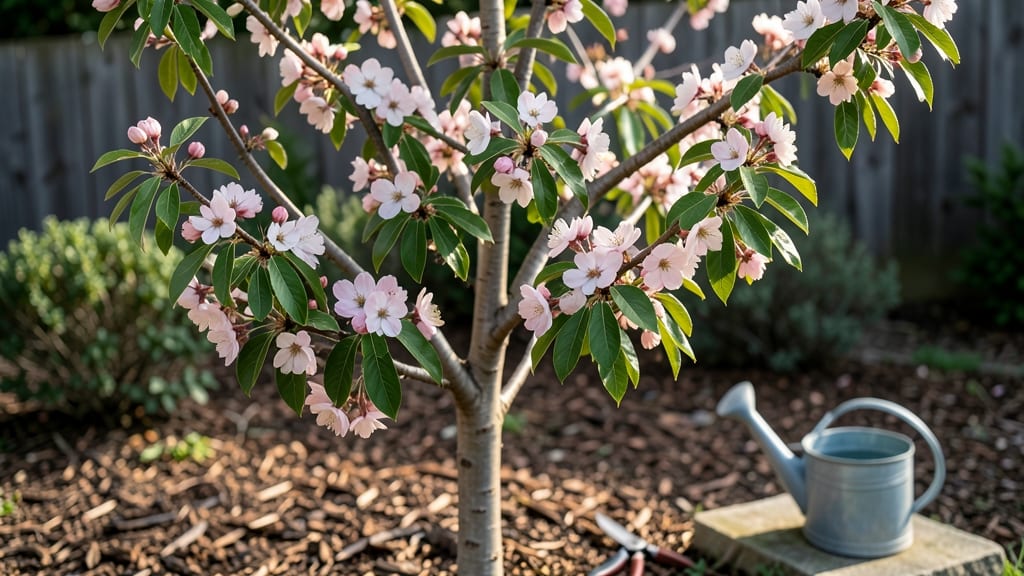
Your flowering peach tree could burst into springtime splendor every year—if you prune with purpose. ✨ I learned the hard way that random cuts lead to fewer blooms, not more. The secret lies in understanding how peach trees set buds and when to shape them for maximum flowers.
Most gardeners prune too late or too aggressively, which triggers the tree to produce fruit instead of showy blossoms. You’ll need sharp pruners, a clear day in late winter (before buds swell), and a plan to remove only the oldest branches first.
The goal is to keep the tree open and airy, so light reaches all the new growth where flowers form.
By summer’s end, you’ll see clusters of fragrant pink blooms that last weeks longer than unpruned trees. The branches stay strong, the flowers stay vibrant, and you avoid that heartbreaking sight of blossoms dropping before they fully open.
This method works for both ornamental varieties and fruit-bearing trees—just adjust timing slightly for edible types.
Works in zones 5-9, though early spring frost can still catch blossoms off guard. Here’s how to protect them—and keep your tree blooming year after year without the guesswork.
📚 In This Guide
- What you need
- Instructions
- Tips and common mistakes
- Wrapping up and next steps
What you need
- ● Pruning shears: Bypass pruners (sharp, clean, and sterilized) for cuts up to ½ inch in diameter.
- ● Loppers: For thicker branches (½ to 1½ inches), with a long handle for leverage.
- ● Pruning saw: A curved-tooth saw for branches over 1½ inches thick.
- ● Disinfectant: 70% isopropyl alcohol or a pruning sealant (like Tanglefoot) to prevent disease.
- ● Gloves: Heavy-duty, cut-resistant gloves (e.g., Mechanix or pruning-specific gloves).
- ● Ladder or step stool: Sturdy and tall enough to reach the tree’s canopy safely.
- ○ Pruning paint/sealant: (Optional but recommended) For sealing large cuts (e.g., Tree Seal or pruning wax).
- ● Trash bags: Heavy-duty for collecting pruned branches.
- ● Notebook & pen: To jot down notes on cuts made (helpful for tracking growth!).
- ● Timing: Prune during dormant season (late winter/early spring) or right after blooming (avoid summer pruning).
- ● Weather: Choose a dry, overcast day to minimize stress on the tree.
- ● Safety first: Wear closed-toe shoes and ensure the ladder is stable on level ground.
- ● Tree health check: Inspect for diseased or pest-infested branches before pruning.
Instructions for pruning a flowering peach tree
Here’s how to keep your tree healthy and bursting with blossoms year after year.
✂️ Step 1: Prune in Late Winter Before Bud Break
Start your pruning when the tree is still dormant but just before buds begin to swell—usually late February to early March in most climates. This timing ensures you remove dead wood while preserving next season’s blooms. I always grab my sharp bypass pruners and a sterilizing solution (1 part bleach to 9 parts water) to disinfect cuts and prevent disease.
Look for dead, diseased, or crossing branches first. These are your top priorities—they compete with healthy growth and invite pests. Make cuts just outside the branch collar (the swollen area where the branch meets the trunk) at a 45-degree angle. Avoid leaving stubs; they invite rot and weaken the tree.
Here’s the thing—if you’re unsure about a branch, wait. Better to leave it than risk over-pruning. A good rule: never remove more than 25% of the tree’s canopy in one season. You’ll see new growth within weeks, signaling you’ve done it right.
✂️ Step 2: Thin Out Crowded Branches for Airflow
Now focus on thinning the canopy to improve airflow and sunlight penetration. Remove branches that rub against each other or grow inward—these create wounds and block light. Aim for an open, vase-like shape with well-spaced branches radiating from the trunk.
Start at the bottom and work your way up. Each cut should remove a branch back to its origin point (the branch collar). If a branch is too thick for hand pruners, use a pruning saw for clean cuts. You’ll notice the tree’s structure becomes more balanced, with strong scaffold branches supporting future blooms.
Real talk: If you see water sprouts (thin, vertical shoots), cut them off at the base. They drain energy from flowering and weaken the tree’s structure. A properly thinned tree will reward you with healthier blossoms and fewer pests.
☀️ Step 3: Lighten the Canopy After Flowering
Once the tree finishes blooming (typically late spring), do a second round of pruning to encourage fruit development and prevent overcrowding. Remove any suckers (shoots growing from the base) and sparse branches that aren’t producing well. This step keeps energy focused on strong, flowering branches rather than weak growth.
Pay attention to branches that are too dense—they block sunlight and air, leading to fungal issues. Thin these out by one-third to let light reach the center. You’ll see new shoots emerge in 4-6 weeks, signaling the tree is responding well. Avoid heavy pruning now; you’re just fine-tuning the shape and airflow.
Don’t skip this step. I’ve seen trees with thick canopies struggle to bloom well because of poor light penetration. A well-pruned tree in late spring will bloom more vigorously next year—that’s the payoff.
⏰ Step 4: Summer Maintenance to Encourage Blooms
During the growing season, monitor the tree weekly for any deadheading (removing spent blossoms) if needed. While flowering peach trees don’t require heavy deadheading like annuals, removing damaged or diseased leaves keeps the tree healthy. Use clean, sharp shears to avoid tearing tissue.
Watch for shoots growing from the base—these are sucker growth that steals energy. Snip them off at the base immediately. You’ll also spot crossing branches that need attention. A little summer maintenance prevents major pruning headaches later.
Here’s a pro tip: If you notice leggy growth (long, thin branches with few leaves), the tree needs more sunlight. Move nearby obstructions or consider thinning nearby branches to let light in. Strong, sturdy branches = better blooms.
✂️ Step 5: Final Pruning in Early Fall for Winter Readiness
In early fall, do a light pruning to remove any remaining dead wood and shape the tree for winter. Focus on branches that grew too vigorously during the season—trim them back by one-third to maintain balance. Avoid heavy cuts now; you don’t want to stimulate new growth that won’t harden off before frost.
Check for any signs of disease (discolored leaves, oozing cankers) and prune those areas immediately. Sterilize your tools between cuts to prevent spreading pathogens. A clean, well-shaped tree will withstand winter better and bloom more abundantly next spring.
This is the moment that matters: a properly pruned tree in fall means fewer surprises in spring. You’ll wake up to a tree ready to burst into blossoms—no last-minute panic pruning needed.
Tips & tricks for pruning a flowering peach tree
These little details make all the difference between a tree that blooms beautifully and one that struggles year after year.
Timing is Everything: The late February to early March window for Step 1 is non-negotiable for flowering peach trees. This timing ensures you're removing dead wood while the tree is still dormant but before buds begin to swell. I've seen trees bloom more vigorously the following season when pruned during this exact window. If you miss it, wait until the tree finishes flowering in late spring—just don't delay beyond that point or you risk stimulating new growth that won't harden off before winter.
Tool Sharpness Matters: Your pruners and saw need to be razor-sharp for clean cuts. Dull tools crush branches, creating larger wounds that take longer to heal and invite disease. Before you start Step 1, test your tools on a small branch—if it tears rather than cuts cleanly, sharpen them immediately. I keep a small sharpening stone in my toolbox specifically for this purpose. The cleaner the cut, the faster the tree recovers and the better it blooms next season.
Branch Collar Awareness: When making cuts in Step 2, focus on the branch collar—the swollen area where the branch meets the trunk. This is where protective cells form to seal the wound. Cut just outside this collar at a 45-degree angle to maximize healing. I've made the mistake of cutting too close to the trunk, which left unsightly scars and weakened the tree's structure. The branch collar is your guide to making cuts that heal properly and maintain the tree's strength for future blooms.
Seasonal Maintenance Checklist: Create a simple checklist for each season's pruning tasks. For late winter (Step 1), mark "remove dead/diseased branches" and "limit to 25% canopy removal." For late spring (Step 3), note "thin dense branches by 1/3" and "remove water sprouts." Summer maintenance (Step 4) should include "weekly monitoring" and "remove sucker growth." This visual reminder ensures you don't miss critical steps during each season's pruning. I keep mine on my fridge door where I'll see it when planning garden tasks.
Pro Tips for Flowering Peach Tree
- These little details make all the difference between a tree that blooms beautifully and one that struggles year after year.
- Timing is Everything: The late February to early March window for Step 1 is non-negotiable for flowering peach trees.
- Tool Sharpness Matters: Your pruners and saw need to be razor-sharp for clean cuts.
Frequently asked questions
Got questions about keeping your flowering peach tree in bloom? We’ve got answers!
Here are some of the most common concerns—from timing to troubleshooting—so you can prune with confidence and enjoy those stunning blossoms year after year.
When is the best time to prune a flowering peach tree?
The ideal window is late winter or early spring, just before bud break (usually February–March in most climates). This encourages strong new growth and maximizes next year’s blooms. Avoid pruning in fall—it can stimulate tender shoots that may frost-damage.
How much should I trim off each year?
Aim to remove 15–25% of the tree’s total growth annually to maintain shape and health. For young trees, focus on thinning out crowded branches (cut back to the nearest bud or branch collar). Mature trees may need light shaping cuts to open the canopy for sunlight. Never remove more than ⅓ in one season—it stresses the tree!
My peach tree’s leaves are yellowing after pruning. Is this normal?
Mild yellowing (chlorosis) can happen if you cut too aggressively or damage roots/branches. However, if it’s widespread with crispy edges or blackened spots, check for peach leaf curl (a fungal disease) or nutrient deficiencies (like iron). Prune in dry weather and sterilize tools to prevent infections.
Can I prune a flowering peach tree in summer?
Summer pruning is possible but risky—it can stress the tree and reduce next year’s flowers. If you must trim (e.g., for safety), do so in early summer (June) to remove only water sprouts or dead wood. Avoid heavy cuts; focus on light shaping and wait for winter for major work.
Will pruning reduce my tree’s flowers next year?
Not if done correctly! Pruning opens the canopy, letting sunlight reach inner buds—this boosts flowering. However, over-pruning (especially in fall) can reduce blooms. Strike a balance: thin out dense branches and shape gently to encourage airflow and light.
What’s the difference between thinning and heading cuts?
| Thinning Cuts | Heading Cuts |
|---|---|
| Remove an entire branch back to the trunk or main branch. | Trim the tip of a branch to encourage bushier growth. |
| Best for: Opening the tree’s center, improving airflow. | Use sparingly: Can lead to dense, weak growth if overdone. |
For flowering peach trees, thinning is key—it prevents disease and promotes bigger blooms!
Wrapping up and next steps
Growing a stunning flowering peach tree is all about patience, precision, and a little love—just like nurturing any prized plant! 🌸 With the right pruning techniques, you’ll reward yourself with breathtaking blooms year after year.
Now that you’re armed with the knowledge to trim, shape, and maintain your tree, it’s time to roll up your sleeves and get hands-on.
Start by scheduling your next pruning session—whether it’s a light touch-up in spring or a seasonal deep clean. Every cut is a step toward a healthier, more vibrant tree. Happy pruning, and may your garden become the talk of the neighborhood!