
Planting
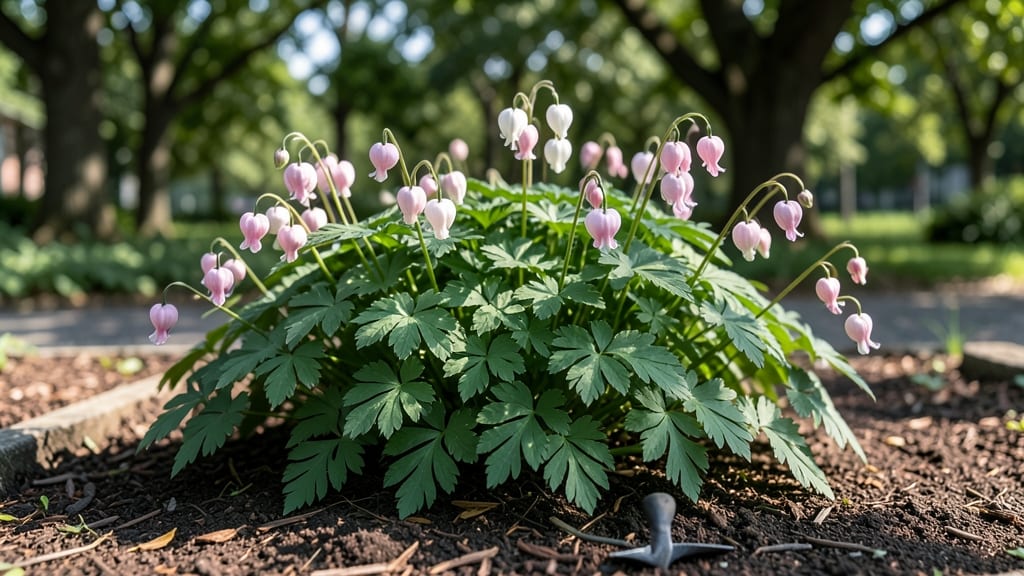
The white flowering bleeding heart plant (Dicentra spectabilis) brings ethereal charm to Pacific Northwest shade gardens with its cascading heart-shaped blooms. 🌿 I’ve grown mine in dappled woodland light for years, and it’s become the star of my spring garden—delicate, fragrant, and impossible to resist.
The secret lies in mimicking its native habitat: moist, rich soil and cool roots shielded from harsh afternoon sun.
Planting is simple if you focus on three things: well-draining soil (amend with compost), partial shade (3–6 hours of morning sun), and consistent moisture. The roots prefer coolness, so mulch heavily—think 2–3 inches of shredded bark or leaf mold—to protect them through summer’s dry spells.
Unlike many perennials, bleeding hearts thrive in Zone 3–8, making them a reliable choice for PNW gardeners.
By late spring, you’ll see those iconic drooping spikes of white flowers appear, followed by lush, fern-like foliage that adds texture all season. The plants multiply over time, forming graceful clumps that naturalize beautifully.
Just be patient—full bloom takes 2–3 years from seed, but the wait is worth it for that first flush of blossoms.
Pair it with ferns, hellebores, or hostas for a woodland understory effect, and watch how it transforms shady corners into dreamy, romantic spaces. The key to long-term success? Avoiding summer drought and giving the stems room to arch naturally. Let’s get yours thriving!
📚 In This Guide
- What you need
- Instructions
- Tips and common mistakes
- Wrapping up and next steps
What you need
- ● Bleeding heart plants: 3–5 bare-root tubers or potted plants (check for healthy, firm roots and no signs of rot).
- ● Well-draining potting mix: 1–2 bags (50 lbs each) of a moisture-retentive but well-aerated blend (e.g., 60% peat moss, 30% compost, 10% perlite).
- ● Garden soil (amended): 1–2 cubic yards of native soil mixed with 3–4 inches of compost or aged manure.
- ● Organic mulch: 1–2 bags (1–2 cubic feet each) of shredded bark, wood chips, or pine needles.
- ● Garden trowel or spade: For digging planting holes (6–8 inches deep).
- ● Garden gloves: A pair to protect hands from soil and sharp roots.
- ● Watering can or hose with a gentle spray nozzle: For consistent moisture (avoid overhead watering).
- ○ Pruners (sterilized): For trimming dead foliage or spent blooms (optional but helpful).
- ● Slow-release fertilizer: 1–2 lbs of balanced 10-10-10 or organic options like fish emulsion (apply in early spring).
- ● Shade cloth (30–50% coverage): If planting in partial sun areas to protect young plants.
- ● Plant supports (small stakes or cages): For varieties that may flop in heavy rain (e.g., ‘Alba’).
- ● Soil pH test kit: To ensure your soil is slightly acidic to neutral (6.0–7.0)—bleeding hearts thrive here!
Step-by-Step guide for planting and caring for white bleeding hearts
These shade-loving Pacific Northwest beauties thrive with minimal fuss—just follow these steps for lush, long-blooming plants.
🌱 Step 1: Choose the Perfect Shady Spot
Bleeding hearts adore partial to full shade, especially in hotter climates. In the Pacific Northwest's cooler, damp conditions, they'll tolerate morning sun with afternoon shade—just avoid harsh midday rays that scorch their delicate foliage. Look for a location with dappled light under deciduous trees or along a north-facing wall.
Here's the thing—moist, well-draining soil is non-negotiable. These plants hate soggy roots but won't survive dry spells either. Amend heavy clay soil with 3-4 inches of compost (like the 2 cubic yards you'll use later) to improve drainage while retaining moisture. Test your spot by digging a 6-inch hole—if water pools after 30 minutes, the site needs better drainage.
🪴 Step 2: Plant at the Right Depth and Spacing
Dig a hole twice as wide as the root ball but no deeper—bleeding hearts prefer to sit 1-2 inches above where they were growing in their nursery pot. This prevents crown rot, which is a silent killer of these shade plants. Gently loosen the roots if they're circling tightly in the pot.
Space plants 18-24 inches apart—they'll spread slowly but reward you with 3-4 feet of arching stems at maturity. I always plant mine in small clusters of 3-5 for a natural, woodland effect. The key is to give them room to establish without competing for water too early.
💧 Step 3: Water Deeply and Mulch Generously
Water thoroughly at planting to settle the soil around roots, then let the top 2 inches dry out before watering again. Overwatering is the fastest way to smother these plants—bleeding hearts need consistent moisture, not soggy conditions. A drip irrigation system set to 1-2 gallons per plant weekly works best in the PNW's rainy winters and dry summers.
Spread 3-4 inches of mulch (like your shredded bark) over the soil surface, keeping it 2 inches away from stems to prevent rot. This mimics their native woodland habitat while locking in moisture and suppressing weeds. Replenish mulch annually—it breaks down faster than you'd expect in our damp climate.
☀️ Step 4: Feed and Prune for Long-Blooming Seasons
In early spring, before new growth appears, apply a balanced 10-10-10 fertilizer (about 1 tablespoon per plant) mixed into the top 2 inches of soil. This gives them a gentle boost without encouraging leafy growth at the expense of flowers. I've found bleeding hearts respond better to light feeding than heavy doses—think of it as a slow-release energy drink for plants.
After flowering (usually late spring to early summer), cut back the old flower stalks to the base. This might seem drastic, but it redirects energy into next year's blooms. Wait until foliage yellows in fall to trim back 1/3 of the plant—this prevents overgrowth and keeps the center from becoming bare. Never prune in winter when the plant is dormant.
✂️ Step 5: Divide and Propagate Every 3-4 Years
Bleeding hearts form dense clumps over time, and dividing them rejuvenates both the parent plant and gives you free plants for neighbors. Wait until early spring when new shoots are 2-3 inches tall—this timing ensures established roots for the transplant shock. Dig up the entire clump, then separate it into 3-5 inch sections, each with 3-5 shoots and some roots.
Real talk: dividing can get messy. I always rinse the roots gently to remove old soil, then replant immediately in the prepared holes. Water deeply after planting and keep the soil evenly moist for 2 weeks—this is when most division failures happen. The PNW's cool springs make this an ideal time, but avoid dividing in summer heat.
Tips & tricks for perfect white flowering bleeding heart plant care
Common pitfalls—and how to sidestep every one—when growing these Pacific Northwest favorites.
Soil Test Tip: That 30-minute water test in Step 1 is your best friend for avoiding soggy roots. If water pools after 30 minutes, mix in an extra 2 inches of compost or consider building a slightly raised bed. Bleeding hearts despise waterlogged conditions, so don't skip this simple check—it's what separates thriving plants from those that struggle.
Planting Depth Secret: The 1-2 inches above-ground rule in Step 2 isn't just about crown rot prevention—it's about airflow. When you plant, create a slight mound of soil so the roots naturally settle at this perfect level. I've seen many gardeners plant too deep, and within weeks, the centers of their plants turn mushy. A quick visual check with your finger can save you from this silent killer.
Watering Wisdom: The 2-inch dry-out rule before watering again might seem counterintuitive in our damp climate, but it's crucial. Use your finger to test moisture—if the top 2 inches feel dry, it's time. In summer heat, you might need daily checks, but in winter, weekly watering often suffices. This consistency is what makes bleeding hearts bloom reliably year after year.
Pruning Precision: When you cut back those old flower stalks in Step 4, go all the way to the base—no halfway measures. I've seen gardeners leave stubs, and while it doesn't kill the plant, it looks messy and can harbor pests. For the fall trim, use clean, sharp shears and make cuts at a 45-degree angle just above a leaf node. This encourages bushier growth next season.
Pro Tips for White Flowering Bleeding Heart Plant
- Common pitfalls—and how to sidestep every one—when growing these Pacific Northwest favorites.
- Soil Test Tip: That 30-minute water test in Step 1 is your best friend for avoiding soggy roots.
- Planting Depth Secret: The 1-2 inches above-ground rule in Step 2 isn't just about crown rot prevention—it's about airflow.
Frequently asked questions
Got questions about growing and caring for your white flowering bleeding heart plant? We’ve got answers!
Whether you’re a first-time gardener or just want to refine your green thumb, here are the most common queries about this stunning Pacific Northwest favorite.
How do I keep my bleeding heart plant blooming year after year?
Bleeding hearts thrive with consistent moisture and partial shade. After flowering, trim back the foliage by one-third to encourage new growth. Apply a balanced fertilizer in early spring, and mulch to retain moisture. Pro tip: They’re perennials, so they’ll return—but they may take a year or two to fully re-establish after division.
When is the best time to plant a bleeding heart in the Pacific Northwest?
Plant in early spring or fall when soil temperatures are cool (50–60°F). Avoid summer heat, which can stress the roots. If planting in containers, use well-draining soil and keep them shaded until established. Fall planting gives roots time to settle before winter rains arrive!
Why aren’t my bleeding heart flowers opening, and how can I fix it?
Overly hot or dry conditions can prevent blooms. Ensure your plant gets morning sun and afternoon shade—direct sun scorches leaves, while too much shade may reduce flowering. Water deeply but avoid soggy soil. If established, a light pruning after flowering can encourage next season’s blooms.
Are there any shade-loving alternatives to bleeding heart with similar heart-shaped flowers?
Yes! Try Astilbe (feathery plumes), Hosta (bold foliage), or Lungwort (Pulmonaria) for shade-friendly companions. For white blooms, Japanese Anemone or Foxglove (biennial) are stunning options too. All love moist, well-drained soil like bleeding hearts!
What pests should I watch for with bleeding heart plants?
Watch for aphids, slugs, and Japanese beetles. Aphids can be wiped off with soapy water, while slugs are deterred by diatomaceous earth or beer traps. For beetles, handpick them early in the day. Healthy plants with proper spacing and mulch are less prone to pests!
Wrapping up and next steps
The white flowering bleeding heart plant is a stunning, low-maintenance gem that thrives in the lush, shaded gardens of the Pacific Northwest—adding elegance and a touch of whimsy with its heart-shaped blooms.
Whether you’re a seasoned gardener or just starting out, this plant offers year-round interest, from delicate flowers to graceful foliage, making it a perfect choice for adding vertical charm to your space.
Ready to bring this beauty into your garden? Start by selecting the right spot—moist, dappled shade—and follow the care tips shared above. With a little love, your bleeding heart will reward you with season after season of enchanting blooms! 🌿✨