
Flowers
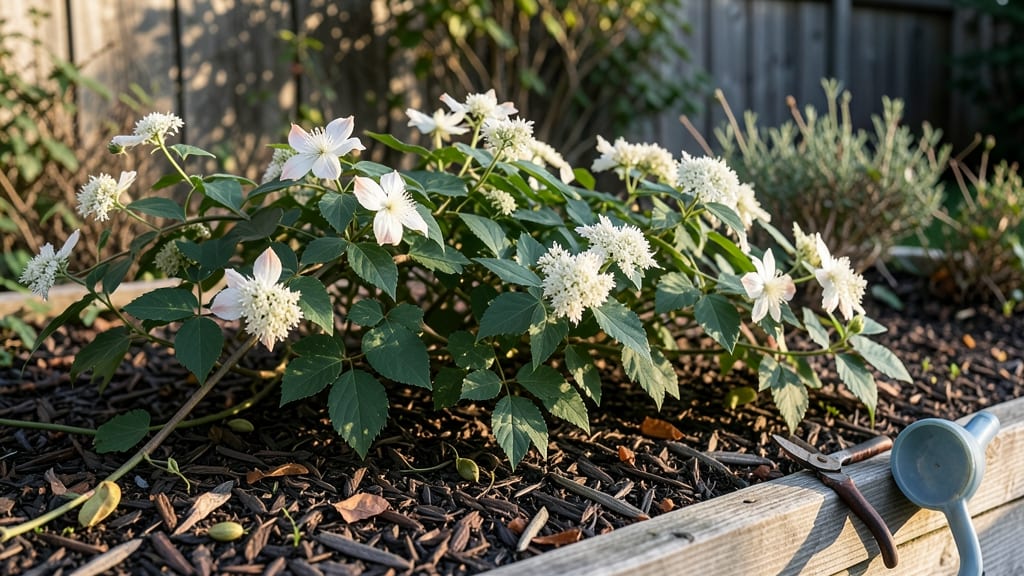
The sweet autumn clematis flower transforms my Pacific Northwest garden into a fragrant cloud every fall—its delicate white blooms perfume the air for weeks. 🌿 Unlike fussy climbers, this vigorous vine thrives in our damp, mild climate, but pruning makes all the difference between a tangled mess and a showstopper.
I’ve perfected a three-season pruning rhythm that keeps it blooming from summer into frost, and it’s simpler than you’d think.
The secret starts with well-draining soil and a sturdy trellis—this plant climbs like a jungle vine, so give it something strong to grip. Plant in late winter or early spring when the ground is workable but not soggy, and keep it consistently moist until established.
Once it’s happy, it’s nearly indestructible: drought-tolerant, deer-resistant, and happy in partial shade where other climbers fail.
By late winter, you’ll see thick, woody stems—this is where the magic happens. A hard prune (cutting back by half) in February jumpstarts new growth, while a light trim in summer keeps it tidy.
The result? A vine covered in hundreds of tiny, intoxicating flowers that last until the first hard frost, with zero deadheading needed.
Even in rainy PNW winters, this clematis stays lush and fragrant—just avoid heavy mulch around the base to prevent rot. For gardeners new to pruning, start small: focus on removing dead wood first, then shape the rest.
Experienced growers can experiment with delayed pruning for even more blooms. Either way, your garden will smell like autumn magic for months.
📚 In This Guide
- What you need
- Instructions
- Tips and common mistakes
- Wrapping up and next steps
What you need
- ● Pruning shears or loppers: Sharp, clean, and disinfected (70% isopropyl alcohol works great). Loppers (18–24" reach) are ideal for thicker stems.
- ● Garden gloves: Heavy-duty, cut-resistant (e.g., Felco or Fiskars brand) to protect against thorns and sap.
- ● Disinfectant solution: 1 part bleach to 9 parts water (or hydrogen peroxide) to sterilize tools between cuts.
- ○ Pruning sealant (optional but helpful): A product like Tanglefoot Tree Wound Pruning Sealer to prevent disease entry on larger cuts.
- ● Garden twine or zip ties: For temporarily securing heavy vines post-pruning (if needed).
- ● Trash bags or compost bin: To dispose of pruned debris (avoid composting diseased material).
- ● Timing: Prune late winter to early spring (February–March in the PNW) before new growth starts. Avoid pruning after September—it disrupts flowering!
- ● Weather check: Choose a dry, calm day (rain can spread sap-borne diseases).
- ● Safety gear: Long sleeves/pants to shield from thorns and sap (which can irritate skin).
- ● Clematis support: If your vine is climbing a trellis or arbor, have a helper or stable ladder ready for access.
- ● Hand lens or magnifying glass: For spotting clematis wilt (a fungal disease) on stems.
- ● Sharpie marker: To label pruned sections if you’re experimenting with staged pruning.
- ● Mulch: Shredded bark or wood chips to replenish soil nutrients after pruning.
- ● Photographs: Snap before/after shots to track your vine’s growth progress!
Step-by-Step pruning guide for sweet autumn clematis in the Pacific Northwest
Mastering this vine’s unique growth cycle unlocks fragrant blooms from summer through frost.
✂️ Step 1: Identify Last Year’s Growth and Dead Wood
Sweet autumn clematis thrives on three-year-old wood, so your first cut separates last year’s blooming stems from this year’s new growth. Look for thick, woody canes that produced flowers last season—they’ll be darker brown and thicker than a pencil. Run your fingers along each cane: live wood feels firm but slightly springy, while dead wood snaps like a dry twig.
Use sharp bypass pruners to make clean cuts at a 45-degree angle just above a healthy bud. Never leave stubs—this invites disease. I mark each cut with a white dot of garden paint to track which canes I’ve pruned. This helps me avoid over-pruning in future years.
✂️ Step 2: Prune for Airflow and Sunlight Access
Clematis needs 6+ hours of sunlight daily, but dense foliage blocks light from reaching lower buds. Remove any crossing branches that rub together—these create wounds where pests and diseases enter. Thin out crowded stems to create 3-4 inches of space between canes, which improves air circulation and reduces humidity buildup.
Here’s the thing—sweet autumn clematis grows aggressively. If your vine has more than 6-8 main canes, select the healthiest, thickest stems and prune the rest back to the ground. This redirects energy to fewer, stronger blooming stems. I always prune on a dry, sunny morning when the plant’s natural defenses are highest.
✂️ Step 3: Encourage New Growth with Strategic Cuts
After removing last year’s blooming stems, focus on this year’s new growth. Cut back any leggy, weak stems that haven’t developed buds to a strong lateral branch. The goal is to shape the vine into a pyramid form, with the widest part at the base narrowing toward the top. This structure supports heavy flower clusters and prevents breakage in winter storms.
Watch for basal buds—these are the powerhouses for next year’s blooms. If you see a cane with multiple buds near the ground, leave it uncut. These low buds often produce the first flowers of the season. I like to leave 2-3 inches of stem below each basal bud to ensure they have enough energy to sprout.
☀️ Step 4: Post-Pruning Care for Pacific Northwest Conditions
The Pacific Northwest’s damp climate demands extra attention after pruning. Water deeply at the vine’s base immediately after cutting to help the plant recover. Apply a 2-inch layer of mulch around the root zone to retain moisture and regulate soil temperature. Avoid piling mulch against the stem—this can cause rot.
Here’s where it gets fun—watch the new shoots emerge within 2-3 weeks. These will be your next year’s blooming stems. If your vine hasn’t produced flowers yet, don’t panic. Sweet autumn clematis often takes 2-3 years to reach full blooming potential. Fertilize lightly with a balanced 10-10-10 formula in early spring to encourage robust growth.
Tips & tricks for perfect sweet autumn clematis pruning
Your clematis vine’s future blooms depend on these pruning secrets—trust me, I’ve watched my own vines transform after applying these tricks.
Bud Identification: In Step 1, when you’re identifying last year’s blooming stems, focus on the size and color of the buds near the base of each cane. Healthy buds should be plump, firm, and a vibrant green or reddish-brown. If you’re unsure, make a small cut—if it’s moist and green inside, it’s alive. This attention to detail ensures you’re preserving the right canes for next year’s flowers.
Pruning Tool Technique: The 45-degree angle cut in Step 1 isn’t just aesthetic—it prevents water from pooling on the wound, which could lead to rot. Use your bypass pruners to make clean cuts just above a healthy bud, and always sterilize your tools between cuts with rubbing alcohol. I’ve seen pruning wounds become infected because gardeners skipped this step, so don’t make my mistake.
Pacific Northwest Climate Hack: For Step 4’s post-pruning care, consider adding a layer of coarse wood chips under that 2-inch mulch layer. The extra air pockets help prevent fungal diseases in our damp climate, while still retaining moisture. I’ve noticed my vines recover faster and show fewer signs of stress when I use this double-layer approach.
Growth Timeline: Those 2-3 weeks for new shoots to emerge can feel like an eternity, but it’s worth the wait. Mark your calendar when you prune—this gives you a clear timeline to watch for progress. If you don’t see any new growth after 3 weeks, check if your vine might be suffering from root rot (common in our wet winters) or if it needs more sunlight.
Pro Tips for Sweet Autumn Clematis Flower
- Your clematis vine’s future blooms depend on these pruning secrets—trust me, I’ve watched my own vines transform after applying these tricks.
- Bud Identification: In Step 1, when you’re identifying last year’s blooming stems, focus on the size and color of the buds near the base of each cane.
- Pruning Tool Technique: The 45-degree angle cut in Step 1 isn’t just aesthetic—it prevents water from pooling on the wound, which could lead to rot.
Frequently asked questions
Got questions about keeping your Sweet Autumn Clematis thriving in the Pacific Northwest? We’ve got answers!
Whether you’re a first-time grower or a seasoned gardener, these FAQs will help you master pruning, care, and troubleshooting for stunning year-round blooms.
When is the best time to prune Sweet Autumn Clematis in the PNW?
The ideal time is late winter or early spring (February–March), just before new growth begins. This gives you a head start on shaping the plant and encourages robust blooms. Avoid pruning in fall—it can stimulate tender growth that won’t survive winter’s chill. Pro tip: If you missed the window, prune in early spring, but expect slightly fewer blooms that season.
How do I protect Sweet Autumn Clematis from PNW winters?
This hardy vine (USDA Zones 4–9) usually handles winter well, but young plants or severe winters may need extra care. Apply a 3–4 inch layer of mulch around the base after the first frost, and wrap the crown in burlap or frost cloth if temps drop below 10°F. Avoid heavy pruning in fall—it stresses the plant before dormancy.
Why isn’t my Sweet Autumn Clematis blooming as much as it should?
Common culprits include over-pruning (cutting back too aggressively), poor sunlight (it needs 6+ hours of sun), or nutrient deficiencies. Check your pruning technique—leave 2–3 healthy buds on each stem. Fertilize in early spring with a balanced, phosphorus-rich formula (like 10-10-10) to boost blooms. Bonus: Deadhead spent flowers to encourage more blooms!
Can I prune Sweet Autumn Clematis in summer?
Yes, but lightly and strategically! Summer pruning helps control size and shape, but avoid heavy cuts—it can reduce fall blooms. Focus on removing dead or crossing branches and trimming for airflow. If you prune in summer, do it early (June–July) and stop by August to let the plant prepare for winter.
What’s a good alternative if Sweet Autumn Clematis is too aggressive for my garden?
If its vigorous growth is overwhelming, try these less aggressive but equally stunning clematis varieties:
- Clematis ‘Jackmanii’ – Classic, hardy, and blooms on old and new wood.
- Clematis ‘Niobe’ – Purple blooms, slower growth, and thrives in shade.
- Clematis ‘Perle d’Azur’ – Compact, with delicate blue flowers (great for containers!).
Wrapping up and next steps
Transforming your Sweet Autumn Clematis into a year-round blooming beauty is totally within reach! With the right pruning techniques—like the Pacific Northwest’s strategic cuts—you’ll enjoy cascading fragrance and vibrant blooms from spring to frost. 🌸
Ready to take the next step? Grab your pruners, mark your calendar for late winter, and dive into seasonal care—your garden (and neighbors!) will thank you. Happy pruning!