
Propagation
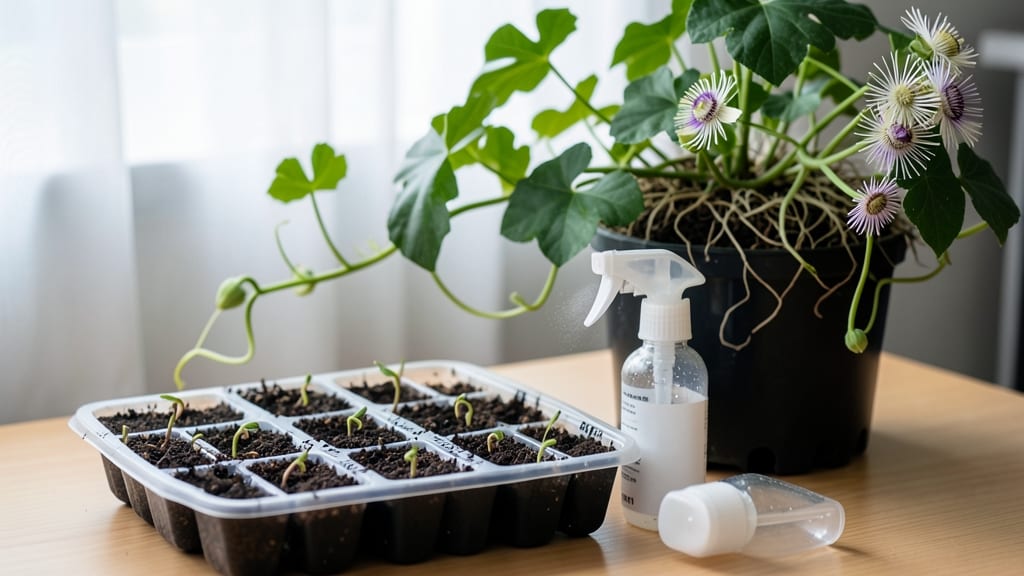
Passion flower seeds take patience, but these tricks cut weeks off your wait time. 🌱 I’ve struggled with slow germination—until I learned the secret balance of warmth, moisture, and a little science. The key isn’t just planting; it’s creating the perfect microclimate for those tiny seeds to wake up fast.
You’ll need a shallow tray, a mix of 50% perlite and 50% peat moss, and a heat mat set to 75-80°F—that’s the magic number for speed. Keep the soil damp (not soggy) and cover the tray with plastic wrap to trap humidity.
Most seeds sprout within 2-4 weeks if you nail these conditions, but mold or rot can derail progress if you’re not careful.
Once those first green shoots appear, you’ll want bright, indirect light to keep them sturdy. Thin seedlings to 2 inches apart when they’re about 1 inch tall, and avoid disturbing the roots. By 6-8 weeks, you’ll have strong seedlings ready to transplant—just in time for the growing season.
Works for both indoor starts and outdoor sowing in warm climates. The same principles apply whether you’re germinating in a sunny windowsill or a greenhouse. Let’s get those passion flowers growing!
📚 In This Guide
- What you need
- Instructions
- Tips and common mistakes
- Wrapping up and next steps
What you need
- ● Passion flower seeds: Fresh, high-quality seeds (10–20 seeds per batch for experimentation). Pro tip: 💡 Buy from reputable suppliers or harvest from ripe passion fruit pods!
- ● Seed-starting mix: Lightweight, well-draining potting soil (4–6 inches deep in containers). Look for a blend labeled "seed starting" or "cactus/succulent mix."
- ● Containers: Small pots (3–4 inches in diameter) or seed trays with drainage holes (for individual seeds).
- ○ Optional: Biodegradable seed pods or peat pots for easy transplanting.
- ● Watering can or spray bottle: With a fine mist nozzle to avoid disturbing seeds.
- ● Plastic wrap or clear lid: To create a humidity dome (e.g., a ziplock bag or greenhouse lid).
- ● Grow lights or sunny windowsill: Passion flowers thrive in warmth (70–85°F) and bright, indirect light.
- ● Small hand trowel or spoon: For gently pressing seeds into soil.
- ○ Heat mat (optional but helpful): Maintains consistent soil warmth (75–85°F) to speed up germination.
- ● Fertilizer: Balanced, water-soluble fertilizer (5-10-5 or 10-10-10) only after sprouts emerge (dilute to half-strength).
- ○ Humidity tray (optional): A shallow tray filled with water and pebbles to boost moisture levels.
- ● Label markers & tags: To track planting dates and seed varieties.
How to germinate passion flower seeds like a pro
Here's the tested method I use to break dormancy and get those hard seeds sprouting reliably.
🌱 Step 1: Pre-Treat Seeds for Maximum Germination
Passion flower seeds have a tough outer shell that slows water absorption. I start by soaking them in lukewarm water for 24 hours—this softens the seed coat and speeds up germination. Place seeds in a small container with enough water to cover them completely, then let them sit on your countertop.
After 24 hours, check for any seeds that float to the surface. These are non-viable—discard them. The good seeds will sink to the bottom. Here's the thing—don't rush this step. Some seeds might need up to 48 hours of soaking, especially if they're particularly hard. You'll know they're ready when the outer coating looks slightly wrinkled and easier to pierce with your fingernail.
💧 Step 2: Plant in Warm, Moist Medium
Fill your seed-starting tray with the provided sterile seed-starting mix and moisten it until it's damp but not soggy. Passion flower seeds need warmth to germinate, so I place the tray on a seedling heat mat set to 75-80°F. This mimics tropical conditions and helps break dormancy faster.
Plant the pre-treated seeds about ¼ inch deep—any deeper and they'll struggle to push through the soil. Space them 2 inches apart in the tray to give roots room to develop. I like to use a small pencil or toothpick to make individual holes for each seed, which helps with even planting depth.
After planting, cover the tray with a clear plastic dome or wrap it with plastic wrap to retain moisture. This creates a mini greenhouse effect that keeps the soil consistently damp, which is crucial for germination. Check daily for condensation on the plastic—this tells you the humidity level is perfect.
☀️ Step 3: Provide Indirect Light and Patience
Passion flower seeds need warmth but not direct sunlight during germination. Place the tray in a location with bright, indirect light, like a north-facing window or under a grow light set to 12-14 hours of light daily. Too much direct light now can overheat the soil and dry out the seeds.
Germination can take anywhere from 2-4 weeks, depending on the variety and your growing conditions. I know it seems like a long wait, but resist the urge to check constantly—each time you lift the plastic, you risk disturbing the seeds. Instead, watch for the first signs of sprouting: tiny green tips pushing through the soil or a slight bulge in the surface.
Once you see the first sprouts, remove the plastic dome immediately. This prevents damping-off disease, which is common in high-humidity environments. You'll notice the seedlings have thick, waxy leaves—this is normal and a sign they're healthy and storing water efficiently.
🌿 Step 4: Transplant Seedlings to Individual Pots
When seedlings develop their second set of true leaves (not the initial cotyledons), it's time to transplant them. Gently remove each seedling, being careful not to damage the roots. I use a small spoon or butter knife to lift them out of the tray, then place them in individual 3-inch pots filled with the same seed-starting mix.
Plant each seedling at the same depth it was growing in the tray. Firm the soil gently around the base to eliminate air pockets, then water lightly to settle everything in place. Here's where it gets fun—passion flowers grow fast once they get established. Place the pots in a location with full sun (6+ hours daily) to encourage strong, sturdy growth.
Keep the soil consistently moist but not waterlogged. You'll see new leaves emerge within a week—that's your signal everything is working. If a leaf yellows, don't panic—it usually just needs more light or slightly drier soil. Passion flowers are tough once they get going, but they need consistent care during this early stage.
Tips & tricks for perfect passion flower seed germination
Common pitfalls—and how to sidestep every one when working with these stubborn seeds.
Soaking Strategy: The 24-hour soak is your baseline, but don't be afraid to extend it to 48 hours if your seeds feel particularly tough. I test readiness by gently pressing a seed between my fingernails—if it gives slightly, it's ready. For extra insurance, add a splash of hydrogen peroxide (1 teaspoon per cup of water) to prevent mold during soaking. This keeps the water fresh and oxygenated, which speeds up the softening process.
Heat Control: That 75-80°F range on your heat mat is non-negotiable for tropical seeds like passion flowers. If you don't have a heat mat, try placing your tray on top of your refrigerator—it generates just enough warmth. Pro tip: Use an infrared thermometer to check the actual soil temperature at planting depth (about 1 inch down). The top layer can feel warmer than where the seeds actually are.
Light Management: During the germination phase, indirect light is crucial—but here's what nobody tells you: position your tray about 6 inches away from the window. Too close, and the soil will dry out too fast. If using grow lights, keep them 4-6 inches above the tray and adjust height as seedlings grow. The 12-14 hours of light should be spread evenly throughout the day, not all at once.
Transplanting Timing: The second set of true leaves is your golden marker for transplanting, but watch for these subtle signs: the leaves should be about 1-2 inches tall and have a slightly darker green color than the initial cotyledons. I wait until the roots are visibly dense in the seedling tray—you'll see them growing through the drainage holes. This ensures your seedlings have enough root mass to handle the transplant shock.
Pro Tips for Passion Flower Seed Germination
- Common pitfalls—and how to sidestep every one when working with these stubborn seeds.
- Soaking Strategy: The 24-hour soak is your baseline, but don't be afraid to extend it to 48 hours if your seeds feel particularly tough.
- Heat Control: That 75-80°F range on your heat mat is non-negotiable for tropical seeds like passion flowers.
Frequently asked questions
Got questions about germinating passion flower seeds?
You’re not alone! Here are some of the most common concerns—and their straightforward solutions—to help you succeed with your passion flower propagation.
How long does it take for passion flower seeds to germinate?
Germination can take anywhere from 2 to 6 weeks, depending on temperature, moisture, and seed freshness. Most seeds sprout within 3–4 weeks if kept in a warm, humid environment (70–80°F). Patience is key—don’t disturb the soil while waiting!
Why aren’t my passion flower seeds sprouting? Troubleshooting tips.
If your seeds aren’t germinating, check these common issues:
- Temperature too low: Move to a warmer spot (like a seedling heat mat) or place near a sunny window.
- Moisture imbalance: Overwatering can drown seeds, while dry soil halts growth. Keep soil consistently damp (not soggy).
- Old or dormant seeds: Soak seeds in warm water for 24 hours before planting to break dormancy.
- Poor seed quality: Passion flower seeds lose viability quickly—use fresh seeds (from the same season if possible).
Can I speed up germination with any tricks?
Yes! Try these pro tips to encourage faster sprouting:
- Use a seedling heat mat (75–80°F) to mimic tropical conditions.
- Cover the tray with plastic wrap to retain humidity (remove once sprouts appear).
- Soak seeds in lukewarm water for 12–24 hours before planting.
- Plant seeds shallowly (¼ inch deep) in well-draining soil.
Should I use store-bought soil or make my own mix?
Both work, but a custom mix often yields better results. Try this blend:
Ingredient
Ratio
Peat moss or coco coir
50%
Perlite or vermiculite
30%
Compost or worm castings
20%
Store-bought seed-starting mix is fine if it’s lightweight and sterile. Avoid garden soil—it can harbor fungi or pests.
Can I grow passion flower seeds outdoors directly?
It’s not recommended unless you live in a warm, frost-free climate (USDA zones 9–11). Seeds planted outdoors in cooler weather may rot or fail to sprout. Start indoors under grow lights or in a greenhouse for best results. Once seedlings are 3–4 inches tall, harden them off before transplanting outside.
Wrapping up and next steps
Growing passion flower from seed is a rewarding journey that combines patience with a few clever tricks! By understanding the ideal germination conditions—warmth, moisture, and light exposure—you’ll set your seeds up for success.
Whether you’re dealing with stubborn dormancy or eager sprouts, these pro tips will help you speed up the process and nurture thriving plants. 🌱
Now that you’re armed with the know-how, roll up your sleeves and give it a try! Start with a small batch, experiment with the methods that work best for you, and soon, you’ll be enjoying lush passion flower vines.
Ready to dive in? Grab your seeds and begin your green-thumb adventure today!