
Flowers
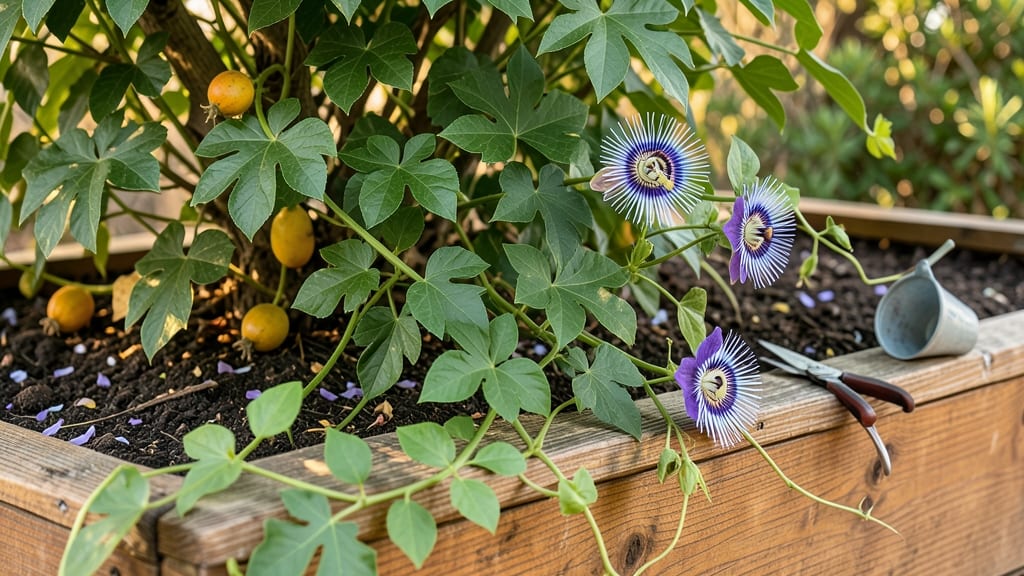
Growing Passiflora caerulea—that frost-tolerant blue passionflower—finally gives Pacific Northwest gardeners a tropical-looking vine that thrives in our cooler climate. 🌿 I’d given up on passionflowers until I discovered this hardy variety that handles our damp winters and bright summers without fuss.
The key? Treating it like a perennial vine, not a finicky tropical houseplant.
You’ll need a sturdy trellis (6-8 feet tall), well-draining soil with added compost, and a sunny spot that gets at least 6 hours of light daily. Unlike other passionflowers, P. caerulea tolerates temperatures down to 20°F, making it perfect for zones 6-9.
Start with cuttings in spring or seeds in late winter—just be patient, as seeds can take 6-12 months to bloom.
Once established, this vine rewards you with vibrant blue flowers that attract hummingbirds and even produce edible (though seedy) fruit. Prune in late winter to shape the vine and remove dead growth, and watch it climb with lush, deep-green foliage.
The only real challenge? Keeping it from outgrowing its trellis—so plan ahead!
Bonus: The flowers make stunning cut arrangements, and the fruit can be candied or used in jellies. With minimal effort, you’ll have a vine that’s both beautiful and productive—no greenhouse required. Ready to try it?
📚 In This Guide
- What you need
- Instructions
- Tips and common mistakes
- Wrapping up and next steps
What you need
- ● Passiflora caerulea plant: 1 mature plant (nursery-grown, 3-5 years old recommended for frost tolerance), OR
- ● Seeds (fresh or stored, preferably from a trusted supplier), OR
- ● Healthy cuttings (4–6 inches long, with at least 2–3 nodes)
- ● Well-draining soil: Mix of 50% garden soil, 30% compost, and 20% perlite or coarse sand (1–2 cubic yards for in-ground planting).
- ○ Container (optional but helpful): 1 large pot (15+ gallons, with drainage holes) for container gardening, OR
- ● Fabric grow bags (18+ inches deep) for better root aeration.
- ● Basic gardening tools: Trowel or small shovel
- ● Pruning shears (sterilized)
- ○ Gloves (optional but recommended)
- ● Mulch: 2–3 inches of wood chips or straw to insulate roots in winter.
- ● Support structure: Trellis, fence, or sturdy stakes (6+ feet tall) for vining growth.
- ● Frost protection (PNW-specific!): Burlap or frost cloth (for young plants)
- ● Row covers (if heavy frosts are forecasted)
- ● Slow-release fertilizer (balanced 10-10-10 or organic options)
- ● Epsom salt (for magnesium boosts)
- ● Pest deterrents (neem oil or insecticidal soap)
- ● Garden journal (to track growth and blooms!)
Step-by-step guide to planting and cultivating passion flower Caerulea
This hardy tropical beauty thrives in the Pacific Northwest—here’s how to grow it successfully.
🌱 Step 1: Choose the Right Location and Soil
Passion flower Caerulea loves sun but tolerates partial shade, making it perfect for the PNW’s mixed light. Plant in a spot with at least 6 hours of sunlight daily, though it can handle morning sun and afternoon shade in hotter microclimates. Avoid heavy, compacted soil—this vine needs well-draining, slightly acidic soil (pH 6.0–7.0) to prevent root rot.
If your garden soil is heavy clay (common in the PNW), amend it with 3–4 inches of compost or pearlite to improve drainage. A raised bed works well if your native soil is too dense. The key is aeration—roots should never sit in soggy conditions, even in winter.
🌿 Step 2: Plant Bare-Root or Container-Grown Vines
For bare-root plants, soak the roots in lukewarm water for 1–2 hours before planting to revive them. Dig a hole twice as wide as the root ball and as deep as the container was. Gently loosen the roots if they’re circling—this encourages outward growth. Place the plant in the hole, ensuring the crown sits just above soil level (burying it too deep causes rot).
For container-grown vines, remove the plant carefully, tease the roots at the edges, and plant at the same depth. Backfill with native soil mixed with 1 cup of bone meal (for phosphorus) to boost early root development. Water deeply right after planting to settle the soil and eliminate air pockets.
☀️ Step 3: Provide Support and Prune for Strong Growth
Passion vines are aggressive climbers—install a 6–8 foot trellis, arbor, or fence within 2–3 feet of the planting hole so the vine can cling immediately. Use soft ties or twine to guide young vines until they grip naturally. Avoid metal supports, as the tendrils can damage them over time.
Prune in early spring to shape the vine and remove weak growth. Cut back overly leggy stems by ⅓ to encourage bushier flowering. Deadhead spent blooms regularly—this redirects energy to new flowers rather than seed production. In fall, cut back frost-damaged canes to healthy wood (they’ll regrow in spring).
💧 Step 4: Water and Feed for Year-Round Health
Water deeply once a week in summer, aiming for 1–1.5 inches of moisture per week. Let the top 2–3 inches of soil dry out between waterings—this prevents fungal issues. In winter, reduce watering to every 2–3 weeks unless the ground is frozen, as Caerulea stores moisture in its roots.
Fertilize twice a year: Apply a balanced 10-10-10 fertilizer in early spring (when new growth starts) and again in mid-summer (when flowering peaks). Avoid high-nitrogen feeds—too much leafy growth at the expense of blooms. A mulch layer of 2–3 inches (wood chips or straw) retains moisture and regulates soil temperature.
⏰ Step 5: Protect from Early Frost and Winter Care
Caerulea handles light frosts down to 15°F, but young plants or severe cold may need protection. In fall, apply a 4–6 inch layer of mulch around the base to insulate roots. For first-year plants, wrap the crown in burlap or frost cloth if temperatures dip below 20°F. Prune back dead or blackened canes in early spring—new growth will emerge from the base.
Here’s the thing—this vine rewards patience. By year three, it’ll establish a robust root system and produce vibrant blue flowers that attract hummingbirds. The more you prune and support it, the healthier (and showier) it becomes. Real talk: If you skip the trellis, you’ll end up with a sprawling ground cover instead of a stunning vertical display.
Tips & tricks for thriving passion flower caerulea in the PNW
A few key insights that'll help you coax this resilient vine into its most stunning form.
Location and Sunlight: While the instructions mention at least 6 hours of sunlight daily, I've found that positioning your vine to catch morning sun and afternoon shade is especially crucial in hotter PNW microclimates. The vine's tropical origins mean it appreciates some relief from midday intensity—think of it as a sunbathing session with built-in sunscreen. If you notice leaf scorch, that's your cue to adjust the position slightly. The goal is vibrant foliage without crispy edges.
Soil Preparation Secret: The instructions specify well-draining, slightly acidic soil (pH 6.0-7.0), but here's what nobody tells you—PNW clay soil can be a real challenge. After amending with 3-4 inches of compost or perlite, I recommend adding a handful of sulfur granules to lower pH naturally if your soil tests higher than 7.0. This vine's roots are sensitive to alkaline conditions, and the pH adjustment makes all the difference in preventing nutrient deficiencies that manifest as yellowing leaves.
Planting Depth Precision: The instructions emphasize placing the crown just above soil level, but I've learned this the hard way—even a slight misjudgment can lead to rot. Use a pencil to mark the crown's position before planting, then check again after backfilling. For container-grown vines, the 1 cup of bone meal is particularly valuable for first-year plants, but don't overdo it—too much phosphorus can inhibit flowering. Think of it as a growth vitamin rather than a fertilizer boost.
Winter Protection Strategy: While Caerulea handles light frosts down to 15°F, first-year plants need extra care when temperatures dip below 20°F. I've had success using burlap wraps instead of frost cloth—they breathe better and prevent moisture buildup that can lead to fungal issues. For established vines, that 4-6 inch mulch layer is non-negotiable, but I like to add a layer of straw mulch on top of wood chips for extra insulation. The key is creating a gradual temperature transition rather than sudden cold shocks.
Pro Tips for Passion Flower Caerulea - Passiflora
- A few key insights that'll help you coax this resilient vine into its most stunning form.
- Location and Sunlight: While the instructions mention at least 6 hours of sunlight daily, I've found that positioning your vine to catch morning sun and afternoon shade is especially crucial in hotter PNW microclimates.
- Soil Preparation Secret: The instructions specify well-draining, slightly acidic soil (pH 6.0-7.0), but here's what nobody tells you—PNW clay soil can be a real challenge.
Frequently asked questions
Got questions about growing Passiflora caerulea in the Pacific Northwest? You’re not alone!
Here are some of the most common queries—plus expert answers to help you cultivate this frost-tolerant beauty like a pro.
How cold can Passiflora caerulea tolerate in the PNW?
This hardy passionflower thrives in USDA Zones 6-9, surviving light frosts down to 10–15°F (-12 to -9°C). In the PNW, it often overwinters outdoors with mulch or a frost cloth. Just avoid heavy snow loads on vines—stake or prune to prevent breakage!
Does Passiflora caerulea need full sun?
While it loves 6+ hours of sun daily, it tolerates partial shade (4–6 hours), especially in hotter PNW summers. In full shade, expect fewer flowers but slower vine growth. Morning sun + afternoon shade is ideal for balanced blooms and foliage.
Why isn’t my passionflower blooming?
Common culprits: too much nitrogen (focus on phosphorus/potassium for flowers), immature vines (wait 2–3 years), or lack of sunlight. Prune leggy growth in early spring to encourage bushier, flower-heavy vines. Deadhead spent blooms to redirect energy!
Can I grow Passiflora caerulea in a container?
Use a 15+ gallon pot with drainage holes and a well-draining mix (add perlite or sand). Choose a fast-growing variety like ‘Constance Elliott’ for compact vines. Overwinter indoors near a sunny window or move to a sheltered garage (keep above 30°F/-1°C).
What pests should I watch for on passionflowers?
Keep an eye out for aphids, spider mites, and passionflower hoppers. Blast off pests with a strong spray of water or use neem oil for organic control. Ladybugs and lacewings are natural predators—welcome them to your garden!
How do I overwinter Passiflora caerulea in Zone 7?
In colder PNW microclimates, cut back vines to 1–2 feet, mound soil or mulch around the base, and cover with burlap or straw. For extra protection, wrap the crown in bubble wrap. Check periodically to prevent rot from excess moisture.
Wrapping up and next steps
Growing Passiflora caerulea in the Pacific Northwest isn’t just possible—it’s a rewarding adventure that brings a touch of tropical charm to your garden! 🌿 With its frost tolerance, striking blooms, and low-maintenance care, this passionflower is a standout choice for gardeners ready to embrace a little boldness.
Whether you’re drawn to its vibrant flowers or its hardy nature, Passiflora caerulea proves that beauty and resilience go hand in hand.
Ready to dive in? Start by gathering your supplies, choosing the perfect spot, and giving your plant the love it deserves. Your garden’s next masterpiece could be just a few seeds (or cuttings) away! 🌸