
Flowers
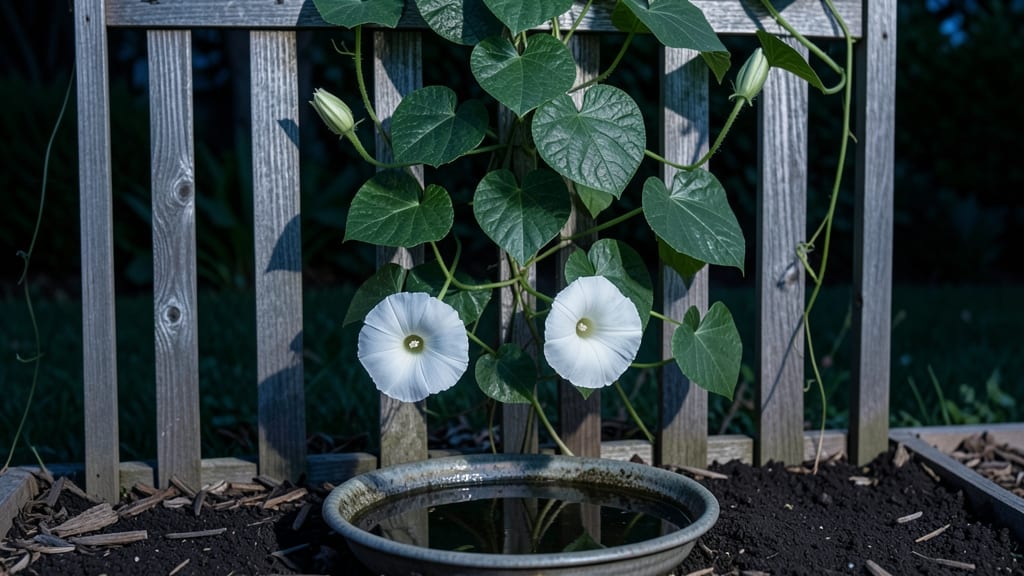
Moon flowers glow like lanterns in the dark—this is the night-blooming magic that transforms your garden into a twilight wonderland. ✨ I’ve seen them light up summer evenings, their pale, waxy petals catching the moonlight and turning ordinary backyards into dreamy escapes.
The secret isn’t just planting them; it’s positioning them where their glow becomes the centerpiece, like a halo over a patio or a shimmer along a garden path.
Their luminous beauty works best near reflective surfaces—water features, stone pathways, or even a simple whitewashed fence. Pair them with silver foliage plants like lamb’s ears or dusty miller to amplify the glow, and add soft solar-powered path lights to create a layered effect.
The result? A garden that feels alive after the sun sets, where every step reveals new pockets of moonlight.
Imagine strolling through your yard at dusk, surrounded by these ethereal blooms opening one by one as night falls. The scent is light and sweet, like a whisper of jasmine, while the visual impact is pure enchantment—perfect for romantic evenings, quiet meditation, or simply unwinding under the stars.
This is gardening for the soul, not just the eyes.
Whether you’re designing a full moon garden or just adding a few vines to a trellis, the key is placement and companions. Moon flowers thrive in warm climates but can be grown as annuals in cooler zones, so don’t let your location hold you back.
The glow is the reward, and it’s worth every bit of planning.
📚 In This Guide
- What you need
- Instructions
- Tips and common mistakes
- Wrapping up and next steps
What you need
- ● Moonflower seeds (Ipomoea alba) – 10–20 seeds (ensure they’re organic or non-GMO for best results).
- ● Well-draining potting mix – 2–3 bags (10–15 quarts each), preferably a blend for flowering plants.
- ● Containers or garden bed – 5–10-inch pots (for seedlings) or a sunny garden spot with loose soil.
- ● Slow-release fertilizer – 1–2 packets (10–20 lb), like 10-10-10 or a bloom-boosting formula.
- ● Compost or worm castings – 1–2 cups per pot or garden bed to enrich soil.
- ● Watering can or hose with a gentle spray nozzle – For even moisture without disturbing seeds.
- ● Garden trowel or hand shovel – For planting seeds at the right depth.
- ● Plant labels – 10–20 labels to track varieties (moonflowers are fast-growing!).
- ○ Trellis or stakes (4–6 feet tall) – Optional but recommended for vertical growth.
- ○ Black plastic mulch or landscape fabric – Optional to suppress weeds and retain warmth.
- ○ Glow-in-the-dark paint or reflective markers – Optional for adding extra magic to your display!
How to create a moonlit display with glowing moonflowers
Transform your garden into a twilight sanctuary with these easy steps.
🌱 Step 1: Choose the Right Moonflower Varieties
Moonflowers (Ipomoea alba) are your best bet for a glowing nighttime display. Look for varieties like 'Moonlight' or 'Starlight'—they open their large, pale white blooms only after sunset, revealing their luminous centers that glow softly under moonlight. Plant them in a spot where they'll receive 6-8 hours of sunlight daily—this ensures strong stems and abundant blooms.
Here's the thing—moonflowers are annuals, so you'll need to replant each spring. But they grow fast, reaching 6-10 feet in a single season, so they're worth the effort. I always plant mine along fences or trellises to maximize their vertical growth and create a dramatic backdrop for evening gatherings.
☀️ Step 2: Plant in Well-Draining Soil with Full Sun
Moonflowers thrive in loose, well-draining soil with a slightly acidic to neutral pH (6.0-7.0). Amend heavy clay soil with 2-3 inches of compost to improve drainage and fertility. These vines are heavy feeders, so mix in a balanced, slow-release fertilizer (like 10-10-10) at planting time to give them a strong start.
Dig a hole twice as wide as the root ball but only as deep. Gently remove the plant from its container, loosen the roots if they're circling, and place it in the hole so the top of the root ball sits just below soil level. This prevents rot while encouraging strong stem growth. Water deeply right after planting to settle the soil around the roots.
💧 Step 3: Water Deeply and Train the Vines
Moonflowers need consistent moisture—about 1 inch of water per week, either from rainfall or irrigation. Water deeply 2-3 times per week during dry spells, focusing on the base of the plant rather than the leaves to prevent fungal diseases. You'll know moisture is right when the top 2 inches of soil feel damp but not soggy.
As the vines grow, gently guide them onto a trellis or fence using soft plant ties. Don't let them sprawl—this encourages leggy growth and fewer blooms. I like to train them in a spiral pattern up the trellis for a full, lush look. Once the vines reach the top, they'll naturally start trailing downward, creating a stunning cascade of glowing blooms.
✂️ Step 4: Prune for Longer Blooming and Deadhead Regularly
To keep your moonflowers blooming all summer, pinch back the tips of new growth when they're about 12 inches tall. This encourages bushier plants with more flowers. Real talk: I used to skip this step, and my vines grew tall but skinny with sparse blooms. Pinching makes a huge difference!
Deadhead spent blooms daily during peak bloom season (late summer to early fall). Simply twist the flower off by hand—no need for pruners. This redirects the plant's energy into producing new blooms instead of setting seed. Watch for buds forming in the evening; these will open into your glowing nighttime display.
🌿 Step 5: Extend the Glow with Strategic Lighting
For an extra magical effect, add solar-powered string lights or LED uplighting near the base of the trellis. These accentuate the moonflowers' natural glow without disturbing their nocturnal bloom cycle. I like to use warm white lights (2700K) to mimic moonlight and create a soft, ethereal ambiance.
Here's where it gets fun—time your lighting to turn on just as the flowers begin to open, around 8:00-9:00 PM. The combination of natural moonlight and artificial light will make your garden look like a fairyland. Just avoid overhead lighting, which can interfere with the flowers' natural opening and closing rhythm.
Tips & tricks for perfect moonlit moonflower displays
Creating a magical moonflower display takes more than just planting seeds—here's what I've learned to make the most of these enchanting vines.
Sunlight Secret: Those 6-8 hours of daily sunlight in Step 1 are non-negotiable for strong stems and abundant blooms. I've found that morning sun (6 AM to noon) works best for my garden—it gives the vines energy without overheating them in the afternoon. If you're in a hot climate, provide afternoon shade to prevent wilting while still getting full sun exposure.
Soil Prep Strategy: For the 2-3 inches of compost mentioned in Step 2, I recommend mixing in 1 part worm castings with the compost for extra nutrients. This helps the moonflowers thrive as heavy feeders. Also, test your soil pH before planting—if it's too acidic, add crushed limestone to bring it up to that 6.0-7.0 range for optimal growth.
Watering Wisdom: The 1 inch of water per week guideline works well, but I've discovered a better approach: water in the morning (before 10 AM) to prevent fungal issues. Use a soaker hose to deliver water directly to the base—this keeps leaves dry and reduces disease risk. During extreme heat, I increase to 2-3 times per week to maintain that damp but not soggy top 2 inches of soil.
Lighting Timing: For that magical 8:00-9:00 PM lighting effect in Step 5, I recommend using a smart plug for your string lights. Set them to turn on automatically when the sun sets—this ensures perfect timing every night. Avoid blue-tinted lights; they can interfere with the flowers' natural opening cycle. Warm white (2700K) lights mimic moonlight beautifully and enhance the ethereal glow.
Pro Tips for Moon Flower Glowing
- Creating a magical moonflower display takes more than just planting seeds—here's what I've learned to make the most of these enchanting vines.
- Sunlight Secret: Those 6-8 hours of daily sunlight in Step 1 are non-negotiable for strong stems and abundant blooms.
- Soil Prep Strategy: For the 2-3 inches of compost mentioned in Step 2, I recommend mixing in 1 part worm castings with the compost for extra nutrients.
Frequently asked questions
Got questions about cultivating your own moon flower glowing nighttime spectacle? Here are some of the most common queries—and their answers—to help you glow up your garden after dark!
Why doesn’t my moon flower bloom at night?
Moon flowers (Ipomoea alba) typically bloom in response to light, not darkness. They open in the evening when natural light dims (around twilight) and close by mid-morning. If they’re not blooming, check for overwatering (root rot stunts growth) or insufficient sunlight during the day (they need 6+ hours). A south-facing trellis or bright indoor grow lights can help!
How long does a moon flower’s glow last?
The "glow" isn’t actual bioluminescence—it’s a reflective, silvery-white hue that shimmers under moonlight or artificial light. Individual blooms last 1–2 nights before wilting, but new flowers open daily. For a continuous display, plant multiple vines or choose fast-growing varieties like Ipomoea alba ‘Moonlight’.
Can I grow moon flowers indoors?
Yes! Use a large container with drainage and place it near a sunny window (south-facing is ideal). Supplement with a grow light (12–14 hours/day) to mimic outdoor conditions. However, indoor vines may grow leggy—prune regularly and train them on a small trellis or fence. Humidity helps too (mist leaves occasionally or use a pebble tray).
What’s eating my moon flower leaves?
Common pests include aphids, spider mites, and slugs. For aphids, spray with neem oil or insecticidal soap. Slugs? Set up beer traps or diatomaceous earth around the base. If leaves look chewed, check for caterpillars (handpick them or use Bt spray). Always inspect undersides of leaves for early signs!
Are there alternatives to moon flowers for night blooms?
Try these night-blooming stars:
- Night-blooming jasmine (Cestrum nocturnum): Fragrant white flowers that open at dusk.
- Evening primrose (Oenothera spp.): Pale yellow blooms with a citrusy scent.
- Angel’s trumpet (Brugmansia): Dramatic, trumpet-shaped flowers (toxic—wear gloves!).
- Four o’clocks (Mirabilis jalapa): Colorful, vibrant blooms that open in late afternoon.
For a glowing effect, pair with white or silver foliage plants like dusty miller (Jacobaea maritima) or lamb’s ears (Stachys byzantina).
Wrapping up and next steps
The moonflower’s ethereal glow isn’t just a nighttime spectacle—it’s a reminder of nature’s quiet magic and the beauty of patience. Whether you’re cultivating your own or simply admiring one, this enchanting bloom invites you to slow down and appreciate the unseen wonders around you. 🌙✨
Ready to bring this twilight charm into your life? Start by planting a moonflower seed or visiting a local nursery to find one. Every garden deserves a touch of its glowing mystery!