
Flowers
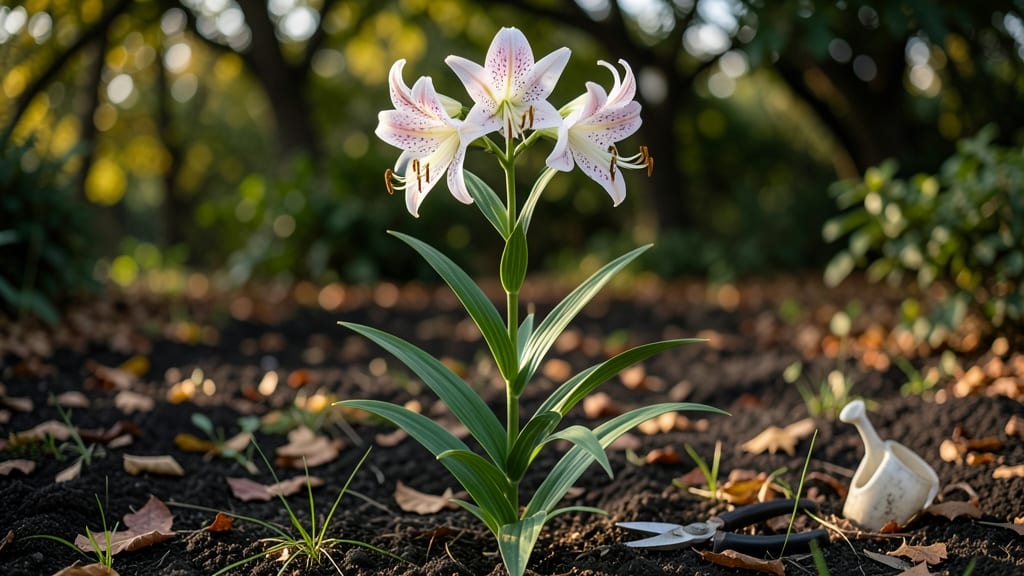
The lily with trumpet-shaped flowers, like Lilium regale—those velvety blooms—bring a bold, honey-sweet fragrance that transforms Pacific Northwest gardens into summer sanctuaries. 🌿 I’ve grown them for years, and their towering stems (up to 6 feet) make them the star. of shady borders.
The secret? They thrive in moist, well-draining soil and partial shade, which is perfect for our rainy climate.
You’ll need rich, organic soil mixed with compost, a spot with morning sun and afternoon shade, and consistent moisture—though they hate soggy roots. Plant bulbs in early fall (October) for spring blooms, and space them 12 inches apart to prevent crowding.
The fragrance alone makes them worth the effort, but their striking height also adds drama to any garden.
Once established, these lilies are low-maintenance—just watch for lily beetles and botrytis blight (remove affected leaves immediately). Deadhead spent blooms to encourage more flowers, and fertilize lightly in spring. By midsummer, your garden will hum with bees and fill with that intoxicating scent that lingers long after sunset.
They’re perfect for woodland gardens, cottage-style borders, or even container growing (use a large pot). With the right care, these trumpets will return year after year, becoming a fragrant centerpiece that neighbors will envy. Ready to grow yours?
📚 In This Guide
- What you need
- Instructions
- Tips and common mistakes
- Wrapping up and next steps
What you need
- ● Trumpet lily bulbs (Lilium regale or similar hybrids): 3–5 bulbs (choose healthy, firm ones with no soft spots).
- ● Well-draining potting mix or garden soil: 1–2 bags (amend with compost for richer nutrients).
- ● Organic fertilizer (balanced 10-10-10 or bulb-specific): 1 small bag (follow label for application rates).
- ● Mulch (pine bark or straw): 1–2 inches (to retain moisture and regulate soil temp).
- ● Watering can or hose with a gentle spray nozzle: For consistent moisture without over-saturating.
- ● Garden trowel or bulb planter: For digging holes (6" deep, 12" apart for spacing).
- ○ Gloves (optional but recommended): To protect hands from soil and sharp bulb edges.
- ● Pruners or shears: For trimming dead foliage post-bloom (sterilize with rubbing alcohol).
- ○ Stakes or supports (optional): Tall lilies may need light staking (bamboo or floral wire).
- ○ pH testing kit (optional): Ideal soil pH: 6.0–7.0 (trumpet lilies prefer slightly acidic to neutral).
- ● Sunlight: Full sun (6+ hours/day) or partial shade (morning sun + afternoon shade in hot climates).
- ● Water access: Consistent moisture (but avoid waterlogged soil—these lilies hate soggy roots!).
- ● Patience: Bulbs take 2–3 months to establish; blooms appear in late summer/early fall.
- ● Pacific Northwest climate advantage: Cool summers and mild winters create perfect conditions—minimal extra care needed!
Step-by-step instructions for cultivating trumpet lilies in the Pacific Northwest
Here's how to grow these showstopping blooms with minimal fuss—perfect for your climate.
🪴 Step 1: Choose the Right Location and Prepare the Soil
Trumpet lilies thrive in partial shade to full sun, but in the Pacific Northwest's cooler summers, morning sun with afternoon shade prevents scorching. I always pick a spot with well-draining soil—these bulbs rot quickly if their feet stay wet. If your garden soil is heavy clay, mix in 3-4 inches of compost and a handful of perlite per planting hole to improve aeration.
Test your soil's moisture retention by squeezing a handful—if it forms a tight ball, amend it. Trumpet lilies prefer slightly acidic to neutral soil (pH 6.1-7.0). A simple soil test kit (available at garden centers) confirms your pH before planting. If needed, adjust with sulfur (for high pH) or lime (for low pH) according to the kit’s instructions.
🌱 Step 2: Plant Bulbs at the Correct Depth and Spacing
Timing matters: Plant bulbs in early fall, about 6-8 weeks before the first frost, so roots establish before winter. Dig holes twice as deep as the bulb’s height (usually 6-8 inches deep) and 12 inches apart—crowding leads to weak stems and fewer blooms. I like to add a small handful of bone meal to each hole for phosphorus, which encourages strong root growth.
Place the bulb with its pointy end up (the roots will radiate downward naturally). Cover with soil, then water deeply to settle everything. Mulch with 2-3 inches of shredded bark to insulate roots in winter and retain moisture in summer. Avoid organic mulches like straw—they decompose too quickly and can smother emerging shoots.
☀️ Step 3: Water and Fertilize for Strong, Fragrant Blooms
Water deeply once a week during the first growing season, aiming for 1 inch of water per week. Trumpet lilies are drought-tolerant once established, but they need consistent moisture to develop sturdy stems. You’ll know you’re nailing it when the soil feels damp 2 inches down—stick your finger in to check. Overwatering is the #1 killer, so always ensure pots or beds have proper drainage.
Fertilize lightly in early spring with a balanced 10-10-10 formula (use ½ teaspoon per bulb). Skip high-nitrogen feeds—they promote leafy growth at the expense of flowers. Once blooms appear, switch to a low-nitrogen, high-phosphorus fertilizer (like 5-10-10) to support flowering. Stop fertilizing after mid-summer to let the plant prepare for dormancy.
✂️ Step 4: Prune and Maintain for Longevity
Deadhead spent blooms by snipping stems at the base with clean pruners—this redirects energy to next year’s flowers and keeps the plant tidy. Wait until after the first frost to cut back foliage entirely. Never remove leaves before they yellow naturally; they feed the bulb for next season’s growth.
Divide clumps every 3-4 years in early fall to prevent overcrowding. Dig up bulbs, separate offsets, and replant immediately. Discard any bulbs that feel soft or mushy—these are diseased. Store healthy divisions in a cool, dry place until replanting. In the Pacific Northwest, trumpet lilies often naturalize, so you’ll likely have more bulbs than you started with!
⏰ Step 5: Protect from Common Pacific Northwest Challenges
Watch for vine weevils, which chew on leaves and burrow into bulbs. Handpick larvae (they’re gray and C-shaped) or use neem oil spray as a preventive. Slugs are another menace—set out beer traps (a shallow dish of beer) near plants to lure them away. If your garden stays damp, raise beds slightly or plant in containers with extra drainage holes.
In colder microclimates, add an extra 2 inches of mulch in late fall to shield bulbs from freeze-thaw cycles. Trumpet lilies are hardy to USDA Zone 3, but they’ll reward you with bigger blooms if you give them consistent winter protection. With these steps, your trumpet lilies will return year after year, filling your garden with their intoxicating fragrance.
Tips & tricks for perfect trumpet lily cultivation
These insider strategies will help your trumpet lilies thrive with minimal effort—especially in our Pacific Northwest climate.
Soil Test Tip: If your soil test reveals a pH outside the 6.1-7.0 range, don't panic—small adjustments make all the difference. For every 100 square feet of garden, spread 5 pounds of elemental sulfur for every 1 point below 6.1, or 20 pounds of ground limestone for every 1 point above 7.0. Re-test after 2-3 months to confirm your adjustments worked. The right pH prevents nutrient deficiencies that stunt flower production.
Planting Precision: When digging those 6-8 inch deep holes, use a bulb planter or even a large can to create perfectly sized holes. This consistency prevents uneven planting depths that cause weak stems. I've found that adding a handful of coarse sand to the bottom of each hole improves drainage in heavier soils—just don't skip the bone meal in the instructions, as that phosphorus boost is what gets those fragrant blooms reaching for the sky.
Watering Wisdom: The "1 inch per week" guideline works, but here's the secret: water in the morning so foliage dries quickly. Wet leaves overnight invite fungal diseases, particularly in our damp Pacific Northwest summers. I use a rain gauge to track weekly rainfall—if we get 1 inch naturally, I skip the watering that week entirely. This prevents both under- and overwatering, which are the two biggest threats to trumpet lilies.
Winter Protection Hack: For those extra-cold microclimates, create a mulch volcano around each plant in late fall. Pile shredded bark mulch higher in the center (3-4 inches) and taper it down to 1-2 inches at the edges. This creates an insulating dome that protects bulbs from freeze-thaw cycles. In particularly harsh winters, add a layer of evergreen boughs on top—they act as a snow blanket that maintains steady ground temperatures.
Pro Tips for Lily With Trumpet Shaped Flowers
- These insider strategies will help your trumpet lilies thrive with minimal effort—especially in our Pacific Northwest climate.
- Soil Test Tip: If your soil test reveals a pH outside the 6.1-7.0 range, don't panic—small adjustments make all the difference.
- Planting Precision: When digging those 6-8 inch deep holes, use a bulb planter or even a large can to create perfectly sized holes.
Frequently asked questions
Got questions about growing or caring for lilies with trumpet-shaped flowers?
You’re not alone! Here are answers to the most common queries—from planting tips to troubleshooting—to help your garden bloom beautifully.
What’s the best time to plant trumpet lilies in the Pacific Northwest?
Plant trumpet lilies (like Lilium regale or Lilium longiflorum) in early spring (March–April) or early fall (September–October). The PNW’s mild, wet winters mean bulbs can rot if planted too late. Choose a spot with well-draining soil and partial shade to mimic their native woodland habitats.
How often should I water trumpet lilies, and do they need special care?
Water deeply but infrequently—about 1–1.5 inches per week, letting the soil dry slightly between waterings. Once established, they’re drought-tolerant but hate soggy roots. Mulch with organic matter (like shredded bark) to retain moisture and protect bulbs. No fertilizer is needed unless soil is poor; use a balanced bloom booster in early spring.
Are trumpet lilies prone to pests or diseases? How do I prevent problems?
Yes! Lily beetles and aphids love them, plus fungal diseases (like botrytis) thrive in damp conditions. Prevent issues by:
- Spraying neem oil in early summer to deter beetles.
- Avoiding overhead watering to reduce fungal risk.
- Removing spent blooms and deadheading to improve airflow.
Can I grow trumpet lilies in containers? What’s the best setup?
Use a large container (at least 12 inches deep) with fast-draining mix (cactus soil + perlite). Plant 2–3 bulbs per pot for a dramatic display. Terracotta pots work well—they wick away excess moisture. Place containers in morning sun/afternoon shade and fertilize lightly every 4–6 weeks during bloom season.
Do trumpet lilies come back every year, or are they annuals?
Most trumpet lilies are perennial in the PNW’s USDA Zones 4–9, returning year after year if given proper care. However, Lilium longiflorum (Easter lily) is often grown as an annual in cooler climates. Pro tip: Divide clumps every 3–4 years in early spring to rejuvenate blooms and prevent overcrowding.
What are some fragrant alternatives to trumpet lilies for PNW gardens?
If you love the sweet, intoxicating scent but want variety, try:
- Stargazer lilies – Bold fragrance, orange-red blooms, and heat tolerance.
- Clematis – Vining, fragrant varieties like Clematis ‘Jackmanii’ pair well with lilies.
- Peony – Paeonia lactiflora offers rosy-scented blooms and thrives in PNW shade.
- Daffodils (Narcissus) – Early spring fragrance and deer-resistant.
Wrapping up and next steps
Growing a lily with trumpet-shaped flowers in your Pacific Northwest garden is a rewarding way to add bold beauty and intoxicating fragrance to your outdoor space.
Whether you’re drawn to the elegant Lilium regale or the striking Lilium longiflorum, these plants thrive with the right care—think well-draining soil, consistent moisture, and a sunny spot. Their resilience and show-stopping blooms make them a standout choice for any gardener!
Ready to transform your garden? Start by selecting your favorite trumpet lily variety and follow the steps above to give it the perfect home. Soon, you’ll be enjoying a fragrant, vibrant centerpiece that turns heads—and fills the air with sweetness! 🌸✨