
Planting
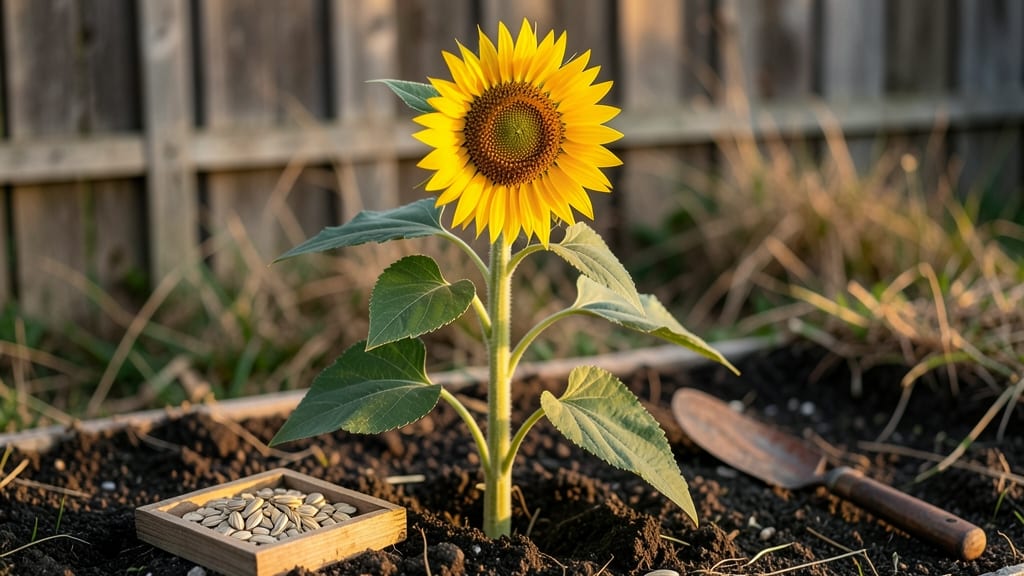
Planting two sunflower seeds per hole is the golden rule for most varieties—though I learned the hard way that giant sunflowers need their own space. 🌻 The key lies in matching seed count to mature plant size: dwarf types can handle three seeds per hole, while mammoth varieties need their own 12-inch-deep holes to avoid competition.
Depth matters just as much as spacing—plant seeds 1 inch deep in well-drained soil, and you’ll see those first leaves breaking through in about a week. Too shallow, and they dry out; too deep, and they struggle to reach sunlight.
My first attempt with seeds buried 2 inches too deep resulted in leggy, weak stems that never bloomed properly.
What you’ll end up with is sunflowers that reach their full potential—towering stems with vibrant blooms that attract pollinators all summer. Proper spacing also means fewer pests and better airflow, so you skip the fungal issues that plague crowded plantings.
The payoff? A garden that feels like a sunflower forest, not a tangled mess.
This method works for both backyard plots and container gardens—just adjust hole size and spacing to match your growing space. Whether you’re planting in spring or late summer, these simple adjustments guarantee stronger stems and bigger blooms. Ready to grow sunflowers that turn heads?
📚 In This Guide
- What you need
- Instructions
- Tips and common mistakes
- Wrapping up and next steps
What you need
- ● Sunflower seeds: Choose heirloom or hybrid varieties (e.g., ‘Mammoth’ or ‘Autumn Beauty’). Buy 1–2 lbs (450–900g) for a small garden or 5+ lbs (2.3+ kg) for larger plots.
- ● Garden soil or potting mix: Well-draining, loamy soil enriched with compost (2–3 inches mixed in) or a balanced fertilizer (10-10-10 ratio).
- ● Watering can or hose: With a gentle spray nozzle to avoid displacing seeds.
- ● Garden trowel or hand shovel: For digging holes 1–2 inches deep.
- ● Measuring tape or ruler: To space seeds 6–12 inches apart (adjust based on variety).
- ○ Garden twine or stakes (optional but helpful): For marking rows if planting in large quantities.
- ● Mulch: Straw or shredded leaves to retain moisture and suppress weeds.
- ● Plant labels: To track varieties if growing multiple types.
- ● Seedling heat mat (for indoor starts): If germinating seeds early in cool climates.
- ● Organic pest deterrent: Like neem oil or row covers for slug/snail protection.
- ● Knee pads or gloves: For comfort during planting!
Step-by-step instructions for planting sunflower seeds with perfect spacing
Here's how I ensure each sunflower gets room to grow—no crowding, no wasted seeds.
🌱 Step 1: Choose the Right Seed Depth and Hole Size
Sunflower seeds need 1 inch of soil coverage for strong germination. Use your finger to poke a hole about 1.5 inches deep—this gives roots room to anchor without burying the seed too deeply. I always press the hole gently with my thumb first to loosen compacted soil.
If your soil feels hard, add a pinch of compost to the hole before planting. The seed should sit at the bottom with space above it for roots to expand downward. Real talk: planting too shallow risks drying out the seed before it sprouts.
🌿 Step 2: Plant 2-3 Seeds Per Hole for Guaranteed Growth
Drop 2-3 seeds per hole to ensure at least one strong sprout. I tap the seed packet gently to release seeds one at a time—planting too many in one hole leads to weak, crowded seedlings. Space holes 6 inches apart for standard varieties or 12 inches apart for giant sunflowers.
Cover the seeds with soil, then pat lightly to settle them. Don't overpack—you want air pockets for roots to push through. Water gently until the soil looks evenly moist but not soggy. Here's the thing—if you see water pooling, your hole was too deep.
☀️ Step 3: Thin Seedlings to One Strong Stem
Once seedlings reach 2-3 inches tall (about 2-3 weeks after planting), thin to the strongest sprout per hole. Gently grasp the weaker stems at the base and pull upward—don't twist, or you'll damage the remaining plant. I use small scissors for stubborn roots to avoid disturbing the soil.
Thinning might seem cruel, but crowded sunflowers grow leggy and produce fewer blooms. Watch for deep green leaves and thick stems—those are your winners. If you see pale, stretched seedlings, they need more light or thinning.
💧 Step 4: Monitor Spacing as Plants Mature
Sunflowers need 2-3 feet of space by full maturity. If you planted too closely, gently transplant the largest seedlings to new holes 12 inches away from the original spot. Do this when plants are 4-6 inches tall—they'll recover quickly.
Mulch around the base with 2 inches of organic mulch to retain moisture and prevent weeds from competing. You'll know spacing is perfect when leaves don't touch between plants and stems stand upright without leaning.
Tips & tricks for perfect sunflower spacing
A few simple tricks will help you avoid common mistakes and grow sunflowers that reach their full potential.
Soil Preparation Tip: Before planting, loosen the soil around each hole with your finger or a small trowel—this creates better root pathways. I find that adding a pinch of compost to the bottom of each 1.5-inch-deep hole gives seedlings a nutrient boost right from the start. This extra step prevents weak stems that can't support towering blooms later. The key is gentle pressure—you want fluffy soil, not compacted dirt.
Seedling Survival Strategy: Planting 2-3 seeds per hole as instructed ensures you'll have at least one strong sprout, but here's what nobody tells you—place the seeds about 1 inch apart within the same hole. This creates a natural competition that weeds out weaker seedlings early, leaving only the strongest to thrive. You'll know you've done it right when you see just one vigorous sprout emerging from each hole.
Thinning Technique: When thinning seedlings to one strong stem at the 2-3 inch mark, use a pair of clean scissors rather than pulling by hand. The clean cut prevents damage to neighboring roots and reduces the risk of disease. I've found that thinning in the early morning gives plants time to recover before evening temperatures drop. Watch for the seedling with the deepest green leaves and thickest stem—this is your winner.
Mulching Secret: After transplanting seedlings to their final 12-inch spacing, apply your 2 inches of organic mulch in a donut shape around each plant, leaving a 2-inch gap at the base. This prevents soil-borne diseases while retaining moisture. The mulch also acts as a natural weed barrier, giving your sunflowers an unobstructed path to reach their full 2-3 foot height potential.
Pro Tips for How Many Sunflower Seeds To Plant Per Hole
- A few simple tricks will help you avoid common mistakes and grow sunflowers that reach their full potential.
- Soil Preparation Tip: Before planting, loosen the soil around each hole with your finger or a small trowel—this creates better root pathways.
- Seedling Survival Strategy: Planting 2-3 seeds per hole as instructed ensures you'll have at least one strong sprout, but here's what nobody tells you—place the seeds about 1 inch apart within the same hole.
Frequently asked questions
How deep should I plant sunflower seeds?
Plant sunflower seeds about 1 inch deep in well-drained soil. Press the soil gently around the seeds to ensure good contact. Deeper planting can delay germination, while shallow planting may dry them out. Pro tip: Use your finger to create a small trench for easier placement!
When is the best time to plant sunflower seeds?
Sunflowers thrive in warm soil, so plant them after the last frost when temperatures consistently stay above 50°F (10°C). For most climates, this means mid-to-late spring. If you’re in a warm region, you can even plant in early spring or fall for a second harvest!
Can I plant more than one seed per hole?
Yes, but thin them out! Plant 2-3 seeds per hole if you’re okay with extra work, then remove the weakest seedlings once they sprout. Alternatively, plant 1-2 seeds per hole for less thinning. Just ensure holes are 6-12 inches apart to avoid overcrowding.
How do I protect sunflower seeds from birds?
Birds love sunflower seeds! Cover newly planted seeds with row covers or netting until they sprout. You can also try planting in less visible areas or using bird repellent sprays (like hot pepper spray) as a last resort. Fun fact: Birds may still visit—but they’ll help pollinate!
What if my sunflowers aren’t germinating?
Check these common issues:
- Cold soil: Wait for warmer temperatures (above 50°F).
- Too deep: Sunflower seeds need light to germinate—plant them no deeper than 1 inch.
- Dry soil: Keep the soil moist but not soggy until sprouts appear (usually 7-14 days).
- Old seeds: Use seeds from the current year for best results.
Wrapping up and next steps
Planting sunflowers is a rewarding journey, and getting the spacing right is key to those majestic, towering blooms you dream of! 🌻 Whether you’re growing them for beauty, bird feed, or even edible seeds, remember: 2-3 seeds per hole (thinned later) is your best bet for healthy, well-spaced plants.
With the right tools, patience, and a little sunshine, you’ll be enjoying a sunflower spectacle in no time.
Ready to dig in? Grab your gloves, mark those rows, and let your garden become a vibrant canvas of golden sunshine! 🌱 Start planting today—your future sunflowers will thank you!