
Flowers
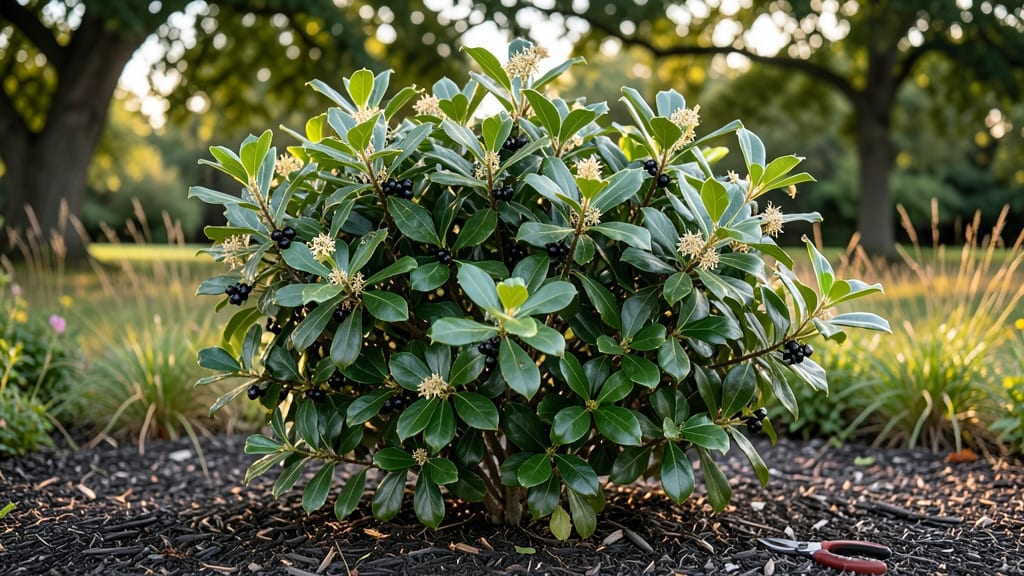
Growing inkberry holly flowers (Ilex glabra) means adding a tough, berry-producing evergreen that thrives in the Pacific Northwest’s damp winters and shady spots. 🌿 I’ve watched mine survive years of neglect, rain, and even deer nibbles—it’s the kind of plant that rewards patience with glossy foliage, delicate white blooms in spring, and clusters of dark purple berries that birds adore.
The key? Mimicking its native wetland habitat without overcomplicating care.
The secret to success starts with the right site: partial shade to full sun works, but inkberry truly shines in morning light with afternoon shade—perfect for understory plantings or woodland garden edges. Your soil should drain well but stay moist, so amend heavy clay with compost or leaf mold.
Water consistently the first year, then let nature take over; this plant hates soggy roots but thrives on regular moisture. Mulch helps retain humidity and keeps weeds at bay.
By late spring, you’ll spot clusters of small white flowers that transform into those glossy berries, though female plants need male companions for fruit. Prune lightly in late winter to shape the shrub, removing only dead or crossing branches—never cut into old wood, or you’ll stunt new growth.
The berries stay on the branches through winter, offering year-round interest and a food source for wildlife. Even in Zone 5, mine stays evergreen with minimal fuss.
Common mistakes? Overwatering in summer or planting in full sun without afternoon shade. Inkberry’s slow growth means it tolerates pruning errors, but rushing the process leads to leggy, sparse shrubs. Give it space—these plants can reach 6–10 feet tall and wide—and they’ll repay you with decades of low-maintenance beauty.
Start with a single plant, then add a male pollinator nearby for berries.
📚 In This Guide
- What you need
- Instructions
- Tips and common mistakes
- Wrapping up and next steps
What you need
- ● Inkberry holly plants: Choose between: 1–3 bare-root seedlings (for transplanting)
- ● 1–2 container-grown saplings (3–5 gallons, 1–2 feet tall)
- ● Seeds (if starting from scratch—note: slower growth!)
- ● Well-draining soil: Mix 1 part native soil with 1 part compost or peat moss (pH 5.0–6.5). For containers, use a chamomile or acid-loving plant mix.
- ● Mulch: 3–4 inches of pine bark, wood chips, or shredded leaves (helps retain moisture and acidify soil).
- ● Fertilizer: Slow-release acid fertilizer (e.g., 10-10-10 or 16-4-8) for planting.
- ● Organic options: Cottonseed meal or fish emulsion (apply in early spring).
- ● Watering tools: Hose with soaker nozzle or drip irrigation kit (for deep, consistent watering).
- ● Watering can (for container plants).
- ● Garden tools: Trowel or hand shovel (for digging holes).
- ● Pruners or bypass shears (sterilized with rubbing alcohol).
- ● Garden gloves (to protect from thorns!).
- ● For containers: 1–2 large pots (15–20 gallons, with drainage holes).
- ● Gravel or ceramic pebbles (for drainage layer at the bottom).
- ○ Optional but helpful: pH test kit (to monitor soil acidity).
- ● Mulch volcano protector (to keep mulch away from the trunk).
- ● Epsom salt (for magnesium boost if leaves yellow).
- ● Location: Partial shade to full sun (morning sun + afternoon shade works best in the PNW). Avoid harsh afternoon sun.
- ● Climate: Hardy in USDA Zones 5–9 (perfect for the Pacific Northwest!).
- ● Timing: Best planting time: Early spring or fall (avoid summer heat).
- ● For seeds: Stratify in the fridge for 60–90 days before sowing.
- ● Patience: Inkberry holly grows slowly—expect 1–2 feet of growth per year!
Step-by-step instructions for planting and caring for inkberry holly
Here's how to establish this Pacific Northwest favorite with minimal fuss.
🌱 Step 1: Choose the Perfect Location for Year-Round Beauty
Inkberry holly thrives in partial shade to full sun—the key is protecting it from harsh afternoon sun in hotter microclimates. Look for spots with 4-6 hours of morning light and dappled shade from late afternoon through evening. This evergreen stays lush year-round, so avoid low-lying areas where cold air pools in winter.
Test your site by observing how sunlight moves across it during a typical day. The ideal location will have moist, well-draining soil that stays slightly damp but never soggy. If your yard has heavy clay, amend with 2-3 inches of compost mixed into the top 12 inches of soil before planting. This improves drainage while retaining moisture.
🪴 Step 2: Plant at the Right Time and Depth
Spring or early fall are the best times to plant inkberry holly in the Pacific Northwest. Avoid planting in late fall or winter when roots can't establish before cold sets in. Dig a hole twice as wide as the root ball but only as deep—the top of the root ball should sit level with the surrounding soil when finished.
Gently remove the plant from its container and loosen any circling roots with your fingers. Place it in the hole, backfill with native soil, and water deeply to settle everything. The hole should accommodate 4 plants spaced 6-8 feet apart for a natural hedge or screen. Press the soil lightly around the base but don't compact it—you want air pockets for root expansion.
☀️ Step 3: Water and Mulch for First-Year Establishment
Water deeply once a week for the first 12 months after planting, providing 1-2 gallons per plant each time. You'll know you've watered enough when the soil 1-2 inches down feels moist but not saturated. Overwatering is the biggest mistake here—inkberry holly roots rot easily in soggy conditions.
Spread 2-3 inches of mulch (wood chips or shredded bark work best) over the root zone, keeping it 2 inches away from the trunk to prevent moisture buildup. This mulch layer helps retain soil moisture, suppresses weeds, and protects roots from temperature swings. Replenish mulch annually as it breaks down—never let it pile up against the trunk.
✂️ Step 4: Prune for Shape and Health
Light pruning in late winter or early spring keeps inkberry holly dense and tidy. Remove any dead, damaged, or crossing branches first—they can harbor pests or diseases. Then, shape the plant by cutting back overly long branches to maintain your desired form, whether that's a hedge, shrub, or screen.
Use clean, sharp pruners to make cuts just above a leaf node or bud. Never remove more than one-third of the plant's foliage in a single season—this evergreen recovers slowly from heavy pruning. You'll see new growth emerge within 4-6 weeks of pruning, signaling the plant is responding well.
Tips & tricks for perfect inkberry holly planting
Between us, these little details make all the difference when growing your Pacific Northwest evergreen standout.
Sunlight Strategy: I learned this the hard way after watching my first inkberry holly struggle in full afternoon sun. The key is that 4-6 hours of morning light is ideal—this gives the plant energy without the stress of hot afternoon rays. If your yard gets intense afternoon sun, consider planting near a north-facing wall or under taller deciduous trees that provide shade during peak heat hours.
Soil Prep Secret: That 2-3 inches of compost mixed into the top 12 inches of soil isn't just about drainage—it's about creating the perfect moisture sponge. For heavy clay soils common in the PNW, I recommend adding 1 part perlite or coarse sand to every 3 parts compost to prevent compaction. This creates tiny air pockets that roots love while still holding moisture.
Planting Depth Watch: The top of that root ball needs to sit level with the surrounding soil—not buried, not exposed. I've seen gardeners bury plants too deep, which can cause root rot, and others plant too shallow, which leads to drying out. Use a level tool to check—this simple step prevents 90% of early establishment problems.
Mulch Maintenance: That 2-3 inches of mulch you spread isn't a one-time job. I check mine every spring and replenish as needed—especially after heavy rains when it breaks down faster. The 2-inch gap from the trunk is crucial too; piled mulch creates rot-prone conditions. Think of it as your plant's winter blanket that you refresh each year.
Pro Tips for Inkberry Holly Flower
- Between us, these little details make all the difference when growing your Pacific Northwest evergreen standout.
- Sunlight Strategy: I learned this the hard way after watching my first inkberry holly struggle in full afternoon sun.
- Soil Prep Secret: That 2-3 inches of compost mixed into the top 12 inches of soil isn't just about drainage—it's about creating the perfect moisture sponge.
Frequently asked questions
Got questions about growing or caring for inkberry holly flowers? You’re not alone! Here are some of the most common queries from gardeners—especially in the Pacific Northwest—along with quick answers to help you cultivate this hardy evergreen with confidence.
Do inkberry holly flowers require full sun to thrive?
Not necessarily! While they tolerate full sun, inkberry holly (Ilex glabra) thrives in partial shade to full shade, making it perfect for understory planting or shady corners of your yard. In the PNW’s cooler, damp climate, too much direct sun can stress the plant—especially in hotter microclimates like urban areas.
How long does it take for inkberry holly to flower?
Patience pays off! Inkberry holly typically takes 3–5 years to mature enough to produce its small, white, fragrant flowers (usually in late spring to early summer). Young plants focus on root and foliage growth first. For faster results, choose established nursery plants labeled as "flowering size."
Are inkberry holly flowers attractive to pollinators?
The tiny, 4-petaled white flowers are a magnet for bees, butterflies, and hummingbirds—especially in early summer when other blooms may be scarce. The berries that follow (though not edible to humans) add another layer of wildlife appeal. Planting inkberry holly supports native pollinator ecosystems in the PNW.
Can inkberry holly survive freezing temperatures, like in the PNW winters?
Yes! One of its biggest perks is cold hardiness (Zones 5–9). Inkberry holly handles frost, snow, and even coastal winds without fuss. In fact, it’s often called the "poor man’s boxwood" because it’s low-maintenance and resilient. Just avoid soggy soil in winter to prevent root rot.
What’s the best alternative if I want berries but no flowers?
If you love the berry-producing holly look but aren’t seeing flowers, try Ilex verticillata (winterberry) or Ilex aquifolium (English holly). Both require a male/female pairing for berries, but they’re more reliable for fruit. Inkberry holly’s berries are decorative but not edible, so focus on its year-round structure and wildlife benefits instead!
Why aren’t my inkberry holly leaves staying green?
Yellowing or browning leaves often signal overwatering, underwatering, or nutrient deficiencies. Check soil moisture—inkberry holly prefers moist but well-draining soil. Amend heavy clay with compost, and fertilize lightly in spring with acid-loving plant food. Fungal issues (like leaf spot) can also strike in humid PNW summers; prune affected areas and improve airflow.
Wrapping up and next steps
Inkberry holly (Ilex glabra) is a resilient, low-maintenance gem that brings year-round beauty to the Pacific Northwest’s gardens—and you’re now ready to grow it with confidence! From its adaptable nature to its stunning evergreen foliage and occasional flowers, this plant is perfect for both beginners and seasoned gardeners.
Whether you’re adding it for wildlife support, privacy, or simply to brighten your landscape, your green thumb is about to shine. 🌿✨
Now that you’re armed with the right tools, tips, and troubleshooting tricks, why not take the next step? Start small:
- Plant a single Inkberry holly in a pot to test your local conditions.
- Share your progress (or questions!) with fellow PNW gardeners online.
- Expand your garden’s diversity—pair it with native companions like Oregon grape or salal for a thriving ecosystem.