
Tools
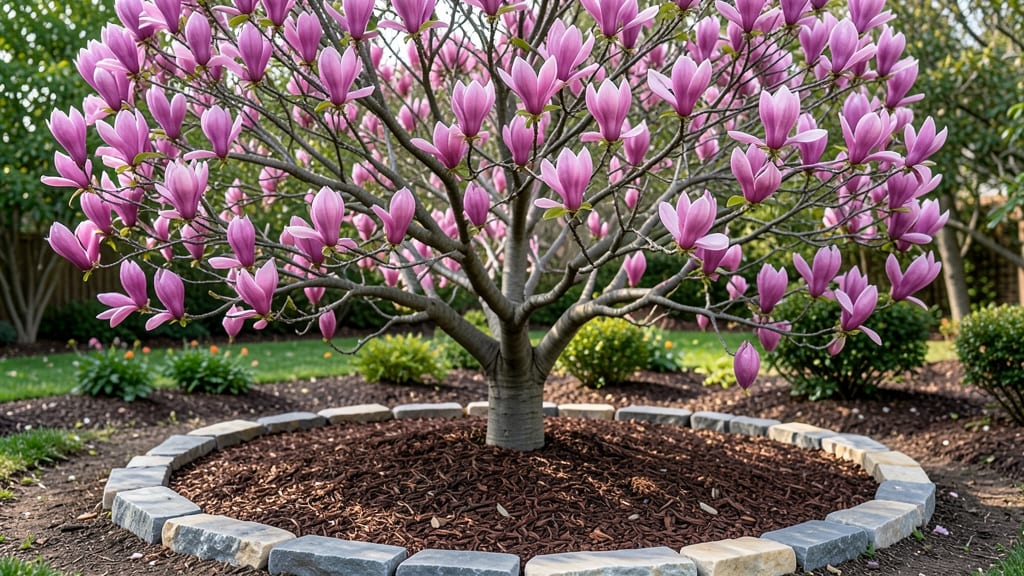
A flower garden around tree transforms bare ground into a lush, ever-changing tapestry that celebrates your tree’s natural beauty. 🌿 I’ve designed mine to bloom from spring’s first daffodils through winter’s frost-kissed berries, using plants that thrive where sunlight dapples through leaves.
The key? Matching flowers to your tree’s shade patterns and root zones—what works under a weeping willow fails miserably beneath a dense oak.
Start with three layers: tall perennials (like hostas or astilbes) at the trunk’s edge, mid-height shrubs (such as hydrangeas or azaleas) for structure, and low-spreading ground covers (like creeping phlox) to fill gaps.
Mulch with 3 inches of wood chips to protect roots and suppress weeds—just keep it 6 inches away from the trunk to avoid girdling. My first attempt used too much mulch and smothered a young maple; lesson learned.
By summer, you’ll have a garden that feels like a secret forest glade, with colors shifting as the tree’s canopy changes. The hostas provide deep green drama, while the azaleas burst with pink in May and the creeping thyme stays fragrant all season.
Even in winter, the dogwood’s bare branches become a sculptural centerpiece framed by evergreen heather. The best part? Your tree stays healthy while the flowers do all the heavy lifting.
This design works for any mature tree—adjust for sun exposure (more sun-lovers near the edges) and soil type (amend heavy clay with compost). The same principles apply whether you’re wrapping a young sapling or sprucing up an old oak.
Ready to turn that bare circle into a showstopper? Let’s get planting.
📚 In This Guide
- What you need
- Instructions
- Tips and common mistakes
- Wrapping up and next steps
What you need
- ● Soil amendments: Compost (5–10 gallons) – improves drainage and nutrient content
- ● Peat moss or coconut coir (2–3 bags) – enhances soil structure
- ● Slow-release fertilizer (10–20 lbs, 10-10-10 NPK ratio) – promotes root growth
- ● Mulch: Organic mulch (pine straw, wood chips, or shredded bark – 2–3 cubic feet)
- ○ Optional: Landscape fabric (for weed suppression, 4’ x 50’ roll)
- ● Plants: Ground cover: Creeping phlox, ajuga, or ivy (5–10 plants)
- ● Shrubs: Dwarf hydrangeas, azaleas, or boxwood (3–5 plants)
- ● Perennials: Hostas, ferns, or heuchera (6–10 plants)
- ● Bulbs: Daffodils, tulips, or crocus (20–30 bulbs for spring color)
- ○ Annuals (optional): Petunias, impatiens, or begonias (10–15 plants for seasonal pops)
- ● Garden shovel or spade (for digging)
- ● Hand trowel (for precision planting)
- ● Pruners (bypass pruners for clean cuts)
- ● Rake (for leveling soil)
- ● Wheelbarrow (for hauling materials)
- ● Garden hose with spray nozzle (for watering)
- ● Measuring tape (to mark planting zones)
- ● Knee pads or gardening stool (for comfort)
- ○ Optional: Soil pH tester (to check acidity/alkalinity)
- ● Healthy, established tree (avoid newly planted or diseased trees)
- ● Clear 3–6 foot radius around the tree trunk (adjust based on tree size)
- ● Well-draining soil (amend if compacted or clay-heavy)
- ● Sunlight assessment (full sun, partial shade, or full shade)
- ● Water source nearby (for post-planting care)
How to create a lush flower garden around your tree
Here's the layered approach I've used to turn bare tree bases into vibrant, low-maintenance displays.
🌱 Step 1: Assess the Tree's Needs and Space
Start by measuring the tree's drip line—the outermost branches—and mark a planting circle that's 1.5 times the tree's diameter from the trunk. This gives roots and flowers enough room to thrive without competing. Look at your tree's leaf type: broadleaf trees cast dense shade, while evergreens create drier, cooler conditions. I always test the soil moisture by digging a 4-inch hole—if it's bone dry after a week, you'll need drought-tolerant plants.
Here's the thing—don't plant too close to the trunk. Keep the outermost layer of flowers at least 2 feet from the trunk to prevent root competition. If your tree has shallow roots (like many fruit trees), increase that distance to 3 feet. Use a 6-inch diameter circle around the trunk for ground covers only—this creates a natural transition zone.
☀️ Step 2: Build Three Planting Layers for Year-Round Interest
Layer 1 is your backdrop—plant 3-4 foot tall perennials like coneflowers or black-eyed Susans at the outer edge of your circle. These handle full sun and provide summer color. Layer 2 is the mid-height zone (18-24 inches) where I tuck in shade-tolerant bulbs like daffodils and ferns for spring and fall interest. The innermost layer (6-12 inches) gets ground covers like creeping phlox or ajuga that suppress weeds and stay green year-round.
I always space plants based on their mature size—12-18 inches apart for perennials, 4-6 inches for bulbs, and 6-12 inches for ground covers. This prevents overcrowding as they fill in. For a 4-foot diameter tree base, you'll need about 12-15 plants total (4 tall, 6 medium, 5 ground covers). Mulch with 2-3 inches of shredded bark after planting to retain moisture and regulate soil temperature.
💧 Step 3: Water and Establish for First Season Success
Water deeply once a week for the first 6-8 weeks after planting, aiming for 1-2 inches of moisture each time. You'll know you've watered enough when the soil feels damp 4 inches down. I use a soaker hose placed at the outer edge of the planting circle to encourage deep root growth. Avoid overhead watering—it wastes water and can spread disease to your tree.
Real talk: The first year is critical. If you see leaves yellowing on your perennials, it's usually a sign of underwatering or poor drainage. Amend the soil with 1-2 inches of compost if your area has heavy clay. After the first season, your garden should need only 1 inch of water per week unless you're in extreme drought conditions.
✂️ Step 4: Maintain Through Seasons for Long-Term Beauty
In early spring, remove any dead foliage from last year and add a 1-inch layer of fresh mulch. This prevents weeds and keeps roots cool. Cut back any perennials that died back completely (like coneflowers) in late winter—you'll see new growth within 2-3 weeks. For evergreen shrubs in the outer layer, prune in late summer to encourage bushier growth before winter.
Here's where it gets fun—watch for seasonal changes. When your spring bulbs finish blooming, deadhead them but leave the foliage until it yellows naturally. This feeds the plant for next year's flowers. In fall, add a light layer of mulch (about 1 inch) to protect roots from freezing temperatures. Your tree will thank you by providing better shade for your flowers each year.
Tips & tricks for perfect flower garden around tree
Transforming bare tree bases into vibrant displays isn't just about planting—it's about strategy. These simple tips will help you create a garden that thrives year after year with minimal effort.
Tree Type Matters: Broadleaf trees like maples or oaks create dense shade, so choose shade-tolerant plants like hostas or ferns for the inner layers. Evergreens like pines cast drier, cooler shade—opt for drought-resistant varieties such as sedum or ornamental grasses. I always dig that 4-inch hole to test soil moisture before selecting plants, especially in hotter climates where drought-tolerant species are essential.
Spacing Secrets: When planting your 3-4 foot tall perennials in Layer 1, space them 12-18 inches apart based on their mature size. This prevents overcrowding as they fill in. For the 6-inch diameter ground cover zone near the trunk, use creeping phlox or ajuga—they'll spread naturally without needing replanting. Trust me on this: Proper spacing now saves you from thinning out crowded plants later.
Watering Wisdom: The first 6-8 weeks are critical—water deeply once a week, aiming for 1-2 inches of moisture. Use a soaker hose at the outer edge of your planting circle to encourage deep root growth. I've learned the hard way that overhead watering can spread disease to your tree, so always water at the base. After the first season, your garden should only need 1 inch of water per week unless you're in extreme drought.
Seasonal Care: In early spring, add a 1-inch layer of fresh mulch to prevent weeds and keep roots cool. When your spring bulbs finish blooming, leave the foliage until it yellows naturally—this feeds the plant for next year's flowers. In fall, add another 1-inch layer of mulch to protect roots from freezing temperatures. This seasonal routine keeps your garden looking vibrant with almost no extra effort.
Pro Tips for Flower Garden Around Tree
- Transforming bare tree bases into vibrant displays isn't just about planting—it's about strategy.
- Tree Type Matters: Broadleaf trees like maples or oaks create dense shade, so choose shade-tolerant plants like hostas or ferns for the inner layers.
- Spacing Secrets: When planting your 3-4 foot tall perennials in Layer 1, space them 12-18 inches apart based on their mature size.
Frequently asked questions
Got questions about creating a stunning flower garden around your tree? You’re not alone! Here are some of the most common queries—and their practical solutions—to help you design with confidence.
What’s the best time of year to plant flowers around a tree?
For spring-blooming flowers (like tulips or daffodils), plant in fall (6–8 weeks before frost). Summer-bloomers (e.g., impatiens or petunias) thrive when planted in early spring after the last frost. Evergreens and perennials can go in fall or early spring for best root establishment. Avoid planting in extreme heat or cold!
How close to the tree trunk can I plant flowers?
Keep flowers at least 12–18 inches away from the trunk to avoid competing with the tree’s roots for water and nutrients. For small trees, a 2-foot radius is ideal. Use mulch (2–4 inches deep) to protect roots while allowing airflow. Pro tip: Avoid planting directly over large roots—opt for ground covers (like creeping thyme) in those spots!
What are the best low-maintenance flowers for a tree garden?
If you want easy-care blooms, try:
- Perennials: Coneflowers, black-eyed Susans, or daylilies (drought-tolerant!).
- Bulbs: Daffodils or alliums (return yearly with minimal effort).
- Ground covers: Ajuga or sweet woodruff (suppress weeds naturally).
Why aren’t my flowers growing well around the tree?
Common culprits include:
- Competition: Tree roots stealing water/nutrients. Solution: Deep water 2–3 times/week (not the tree trunk!).
- Shade issues: Too much shade? Choose shade-tolerant plants like hostas or ferns.
- Poor soil: Compacted or rocky soil? Amend with compost or organic matter before planting.
Can I mix annuals and perennials in a tree garden?
Annuals
(like marigolds or pansies) add instant color and can be swapped out yearly. Perennials (e.g., lavender or salvia) provide structure and return season after season. Design tip: Place tall perennials behind the tree, annuals in front, and spillers (like lobelia) at the edges for a layered look!
Wrapping up and next steps
Creating a flower garden around a tree is a rewarding way to add beauty, texture, and life to your outdoor space—no matter the season! By layering plants thoughtfully, you’ve unlocked a low-maintenance yet stunning landscape that thrives year-round. 🌿✨
Now that you’re armed with the right materials, design tips, and troubleshooting tricks, it’s time to roll up your sleeves and get planting! Start small—even a single tree can become a vibrant focal point with the right care. Which flower will you add first?
Pro tip: Snap photos of your progress and share them with fellow gardeners for inspiration! 📸💬