
Flowers
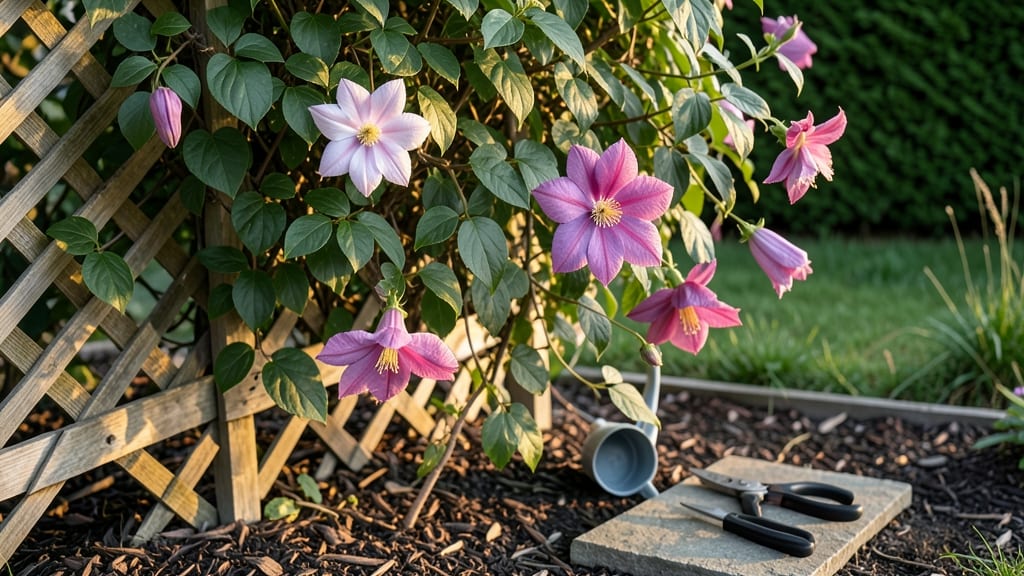
Growing clematis with large flowers in the Pacific Northwest means choosing the right frost-resistant varieties that thrive despite our damp, cool climate. 🌿 I’ve learned the hard way—some clematis varieties wilt under our persistent rains, but the right ones reward you with bold blooms from early summer to frost.
The secret lies in selecting hardy cultivars like ‘Nelly Moser’ or ‘Jackmanii,’ which handle our wet winters and still produce showstopping flowers.
These climbers need six hours of sunlight daily and soil that drains well but stays consistently moist—think of them as thirsty divas who hate soggy feet. Plant them near a sturdy trellis or arbor where they can climb and spread their lush foliage.
In the PNW, mulching with wood chips helps protect roots from winter chill, while a balanced fertilizer in early spring jumpstarts those giant blooms you’re dreaming of.
Pruning is where most gardeners stumble, but with large-flowered clematis, timing is everything. Cut back last year’s growth in late winter before new shoots appear, and you’ll encourage a flush of vibrant, dinner-plate-sized blooms by midsummer.
The key is patience—these plants take 2-3 years to reach their full glory, but once they do, your garden becomes the envy of the neighborhood.
From frost-proof varieties to pruning hacks, this guide covers everything you need to grow clematis that outperform expectations in our challenging climate. Let’s get those vines climbing and those flowers blooming bigger than ever!
📚 In This Guide
- What you need
- Instructions
- Tips and common mistakes
- Wrapping up and next steps
What you need
- ● Clematis plants: Choose Pacific Northwest frost-resistant varieties like ‘Jackmanii,’ ‘Niobe,’ or ‘Perle d’Azur’ (3-5 plants for optimal impact).
- ● Well-draining potting mix: 5+ gallons of a blend with peat moss, perlite, and compost (or use native soil amended with organic matter).
- ● Support structure: A 5-6 ft tall trellis, arbor, or sturdy wire cage (galvanized or PVC works great).
- ● Mulch: 2-3 inches of wood chips or straw to insulate roots in winter.
- ● Balanced fertilizer: A 10-10-10 or 20-20-20 granular fertilizer (1 tbsp per plant initially, then monthly in spring/summer).
- ● Pruning shears: Sharp, bypass-style shears (sterilized with rubbing alcohol).
- ● Watering can or hose: With a fine-mist nozzle for gentle hydration.
- ● Epsom salt: 1 tbsp per gallon of water (monthly feed for magnesium boost).
- ● Slow-release fertilizer spikes: For hassle-free nutrition.
- ● Frost cloth: Lightweight fabric to protect young plants in early/late frost.
- ● Garden gloves: For thorny varieties like ‘Jackmanii.’
- ● Stakes or ties: Soft plant ties to secure vines to trellises.
Step-by-Step instructions for cultivating hardy clematis in the Pacific Northwest
Mastering these frost-tolerant climbers means choosing the right site and pruning strategy first.
🌱 Step 1: Select the Perfect Planting Location
Large-flowered clematis thrives in partial shade—think morning sun with afternoon shade—especially in the Pacific Northwest's cooler climate. I always pick a spot with 6-8 hours of filtered light to prevent leaf scorch while maintaining flower production. Avoid deep shade, which leads to weak stems and fewer blooms.
Here's the thing—clematis roots need cool, moist soil but hate wet feet. Amend heavy garden soil with 3-4 inches of compost to improve drainage while retaining moisture. The ideal spot has well-draining soil that stays consistently damp but never soggy. Test your site by digging a 12-inch hole—if water pools after 30 minutes, raise the planting area or choose a different location.
🪴 Step 2: Plant with Proper Support and Soil Prep
Dig a hole twice as wide as the root ball but only as deep—never deeper—than the container's root system. This prevents the plant from sitting too low and risking rot. I always loosen the roots gently if they're circling, then place the plant so the top of the root ball sits 2-3 inches below soil level. This encourages strong stem growth from below.
Install your support structure—whether a trellis, arbor, or sturdy wire frame—before planting. Clematis vines grow 6-12 feet annually, so choose something that can handle 50+ pounds of mature growth. Mix the removed soil with 1 part compost and 1 part perlite to lighten heavy Pacific Northwest clay, then backfill the hole, tamping gently to eliminate air pockets.
✂️ Step 3: Prune Strategically for Pacific Northwest Winters
Large-flowered clematis fall into Group 3 pruning—the most critical step for PNW growers. After the first hard frost, cut back last year's growth to 2-3 healthy buds above the ground. This ensures strong new growth in spring while protecting the plant from heavy snow loads. Never prune in fall if you haven't had frost—new growth won't harden off properly.
Real talk: I've seen beginners over-prune in spring, sacrificing blooms. Wait until late winter when you can see the plant's structure clearly. The first 2-3 buds from the base will produce main flowering stems, while later growth creates secondary blooms. Mark your pruning cuts with twine or flags if needed—it's easy to forget which stems are which after winter.
💧 Step 4: Water and Feed for Consistent Blooms
Deep water once weekly during the first growing season to establish roots, then every 10-14 days once established—unless we're in a dry PNW summer. You'll know it's time when the top 2 inches of soil feel dry. Water at the base, not overhead, to prevent fungal diseases like powdery mildew that thrive in our damp climate.
Feed with a balanced 10-10-10 fertilizer in early spring when new growth appears, then switch to a low-phosphorus formula (like 5-10-10) after blooming to encourage next year's flowers. I always side-dress with compost in fall to build soil fertility naturally. Over-fertilizing leads to lush foliage but fewer flowers—something I learned the hard way with my first clematis.
Tips & tricks for perfect large flower clematis cultivation
These practical insights will help you overcome the Pacific Northwest's unique gardening challenges and grow showstopping clematis blooms.
Site Selection Secret: The 6-8 hours of filtered light in Step 1 is non-negotiable for PNW climates. I recommend placing your clematis near a north-facing wall or under deciduous trees that provide shade during summer's intense afternoon sun. This balance prevents leaf scorch while maintaining energy for flower production. For maximum impact, position your support structure before planting—this ensures you won't disturb roots later when vines are established.
Soil Test Hack: Before amending your 12-inch test hole with 3-4 inches of compost, perform a simple moisture test: Dig a 6-inch deep hole and fill it with water. If it drains completely within 15 minutes, your soil drains well. If water remains after 30 minutes, you'll need to create a raised bed or add more perlite to prevent root rot. The PNW's heavy clay soils often need this extra drainage boost.
Pruning Visual Guide: When pruning to 2-3 healthy buds in Step 3, look for buds that are plump and slightly sticky to the touch—these indicate strong growth potential. I always make my cuts just above a bud at a 45-degree angle to prevent water from pooling on the cut surface. For large plants, use sharp bypass pruners to avoid crushing stems, which can introduce disease. Marking pruned stems with colored twine helps track which branches produced your main flowering stems.
Watering Strategy: The weekly watering schedule in Step 4 works best when done in the early morning. This timing allows foliage to dry completely before evening, reducing fungal risks. For established plants, I recommend using soaker hoses placed at the base rather than overhead watering. This delivers moisture directly to roots while preventing the powdery mildew that thrives in our damp climate. The top 2 inches of soil dry test is particularly important during our unpredictable PNW summers.
Pro Tips for Clematis Large Flower
- These practical insights will help you overcome the Pacific Northwest's unique gardening challenges and grow showstopping clematis blooms.
- Site Selection Secret: The 6-8 hours of filtered light in Step 1 is non-negotiable for PNW climates.
- Soil Test Hack: Before amending your 12-inch test hole with 3-4 inches of compost, perform a simple moisture test: Dig a 6-inch deep hole and fill it with water.
Frequently asked questions
Got questions about growing clematis with large flowers in the Pacific Northwest? You’re not alone! Here are answers to the most common concerns—from planting to pruning—so you can enjoy stunning blooms year after year.
When is the best time to plant large-flowering clematis in the PNW?
The ideal window is early spring (March–April) or early fall (September–October). Planting in spring gives roots time to establish before summer heat, while fall planting avoids winter stress. Avoid extreme temperatures—never plant in winter unless your climate is exceptionally mild.
How cold-hardy are large-flowering clematis varieties?
Most large-flowering clematis (e.g., 'Jackmanii,' 'The President') thrive in USDA Zones 4–9, making them perfect for the PNW’s frost. However, young plants need winter protection—mulch heavily (4–6 inches) and wrap crowns with burlap if temps drop below 10°F. Hardy varieties like 'Niobe' or 'Perle d’Azur' handle frost best.
How do I prune large-flowering clematis correctly?
Prune in early spring (March) before new growth starts. Cut back last year’s stems to 2–3 healthy buds from the base. Avoid "deadheading" spent blooms—this encourages more flowers! Never prune in fall, as it can leave stems vulnerable to frost damage. Pro tip: Use sterilized shears and wear gloves—clematis vines can be thorny!
What pests or diseases should I watch for with large-flowering clematis?
Common issues in the PNW include:
- Clematis wilt (fungal): Remove infected stems immediately and avoid overhead watering.
- Slugs/snails: Set out beer traps or use organic slug pellets at night.
- Aphids: Spray with soapy water or introduce ladybugs for natural control.
- Powdery mildew: Improve airflow and apply neem oil preventatively.
Prevention tip: Space plants for airflow and water at the base (not leaves) to keep foliage dry.
Can I grow large-flowering clematis in containers?
Yes! Choose a large container (15+ gallons) with drainage holes and use a well-draining potting mix. Opt for compact varieties like 'Durandii' or 'Betty Corning.' Move pots to a shaded spot in summer to prevent overheating. Winter care: Wrap containers in bubble wrap and mulch the soil to protect roots.
Bonus Tip: Why aren’t my large-flowering clematis blooming?
Check these common culprits:
- Too much shade: Large-flowering clematis need 6+ hours of sun (morning sun + afternoon shade works in hot climates).
- Over-fertilizing: Too much nitrogen = lush leaves, fewer flowers. Use a low-nitrogen, high-phosphorus fertilizer in spring.
- Pruning mistakes: If you prune at the wrong time (e.g., summer), you’ll cut off next year’s blooms.
- Poor soil: Amend with compost and ensure pH is neutral (6.5–7.0).
If the issue persists, your variety might need more winter chill hours—try a different PNW-hardy cultivar!
Wrapping up and next steps
Growing clematis large flower varieties in the Pacific Northwest—especially frost-resistant types—is a rewarding journey that brings bold blooms and lush greenery to your garden. 🌸 With the right soil, sunlight, and care, you can enjoy stunning vines year after year, even through cooler climates.
Whether you're a beginner or a seasoned gardener, these varieties offer beauty with resilience.
Now that you’re equipped with the knowledge, take the next step—pick your favorite variety, gather your supplies, and start planting! Watch your garden transform as these vibrant climbers thrive, adding vertical charm and seasonal color to your outdoor space.