
Shrubs
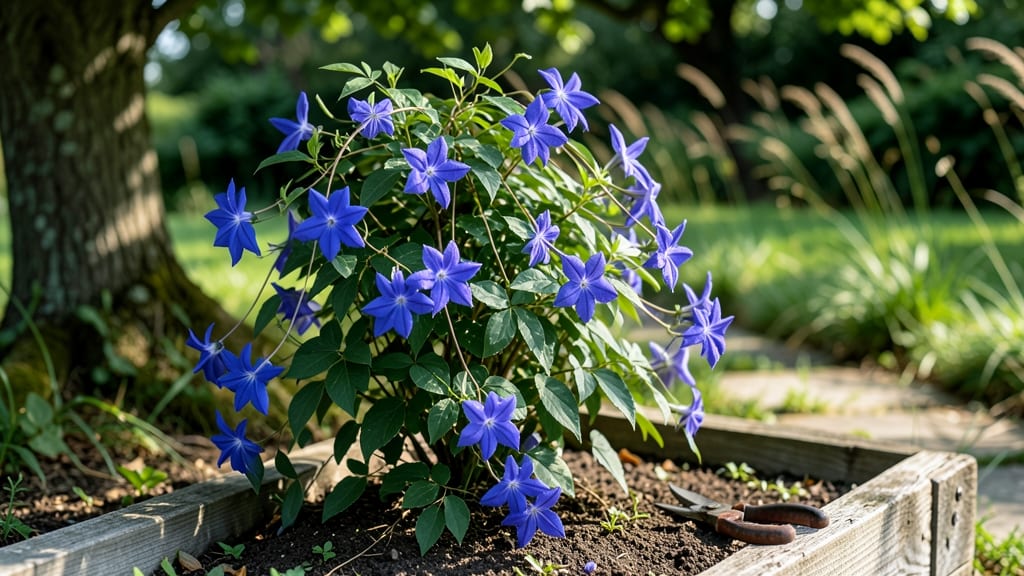
Blue flowering clematis transforms any Pacific Northwest garden into a serene, frost-resistant masterpiece. 🌿 I fell for them after seeing how their velvety blue blooms stood up to our damp winters—no wilting, no fading, just pure elegance.
The key lies in their ability to thrive in cool climates while demanding minimal fuss, making them perfect for both beginner and seasoned gardeners.
Pair these climbers with evergreen shrubs like rhododendrons or hemlock for year-round structure, or let them cascade over arbors where their blooms will frame your patio in summer. The secret to their success?
Planting them near a north-facing wall shields roots from winter winds, while their natural climbing habit means they’ll fill vertical space without taking up precious ground room.
You’ll love how they bloom twice a season—once in late spring and again in early fall—when most gardens are otherwise bare. The deep blue flowers contrast beautifully with silver foliage or bright yellow daylilies, creating a striking visual that lasts from early summer through frost.
Just remember: their roots need shade, but the vines crave full sun to produce those signature blooms.
For creative landscaping, try training them up a pergola or along a fence where they’ll create a living tapestry of color. In containers, dwarf varieties like ‘Jackmanii’ work beautifully on balconies, while larger types can anchor a mixed border.
The possibilities are endless once you see how adaptable they truly are in our region’s climate.
📚 In This Guide
- What you need
- Instructions
- Tips and common mistakes
- Wrapping up and next steps
What you need
- ● Blue flowering clematis plant: Choose a frost-resistant variety like Clematis ‘Jackmanii’ (deep blue-purple) or Clematis ‘Perle d’Azur’ (sky-blue). Buy a 1-gallon or 3-gallon container plant from a local nursery.
- ● Well-draining potting mix: 10–15 gallons of a blend like 50% garden soil, 30% compost, and 20% perlite or coarse sand (critical for preventing root rot!).
- ● Support structure: A 5–8 ft tall trellis, arbor, or obelisk (metal or wooden) to train vines upward.
- ● Organic mulch: 2–3 inches of cedar chips, wood shavings, or straw to insulate roots in winter.
- ● Slow-release fertilizer: A 10–10–10 or 5–10–5 NPK blend (use ½ cup per plant at planting time).
- ● Garden trowel or spade (for digging).
- ● Pruning shears (sterilized with rubbing alcohol).
- ● Garden hose or watering can (with a gentle spray nozzle for hydration).
- ● Gloves (to protect from thorns and soil).
- ○ pH testing kit (optional but helpful—clematis thrives in 6.5–7.0 pH).
- ● Sunlight: 6+ hours of full sun daily (morning sun + afternoon shade works in hotter PNW summers).
- ● Soil moisture: Keep soil consistently moist but not soggy (especially during first growing season).
- ● Winter prep: Cut back vines to 1–2 ft tall in late fall and cover with burlap or mulch for frost protection.
Step-by-step instructions for planting frost-resistant blue clematis
Here's how to establish these stunning vines so they thrive in PNW winters.
🌱 Step 1: Choose the Perfect Planting Site
Clematis needs both sun and shelter to survive our damp winters. Select a spot with at least 6 hours of morning sun but afternoon shade—this prevents leaf scorch while keeping flowers vibrant. I always plant mine near a north-facing wall or fence where winter winds can't reach.
The key is root protection. In colder microclimates, plant with the crown buried 4-6 inches deep—this insulates the base from freeze-thaw cycles. Mark the planting depth with a stake before setting the plant so you don't bury it too deep later. Here's the thing—too shallow, and winter winds will desiccate the crown; too deep, and spring growth stalls.
🪴 Step 2: Prepare the Soil and Plant
Amend the soil with 3-4 inches of compost mixed into the top 12 inches of native soil. Clematis roots need excellent drainage but also moisture retention—think "swampy but not soggy." I like to create a small mound of soil to plant on, then fill the hole around it. This keeps the crown slightly elevated while still buried.
Water the hole thoroughly before planting. You'll see the soil settle about an inch—wait until it drains completely before placing your clematis. Gently spread the roots outward (they'll be tight when you buy them) and backfill with the amended soil, pressing lightly to remove air pockets. The first flush of new growth in spring tells you the roots have settled properly.
☀️ Step 3: Provide Support and Winter Protection
Install your trellis or arbor immediately after planting. Clematis vines grow aggressively—12-18 inches per year—and need sturdy support from day one. I use a 5-foot tall trellis for most varieties, positioned 18-24 inches away from the planting site so the base stays shaded while the top gets sun.
For winter, I mound 6-8 inches of mulch around the base after the first hard frost. Use shredded bark or straw—not leaves, which compact and suffocate roots. In particularly harsh winters, I add a layer of burlap wrapped around the trellis to break wind. You'll know it's working when you see fresh green growth in early spring before most perennials emerge.
💧 Step 4: Water and Fertilize for First-Year Establishment
Water deeply 2-3 times per week during the first growing season, aiming for 1-1.5 gallons per plant. The soil should feel moist 6 inches down—use a trowel to check. Overwatering here leads to root rot, which clematis hates. I water at the base in the morning so leaves dry quickly and resist fungal diseases.
Fertilize lightly in spring with ½ cup of 10-10-10 granular fertilizer worked into the soil. Too much nitrogen now encourages leafy growth at the expense of flowers. You'll see your first blooms in year two if you hold off heavy feeding until the plant establishes strong roots. Real talk: Skipping fertilizer the first year saves you from leggy, weak stems that flop over trellises.
Tips & tricks for planting frost-resistant blue clematis
Don't let PNW winters fool you—these blue beauties thrive with the right approach. Here's what I've learned after years of growing them successfully in our climate.
Sun and Shelter Balance: That 6 hours of morning sun is non-negotiable, but don't overlook the afternoon shade requirement. I've found planting near a north-facing fence creates the perfect microclimate—sun for energy but protection from hot afternoon rays. In exposed areas, consider a temporary shade cloth during peak summer sun to prevent leaf scorch, especially for young plants still establishing roots.
Crown Depth Secret: The 4-6 inch crown burial depth is crucial for winter survival. I mark the planting depth with a small stake before actually placing the plant—this prevents that common mistake of burying too deep. Too shallow? The crown will dry out in winter winds. Too deep? Spring growth gets stunted. Think of it like tucking your plant in for winter—just right keeps it cozy but not suffocated.
Soil Mound Technique: Creating that small planting mound in Step 2 isn't just about elevation—it's about drainage. The mound allows water to flow away from the crown while still keeping the roots moist. I always add a handful of perlite to the compost mix for extra drainage insurance, especially in our heavy clay soils. The goal is that "swampy but not soggy" balance—roots need to breathe but also stay hydrated.
Winter Protection Layers: That 6-8 inches of mulch is your first line of defense, but don't stop there. I've had the best success adding a layer of burlap wrapped around the trellis in harsh winters. It's like giving your plant a winter coat—protects from windburn while still allowing some airflow. The real test comes in early spring when you see those first green shoots before most perennials even think about waking up.
Pro Tips for Blue Flowering Clematis
- Don't let PNW winters fool you—these blue beauties thrive with the right approach.
- Sun and Shelter Balance: That 6 hours of morning sun is non-negotiable, but don't overlook the afternoon shade requirement.
- Crown Depth Secret: The 4-6 inch crown burial depth is crucial for winter survival.
Frequently asked questions
Got questions about growing blue flowering clematis in the Pacific Northwest?
You’re not alone! Here are answers to common concerns—from planting tips to frost resilience and troubleshooting—so you can enjoy vibrant blooms year after year.
Can blue clematis survive PNW winters?
Many frost-resistant varieties like Clematis ‘Jackmanii’ or ‘Perle d’Azur’ thrive in USDA Zones 4–9. Mulch heavily in late fall (3–4 inches) and protect young plants with burlap wraps during harsh freezes. Prune in early spring to encourage sturdy new growth.
When is the best time to plant blue clematis?
Plant in early spring (March–April) or fall (September–October) for optimal root establishment. Avoid summer heatwaves—soil should be cool and moist. If transplanting, water deeply for 2 weeks post-planting to reduce shock.
What’s the trick to getting blue clematis to bloom?
Blue clematis need 3 key things:
- Sunlight: 6+ hours daily (morning sun + afternoon shade works best).
- Support: Use a trellis, arbor, or sturdy stake—they’re vining climbers!
- Pruning: Group 1/2/3 varieties correctly (e.g., prune Group 3 hard in early spring).
Pro tip: Fertilize lightly in spring with a balanced 10-10-10 mix—avoid high nitrogen, which encourages foliage over flowers.
Why aren’t my clematis blooming?
Common culprits:
- Over-pruning (cutting back blooms before they set).
- Poor sunlight (shady spots = fewer flowers).
- Competition (weeds or overcrowded roots).
- Wrong pruning group (e.g., pruning a Group 1 variety like ‘Jackmanii’ too late).
Fix it: Adjust pruning, add phosphorus-rich fertilizer, or move to sunnier spot.
Are there blue clematis alternatives for PNW gardens?
If blue clematis don’t fit your space, try:
- Clematis ‘Niobe’ (deep purple, Group 2, drought-tolerant).
- Clematis ‘Vyvyan Pennell’ (lavender-blue, fragrant, Group 3).
- Pacific Coast Iris (blue blooms, perennial, thrives in wet climates).
- Salvia ‘May Night’ (blue spikes, attracts pollinators).
All handle PNW’s mild winters and coastal humidity well!
How do I protect clematis from late frosts?
Use frost cloth or a lightweight row cover on young plants during late spring frosts (common in May). Avoid plastic—it traps heat and can scorch leaves. Water plants thoroughly before cold snaps to boost cold resistance. Mature vines (3+ years) usually tolerate light frosts.
Wrapping up and next steps
Transforming your Pacific Northwest garden into a stunning blue paradise with frost-resistant clematis is easier—and more rewarding—than you think! 🌿 Whether you’re drawn to the delicate blooms of Clematis ‘Jackmanii’ or the vibrant charm of Clematis ‘Perle d’Azur’, these plants offer year-round beauty with minimal fuss.
With the right care, your trellis or arbor will soon be a showstopper, attracting pollinators and turning heads in your neighborhood.
Ready to take the next step? Start small: pick one variety that excites you, gather your supplies, and give it a try! Before you know it, your garden will be bursting with blue flowering clematis magic—one vine at a time. Happy gardening! 🌸