
Propagation
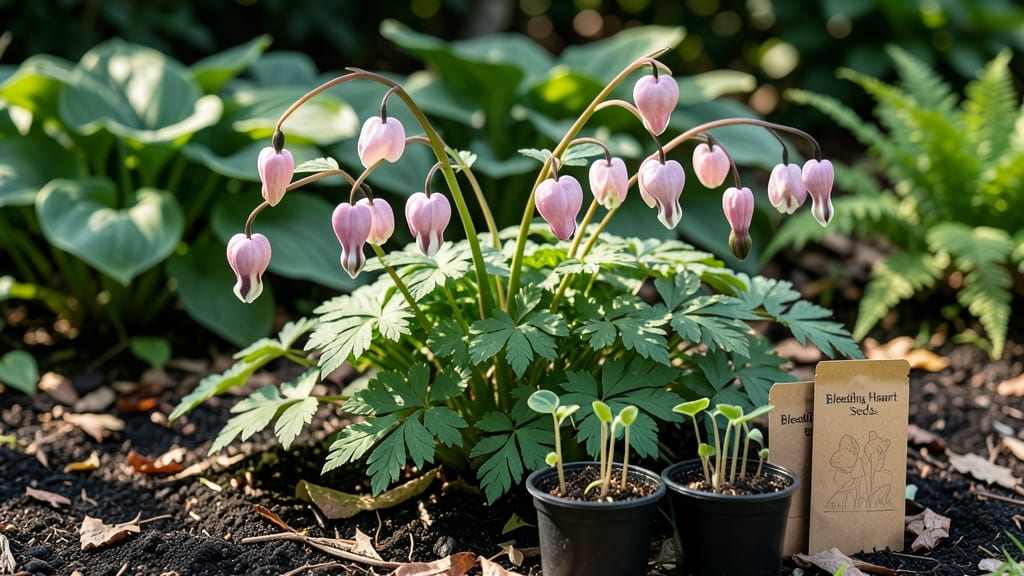
Growing bleeding heart flowers from seeds in the Pacific Northwest feels like coaxing a shy woodland creature into your garden—it takes patience, but the payoff is worth it. 🌿 These delicate plants thrive in your region’s cool, moist climate, but their seeds need just the right conditions to wake up from dormancy.
I’ve learned that the secret isn’t forcing them to grow fast, but creating the perfect mimic of their natural woodland habitat right in your seed tray.
You’ll need a shallow tray, a mix of peat moss and perlite for drainage, and a spray bottle to keep things consistently moist without drowning the tiny seeds.
Plant them just beneath the soil surface—no deeper than ¼ inch—and keep them in a cool spot (around 55-60°F) until sprouts appear, which can take 4-8 weeks depending on seed freshness. The key is consistency: too much heat or dryness, and they’ll refuse to cooperate.
Once those first heart-shaped leaves emerge, you’ll know you’re on the right track. The seedlings will be slow to start but gain strength quickly in your region’s mild climate, eventually producing those iconic dangling blooms by next summer.
Just be ready to provide shade during hot afternoons and keep the soil evenly moist—these plants reward attention with lush, graceful growth.
While seeds are possible, division or nursery transplants are often easier for beginners—especially if you’re eager to see results sooner. But if you’re up for the challenge, these germination tricks will give you the best shot at success.
The real magic happens when you see those first heart-shaped leaves unfurl, proving that even the most delicate plants can thrive with the right care.
📚 In This Guide
- What you need
- Instructions
- Tips and common mistakes
- Wrapping up and next steps
What you need
- ● Bleeding heart flower seeds – Choose Dicentra spectabilis (or another Pacific Northwest-friendly variety) for best results. Aim for 5–10 seeds per pot or 100+ seeds for a larger garden area.
- ● Seed-starting mix – A lightweight, well-draining mix (e.g., 50% peat moss, 30% perlite, 20% vermiculite) works best. Avoid heavy garden soil.
- ● Small seed trays or pots – Use 2–3 inch pots or cell packs for individual seedlings. Ensure they have drainage holes!
- ● Clear plastic domes or plastic wrap – Helps maintain humidity for germination.
- ● Spray bottle – For gentle watering to avoid disturbing seeds.
- ● Grow lights or sunny windowsill – Seeds need 6–8 hours of indirect light daily (grow lights are ideal for PNW’s shorter winter days).
- ● Gloves – Protects hands from soil and delicate seeds.
- ● Labeling tags & marker – Track varieties and planting dates (PNW’s mild climate can blur memories!).
- ○ Heating mat (optional) – Speeds up germination (set to 65–70°F).
- ● Fertilizer (balanced 10-10-10, diluted) – Apply 4–6 weeks after sprouting to boost growth.
- ● Transplanting tools – Small trowel or spoon for moving seedlings to larger pots or garden beds.
Step-by-step instructions for germinating bleeding heart seeds
Here’s how to coax these finicky seeds into sprouts—without the frustration.
🌱 Step 1: Stratify Seeds to Mimic Winter Conditions
Bleeding hearts need a cold period to break dormancy. Place your seeds in a sealed plastic bag with a slightly damp paper towel—just enough moisture to feel damp, not soggy. Store the bag in your refrigerator’s crisper drawer for 8-12 weeks at 35-40°F. Check weekly; if the towel dries, spritz it lightly with water.
This cold treatment tricks the seeds into thinking winter’s passed, so they’ll germinate like they’re ready for spring. I’ve found that 10-12 weeks works best for Pacific Northwest climates, where natural winter chills align perfectly. Don’t rush it—these seeds won’t sprout without this step.
💧 Step 2: Sow Seeds in Moist, Well-Draining Soil
After stratification, fill 4-inch pots with a mix of 50% peat moss and 50% perlite—this keeps moisture consistent without compacting. Plant seeds ¼ inch deep, spacing them 1 inch apart in the pot. Water gently until the soil feels damp 1 inch down, but avoid soaking the surface.
Bleeding hearts hate soggy soil, so use a spray bottle for precision. If the top layer dries out, the seeds won’t germinate. Place pots in a clear plastic bag to retain humidity, but prop it open slightly for airflow. You’ll see tiny sprouts in 4-8 weeks—patience is key here.
☀️ Step 3: Provide Indirect Light and Warmth
Once sprouted, move pots to a bright, indirect light spot—like an east-facing windowsill. Avoid direct sun, which scorches delicate seedlings. Keep soil evenly moist but never waterlogged; let the top ½ inch dry between waterings. A seedling heat mat set to 65-70°F speeds growth if your home runs cooler.
Leggy seedlings mean light’s too weak. If stems stretch toward the window, boost light with a grow bulb kept 6 inches away. You’ll know they’re thriving when first true leaves appear—these are the heart-shaped ones that give the plant its name. Watch for them in 6-8 weeks total from sowing.
🪴 Step 4: Transplant When Roots Fill the Pot
When seedlings have 3-4 sets of true leaves and roots crowd the pot, transplant to 6-inch containers with fresh peat-perlite mix. Handle roots gently—bleeding hearts resent disturbance. Bury stems ½ inch deeper than before to encourage stability. Water thoroughly after transplanting to settle the soil.
Outdoor planting comes after the last frost, but only when night temps stay above 50°F. These plants love shade and moisture—think dappled woodland light. Mulch with 2 inches of shredded bark to retain humidity and suppress weeds. You’ll see blooms in 2 years, but the wait’s worth it for those iconic heart-shaped flowers.
Tips & tricks for germinating bleeding heart seeds
Here's what nobody tells you about coaxing these stubborn seeds to sprout—lessons I learned after three failed attempts.
Cold Treatment Precision: Don't just stick seeds in the fridge—monitor that 35-40°F temperature like a hawk. I use a small thermometer inside the bag to ensure consistent chilling. If temps creep above 45°F, germination rates plummet. For Pacific Northwest gardeners, this mimics natural winter conditions perfectly, but your fridge might run warmer than expected.
Soil Mix Strategy: The 50/50 peat-perlite mix is non-negotiable for bleeding hearts. I add a handful of perlite to the bottom of each 4-inch pot first to create instant drainage. This prevents the dreaded "soggy bottom" that can kill seeds before they even sprout. Pro tip: Tap the pot gently after filling to settle the mix—this eliminates air pockets that trap moisture.
Humidity Hack: That clear plastic bag in Step 2 is your secret weapon, but don't make it airtight. Use a rubber band to create a tiny gap—just enough to prevent mold while maintaining humidity. I've seen condensation build up so fast it drowns seedlings. A slightly open bag prevents this while still trapping enough moisture for germination.
Light Transition: When moving sprouted seedlings to indirect light, do it gradually over 3-4 days. Sudden bright light can shock them. Start with morning sun only, then gradually increase exposure. This mimics how they'd naturally emerge in woodland settings. I place mine on a rotating schedule—east window in the morning, west window in the afternoon.
Pro Tips for Bleeding Heart Flower Seeds
- Here's what nobody tells you about coaxing these stubborn seeds to sprout—lessons I learned after three failed attempts.
- Cold Treatment Precision: Don't just stick seeds in the fridge—monitor that 35-40°F temperature like a hawk.
- Soil Mix Strategy: The 50/50 peat-perlite mix is non-negotiable for bleeding hearts.
Frequently asked questions
Got questions about growing bleeding heart flower seeds? You’re not alone—this delicate beauty has a few quirks! Here are answers to the most common queries from gardeners in the Pacific Northwest and beyond.
How long does it take for bleeding heart seeds to germinate?
Patience is key! Under ideal conditions (consistent moisture, 60–70°F soil temps), seeds typically sprout in 2–4 weeks. Cold stratification (4–6 weeks in the fridge) can speed this up. If nothing emerges after 6 weeks, gently check for mold or rot—discard and replant if needed.
Why aren’t my bleeding heart seeds sprouting?
Common culprits include too much light (keep them in darkness until germination), dry soil (mist daily), or old seeds (viability drops after 1–2 years). Try scarifying seeds (lightly sandpaper the coat) or soaking them overnight to break dormancy. If all else fails, source fresh seeds!
When is the best time to plant bleeding heart seeds?
For the PNW’s mild climate, late summer to early fall (August–September) is ideal—seeds stratify naturally over winter. Alternatively, sow indoors in early spring (March) with a grow light. Avoid planting outdoors in freezing temps; these seeds hate frost!
Can I grow bleeding heart from cuttings instead of seeds?
Yes! While seeds are finicky, softwood cuttings (from new growth in spring) root easily in perlite/moss mix. Dip in rooting hormone, keep humid (use a plastic bag), and place in indirect light. Seed-grown plants take longer but offer more genetic variety—your call!
Are bleeding heart seeds prone to pests or diseases?
Watch for slugs (young seedlings are snacks!) and powdery mildew in humid PNW summers. Space plants for airflow, water at the base, and remove debris. Pre-treat soil with neem oil if slugs are a recurring issue. Healthy soil = fewer problems!
Pro tip: Tag your seed packets with the planting date—this helps track germination success and adjust future timelines!
Wrapping up and next steps
Growing bleeding heart flower seeds in the Pacific Northwest is totally doable—just follow the right tricks! With patience, the right soil mix, and a little warmth, you’ll soon be rewarded with those iconic heart-shaped blooms. Don’t let a few challenges discourage you—every gardener starts somewhere!
Ready to take the next step? Start with a small batch of seeds this season, experiment with the germination methods you learned, and soon you’ll be sharing your success with fellow PNW gardeners. Happy planting! 🌱✨