
Flowers
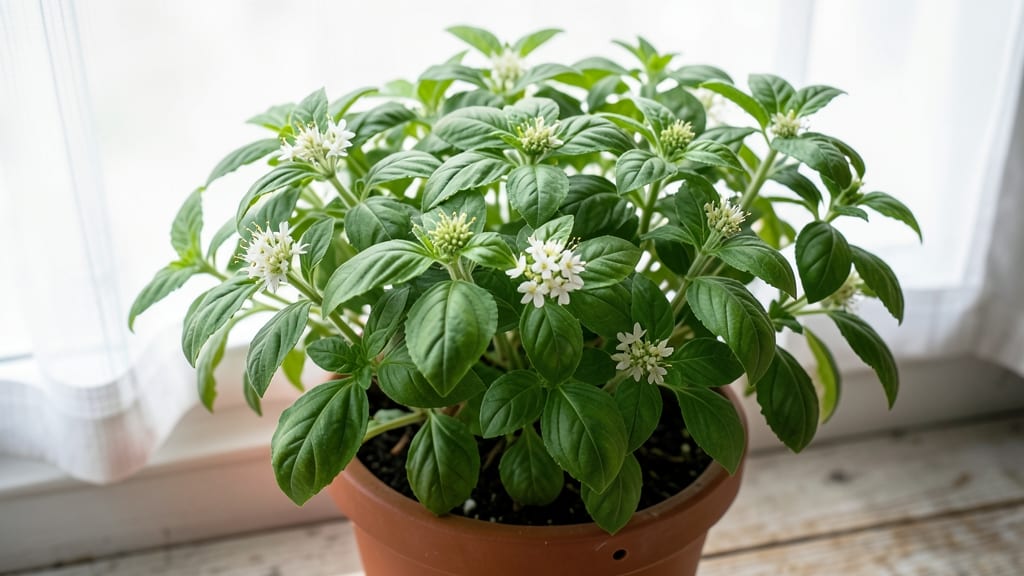
When basil has flowers, it’s not just a pretty sight—it’s a signal your plant is ready to shift its energy from leaves to seeds. 🌸 I’ve watched my basil go from lush green stems to flower spikes in just a few weeks, and while the blooms are edible, they mean your harvest will slow down if you don’t act.
The key is understanding how to manage those flowers without sacrificing flavor or growth.
The moment you spot those tiny white or purple buds, your basil is telling you it’s time to prune. Pinching off the flowers right at the stem encourages more leaf production, keeping your plant bushy and productive.
I’ve found that harvesting leaves just below the flower clusters also works—it’s like giving your basil a gentle nudge to focus on what you actually want to eat.
Those edible blooms add a delicate peppery note to salads and cocktails, but they’re a secondary priority. If you let the flowers go to seed, your basil will start producing fewer leaves and may even bolt, especially in hot weather.
The solution? Stay ahead of the blooms with regular pruning, and you’ll enjoy both the leaves and the flowers all season long.
For best results, prune in the morning when the plant is hydrated, and always use clean scissors or fingers to avoid spreading disease. A little maintenance now means a basil plant that keeps giving—both in flavor and in harvest—well into fall.
📚 In This Guide
- What you need
- Instructions
- Tips and common mistakes
- Wrapping up and next steps
What you need
- ● Basil plants: 3–5 healthy Genovese, Thai, or Purple basil plants (or seeds if starting from scratch). Look for plants with plenty of leaves and emerging flower buds.
- ● Pruning shears or clean scissors: Sharp, sterilized tools to snip flowers without damaging the plant.
- ● Glass jars or vases: 1–2 clean, shallow containers (4–6 inches wide) for floral arrangements.
- ● Fresh water: Room-temperature water for hydrating cut flowers.
- ● Floral preservative: A packet (like Floralife) to extend vase life by 1–2 weeks.
- ● Food-grade honey or sugar: 1 tsp dissolved in water to nourish cut flowers.
- ● Drying rack or paper towels: For air-drying flowers for teas or garnishes.
- ● Labeling tags: To mark basil varieties if growing multiple types.
- ● A sunny spot (6+ hours of light daily) for growing basil or access to a garden center.
- ● Basic gardening knowledge: Familiarity with pruning or willingness to learn!
- ● Patience: Basil flowers take 4–6 weeks to fully bloom from seed.
How to care for basil when flowers appear
Here's how to keep your basil productive and flavorful once those pretty blooms show up.
🌿 Step 1: Identify the Flower Stages
Basil flowers start as small buds that open into delicate white, purple, or pink blooms. The moment you see these first flower buds, take action—this is when basil shifts energy from leaves to reproduction. I check my plants every 3-4 days during peak growing season to catch them early.
Here's the thing—those flowers might look pretty, but they rob your plant of the sweet, aromatic leaves you love. The buds appear first at the leaf axils (where leaves meet stems). Once you spot even a single bud, it's time to act. Don't wait until flowers fully open—they'll be harder to remove and the damage will be done.
✂️ Step 2: Prune Flowers Immediately
Use clean, sharp scissors or fingers to pinch off flower buds before they open. I like to make a clean cut just above the leaf node where the bud appears. This encourages the plant to focus on leaf growth again. Never pull flowers by hand—you'll risk damaging tender stems.
Remove every visible bud, even if it's just one. A single flower can reduce leaf production by 30-50%. Work from the bottom up, checking all stems carefully. If you miss any, they'll grow faster, so check again in 2-3 days. This is the moment that matters—consistent pruning keeps your basil bushy and productive.
💧 Step 3: Adjust Care for Post-Flowering Recovery
After removing flowers, give your basil a boost with 1 inch of water and a light application of balanced fertilizer (like 10-10-10). I water at the base in the morning so leaves stay dry—wet foliage invites fungal issues. The plant will respond within 5-7 days with new leaf growth at the stem tips.
Here's what I do next: move the pot to a slightly shadier spot for 3-4 days to reduce stress. Too much sun after flowering can make the plant wilt as it recovers. Watch for new growth at the leaf axils—this confirms your pruning worked. If no new leaves appear after 10 days, check for pests or underwatering.
☀️ Step 4: Prevent Future Flowering
Basil flowers more quickly in hot weather or when stressed. To delay blooming, keep plants in partial shade during peak afternoon sun (especially in summer). I've found that morning sun only keeps my basil flowering-free for weeks longer.
Real talk: Even with perfect care, basil will eventually flower. The key is catching it early. Harvest leaves regularly—this naturally slows flowering by keeping the plant focused on leaf production. If your basil is already heavily flowered, it's time to harvest leaves aggressively or start fresh plants from cuttings.
Tips & tricks for perfect basil flower care
Here's what nobody tells you about keeping your basil thriving after those flowers appear.
Early Detection is Everything: Those tiny flower buds hide in plain sight at the leaf axils—check your basil every 3-4 days during warm months. I learned this the hard way after letting buds grow into full blooms, which cut leaf production by half. The moment you spot even one bud, act immediately. Those first buds are sneaky, so examine stems carefully from the bottom up.
Pruning Technique Matters: Never pull flowers by hand—you'll tear delicate stems. Instead, use clean scissors or your fingers to make a precise cut just above the leaf node where the bud appears. This clean cut signals the plant to redirect energy to leaf growth. I've found that removing every visible bud (even just one) prevents the plant from wasting energy on reproduction, keeping it focused on producing those sweet, aromatic leaves you love.
Recovery Strategy: After pruning, give your basil a recovery boost with 1 inch of water at the base in the morning—this prevents fungal issues from wet foliage. Then move the pot to partial shade for 3-4 days to reduce stress. This simple adjustment makes all the difference in preventing wilting as the plant recovers. Watch for new growth at the stem tips within 5-7 days as confirmation your pruning worked.
Sunlight Management: Too much sun after flowering stresses the plant, so move it to morning sun only during recovery. This small adjustment can delay future flowering by weeks. I've kept my basil flowering-free for months longer by protecting it from peak afternoon sun, especially during summer heat waves. The key is balance—enough light for growth, but not so much that it triggers more blooming.
Pro Tips for Basil Has Flowers
- Here's what nobody tells you about keeping your basil thriving after those flowers appear.
- Early Detection is Everything: Those tiny flower buds hide in plain sight at the leaf axils—check your basil every 3-4 days during warm months.
- Pruning Technique Matters: Never pull flowers by hand—you'll tear delicate stems.
Frequently asked questions
Got questions about basil flowers?
You’re not alone! Whether you're curious about harvesting, flavors, or garden care, we’ve got answers to help you make the most of these edible blooms.
Can you eat basil flowers?
Basil flowers are edible and add a delicate, slightly peppery flavor to dishes. They’re perfect for garnishing salads, infusing oils, or decorating pasta. Just ensure they’re pesticide-free if harvesting from your garden. Pro tip: Harvest flowers early in the morning for the freshest taste!
When do basil flowers appear?
Basil typically blooms 6-8 weeks after planting, especially if it’s exposed to long daylight hours or stress (like heat or drought). If you’re growing basil for leaves, pinch off flowers to encourage bushier, leafier growth. For flowers, let them bloom naturally for culinary or ornamental use.
What do basil flowers taste like?
Basil flowers have a milder, sweeter flavor than the leaves—think of a cross between basil and a tiny, floral pepper. They’re great in infusions (like vinegar or honey), teas, or as a garnish. Purple basil flowers add a lighter, almost citrusy note compared to green varieties.
How do I encourage more basil flowers?
To boost flowering, reduce watering slightly (but don’t let it wilt) and expose basil to full sun (6+ hours/day). If your plant is leggy, trim it back to encourage bushier growth. Bonus: Deadhead spent blooms to prompt more flowers—and save seeds for next season!
Are there any downsides to basil flowers?
While basil flowers are safe to eat, they can reduce leaf production if left unchecked. Overripe or wilted flowers may also attract pests. Always harvest flowers before they fully open for the best flavor and appearance. Plus, some varieties (like Thai basil) may have stronger, more pungent blooms than others.
Wrapping up and next steps
Discovering that basil has flowers opens up a world of culinary and gardening possibilities! From vibrant pesto garnishes to pollinator-friendly blooms, these edible flowers add beauty and flavor to your dishes and garden.
Whether you're a chef, gardener, or foodie, experimenting with basil flowers is a fun and rewarding way to elevate your cooking and green space.
Ready to dive in? Start small—try adding a few flowers to your next dish or propagating a new basil plant from seeds. Your kitchen (and garden!) will thank you! 🌱✨