
Companion Plants
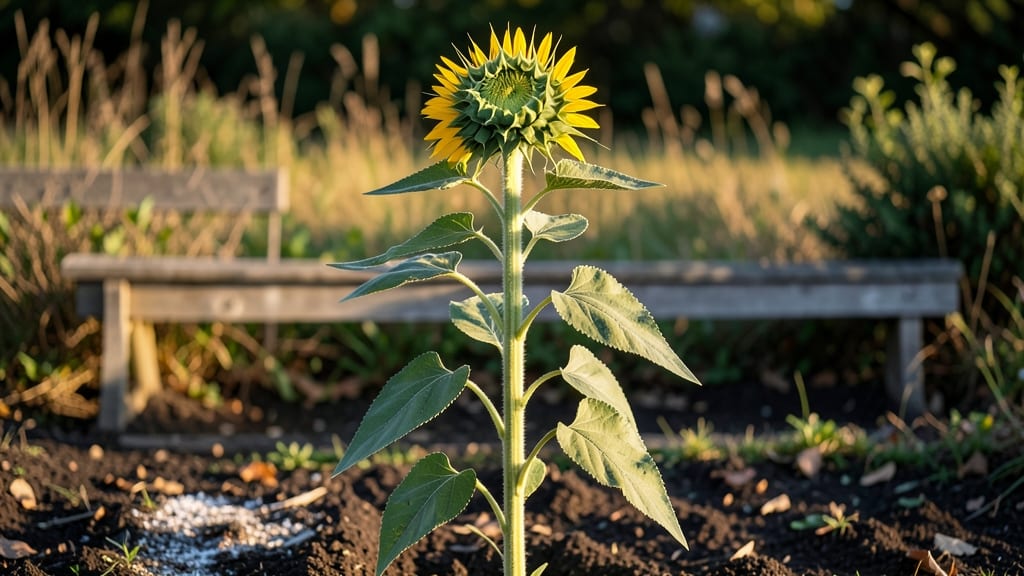
Sunflower plants before flowering look like towering green soldiers with striped stalks—nothing like the bold blooms you expect. 🌱 The first thing you notice is their rough, hairy stems, which start as a single sprout but quickly grow 5-8 feet tall by summer.
Leaves are large, jagged-edged, and arranged alternately along the stem, forming a loose rosette that unfurls as the plant stretches upward.
Young sunflowers begin as a cluster of basal leaves close to the ground, almost like a miniature version of their mature foliage. As they grow, the central stem emerges, often with faint vertical stripes that become more pronounced as the plant matures.
Unlike the familiar yellow bloom, this stage is all about leafy green growth—think of a sculptural, leafy stalk rather than a flower.
What gives them away as sunflowers are the early bud bumps forming at the top of the stem. These tight, fuzzy knobs start small but grow rapidly, eventually revealing the dark brown or green center before the petals unfurl.
The contrast between the rough, striped stems and the smooth, broad leaves makes them unmistakable once you know what to look for.
This leafy phase is where sunflowers build their strength—storing energy for that dramatic bloom. By recognizing these traits early, you can give them the space they need to reach their full sun-loving potential. The transformation from striped stalk to golden bloom happens faster than you’d think!
📚 In This Guide
- What you need
- Instructions
- Tips and common mistakes
- Wrapping up and next steps
What you need
- ● Sunflower seeds: Choose Helianthus annuus varieties (e.g., Mammoth, Teddy Bear, or Russian Giant). Buy 5–10 seeds for a small observation garden or 50+ for a full patch.
- ● Well-draining soil: Mix 2 parts potting soil with 1 part perlite or coarse sand (1–2 gallons per plant). For outdoor planting, amend garden soil with compost (5 lbs per square foot).
- ● Containers or garden bed: Containers: 5–7-inch diameter pots (1 per seedling) or a 12-inch tray for 10+ seeds.
- ● Outdoor bed: Full sun (6+ hours daily) and space 12–24 inches apart (depending on variety).
- ● Watering can or hose: With a gentle spray nozzle for seedlings.
- ● Plant labels: Small stakes or markers to track varieties (e.g., toothpicks + masking tape).
- ○ Pruning shears: For trimming excess foliage (optional, but helpful for close-ups).
- ● Growth chart: Print or sketch a diagram of sunflower stages (seedling → rosette → bud formation) to compare your plants.
- ● Magnifying glass: For inspecting leaf texture, vein patterns, or early bud bumps.
- ● Camera or phone: With a macro lens or app (e.g., PlantNet) to document progress.
- ● Fertilizer: Balanced 10-10-10 or compost tea (1 tbsp per plant every 3–4 weeks after sprouting).
- ● Sunflower companion plants: Marigolds or borage to deter pests (plant 6–12 inches away).
Identifying sunflower seedlings: what to expect before blooms appear
Here's how to spot young sunflowers before their iconic flowers emerge.
🌱 Step 1: Recognize the Early Cotyledons
Sunflower seedlings first appear as two small, rounded leaves called cotyledons. These are the plant's first true leaves, and they'll look like tiny, smooth-edged ovals about ½ inch wide. They emerge from the soil within 7-14 days of planting, depending on soil warmth.
Here's the thing—these cotyledons won't resemble the later foliage. They're a simple, undivided shape and appear in pairs directly opposite each other. If you're growing from seed, this is your first clue that germination worked. I always check for these first leaves before moving seedlings to larger containers.
🌿 Step 2: Watch for the First True Leaves
About 1-2 weeks after the cotyledons appear, you'll notice the first true leaves emerging. These are the distinctive sunflower leaves you'll recognize later: deeply lobed, rough-textured, and arranged alternately along the stem. They'll start small—around 1-2 inches long—but their shape is unmistakable.
Don't confuse these with weed seedlings. Sunflower leaves have a slightly fuzzy texture and a bluish-green hue when young. I've learned the hard way that pulling anything before these true leaves appear can remove actual sunflower seedlings by mistake.
☀️ Step 3: Identify the Developing Stalk and Buds
As seedlings grow, you'll notice the main stem thickening and developing vertical striations. These are the characteristic sunflower ridges that become more pronounced as the plant matures. The stalk will grow rapidly—sometimes 2-3 inches per day—and develop a slightly woody texture.
Around 4-6 weeks after germination, you'll see small, tightly closed buds forming at the top of the main stem. These are the flower buds, though they'll look like tiny green cones rather than the familiar blooms. This is when plants need full sun for at least 6-8 hours daily to develop properly.
⏰ Step 4: Observe the Leaf Arrangement Pattern
Mature sunflower seedlings develop a distinctive leaf arrangement. The leaves grow alternately along the stem, with each new leaf emerging slightly higher than the previous one. This spiral pattern continues up the main stalk, creating what's called a phyllotactic arrangement.
You'll also notice the lower leaves becoming larger and more deeply lobed as the plant grows. The upper leaves stay smaller and simpler in shape. This vertical progression is your visual cue that the plant is healthy and ready for its rapid growth phase.
Tips & tricks for identifying young sunflower plants
Real talk: Spotting sunflower seedlings before they bloom saves you from weeding out your future giants. Here's what I've learned after accidentally pulling too many promising sprouts.
Leaf Texture is Your First Clue: The fuzzy, slightly rough texture of sunflower leaves sets them apart from weeds. Run your thumb gently over a leaf—sunflower foliage feels like fine sandpaper, while weed leaves are usually smoother. This texture becomes more pronounced as leaves mature, but you can spot it even on those first true leaves around 1-2 inches long that appear after the cotyledons.
Growth Rate Gives It Away: Sunflower stalks grow aggressively once they establish themselves. If you notice a seedling shooting up 2-3 inches per day (as mentioned in Step 3), that's your sunflower. Most weeds grow at a fraction of this speed. I've used this growth spurt to confirm seedlings I wasn't entirely sure about—once they start growing that fast, there's no mistaking them.
Stem Ridges are the Giveaway: The vertical striations on sunflower stalks develop early and become more defined as plants mature. Look closely at the main stem—if you see these characteristic ridges forming within 4-6 weeks after germination, you're dealing with a sunflower. This is especially helpful when distinguishing from other tall plants in your garden.
Sunlight Needs Confirm: Sunflowers demand full sun, and their growth patterns reflect this. If you notice seedlings growing toward the light with leaves developing a bluish-green hue (as described in Step 2), that's a strong indicator. Place them in a sunny spot with at least 6-8 hours of direct sunlight daily—this will accelerate their development and help you confirm their identity through rapid growth.
Pro Tips for What Do Sunflower Plants Look Like Before They Flower
- Real talk: Spotting sunflower seedlings before they bloom saves you from weeding out your future giants.
- Leaf Texture is Your First Clue: The fuzzy, slightly rough texture of sunflower leaves sets them apart from weeds.
- Growth Rate Gives It Away: Sunflower stalks grow aggressively once they establish themselves.
Frequently asked questions
What does a sunflower seedling look like when it first sprouts?
A sunflower seedling starts as a tiny, round cotyledon (seed leaves) with a smooth, hairless stem—about 1–2 inches tall. Within weeks, it develops its first true leaves, which are narrow, toothed, and lance-shaped. Think of it as a miniature, less dramatic version of its adult self!
How long does it take for sunflower leaves to resemble the mature plant?
Sunflower leaves grow rapidly! By 4–6 weeks, seedlings develop larger, more elongated leaves with jagged edges. The iconic striped stalk (if a striped variety) may appear as early as 3–4 weeks, though it’ll take months to reach full height. Patience is key—these plants grow fast!
Can I tell if my sunflower plant is healthy before it flowers?
Healthy pre-flowering sunflowers have vibrant green leaves (no yellowing or spots), sturdy stems, and a compact, upright growth habit. Wilted leaves, holes, or a leggy (overly stretched) stem signal stress—likely from overwatering, pests, or poor sunlight.
What if my sunflower’s leaves look weird before flowering?
Weird leaves could mean pests (like aphids or beetles), disease (powdery mildew), or nutrient deficiencies (yellowing = nitrogen lack). Check the undersides of leaves for pests, ensure good airflow, and amend soil if needed. A quick fix: spray with neem oil or water in the morning to deter pests.
Are there sunflower varieties that stay leafy and never flower?
No, but some decorative or dwarf varieties (like ‘Teddy Bear’ or ‘Moulin Rouge’) have smaller, slower-growing heads. However, all sunflowers flower—even if you prune the main head, side buds may bloom! For foliage, try companion plants like basil or nasturtiums instead.
Wrapping up and next steps
From their velvety young leaves to their towering striped stalks, sunflowers before blooming are a study in patience and promise! 🌱 Watching them grow is like unwrapping a gift—each stage builds toward that stunning golden reward.
Now that you know what to expect, why not plant a few and enjoy the journey? Grab some seeds, find a sunny spot, and let nature work its magic!
Next step: Learn how to care for sunflowers as they grow—or explore companion plants to pair with them for a thriving garden!