
Flowers
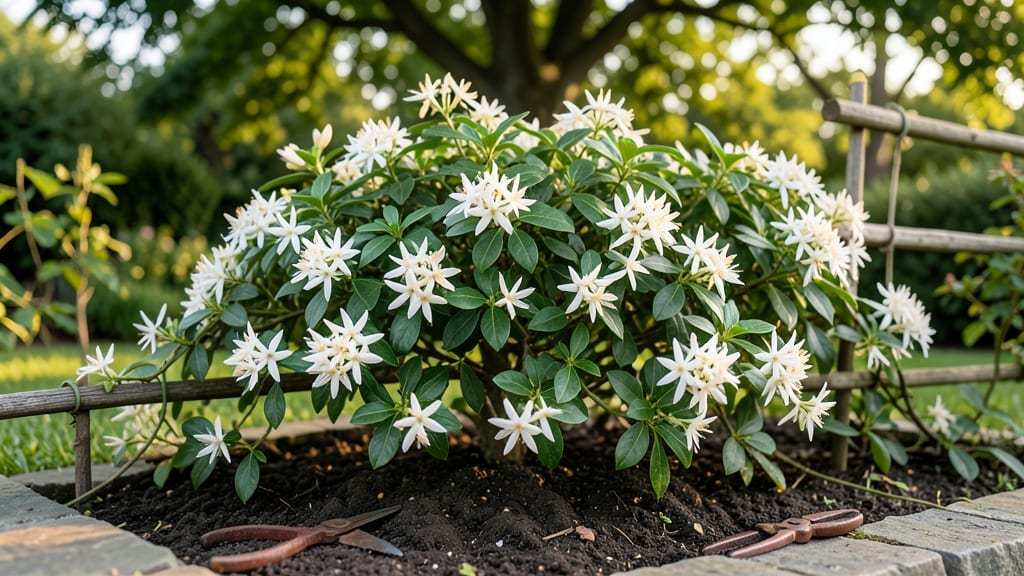
The star jasmine flower brings summer nights to life with its intoxicating, jasmine-like scent—perfect for Pacific Northwest gardens where cooler evenings make fragrance even more magical. 🌿 I’ve grown mine for five years now, and every June, the tiny white star-shaped blooms transform my porch into a fragrant retreat.
The key? Mimicking its native woodland edges—dappled shade, well-draining soil, and patience for its slow-but-steady climbing habit.
This vine thrives with morning sun and afternoon shade, making it ideal for fences, trellises, or even trained up a sturdy tree. Pacific Northwest’s mild summers suit it perfectly—just avoid soggy roots by amending clay soil with compost.
Water deeply but let the top inch dry between drinks, and you’ll see glossy leaves and blooms by midsummer. Pruning after flowering keeps it tidy and encourages next year’s growth.
By late summer, you’ll be rewarded with clusters of fragrant blossoms that perfume the air at dusk. The vines grow 10–15 feet over time, so plan your support structure early.
Even in our rainy winters, star jasmine holds its leaves, adding evergreen interest to bare branches. With minimal fuss, it becomes the garden’s unsung hero—scented, shade-tolerant, and drought-resistant once established.
Fair warning: It’s slow to start but worth the wait. Start with a rooted cutting or small plant, and within three years, you’ll have a fragrant canopy that neighbors will envy.
The secret? Let it grow naturally—no heavy-handed pruning—and it’ll reward you with years of effortless beauty. Ready to make your garden smell like a tropical getaway?
📚 In This Guide
- What you need
- Instructions
- Tips and common mistakes
- Wrapping up and next steps
What you need
- ● Star Jasmine Plant: 1–3 Trachelospermum jasminoides plants (choose dwarf varieties like ‘Little Gem’ for smaller spaces or standard types for vigorous climbing)
- ● Organic option: Seeds (slower to establish; requires stratification) or rooted cuttings (faster growth)
- ● Growing Medium: Well-draining potting mix (50% peat moss or coconut coir + 30% perlite + 20% compost) for containers
- ● Amended garden soil (add 2–3 inches of compost or aged manure for in-ground planting)
- ● Support Structure: Trellis, arbor, or permanent fence (star jasmine thrives with vertical support; aim for 6–10 feet of climbing space)
- ○ Optional: Decorative lattice or obelisk for aesthetic appeal
- ● Gardening Tools: Trowel or transplant spade
- ● Gloves (to protect from thorns on mature plants)
- ● Pruners (sterilized with rubbing alcohol)
- ● Watering can or hose with soaker nozzle
- ○ Optional (But Helpful!): Mulch (3–4 inches of wood chips or pine straw to retain moisture)
- ● Slow-release fertilizer (10-10-10 or balanced organic option)
- ● pH test kit (ideal soil pH: 6.0–7.0)
- ● Drip irrigation system (for large plantings or dry spells)
- ● Location: Full sun to partial shade (morning sun + afternoon shade works best in hot inland PNW areas)
- ● Sheltered from winter winds (star jasmine is semi-evergreen but benefits from protection)
- ● Soil Prep: Amend heavy or clay soils with sand or grit to improve drainage (critical in the PNW’s wet winters!)
- ● Avoid waterlogged areas (star jasmine hates soggy roots).
Instructions for planting and cultivating star jasmine in the Pacific Northwest
Here's how to coax this fragrant climber into thriving, vine-covered beauty that thrives in our damp, mild climate.
🌱 Step 1: Choose the Perfect Planting Site and Timing
Star jasmine (Trachelospermum jasminoides) thrives in partial shade to morning sun—critical for the Pacific Northwest's intense afternoon sunlight. I always select a site with dappled light or filtered sun, especially in hotter inland areas like Portland or Salem. The plant's glossy leaves burn easily under full sun exposure.
Spring is ideal for planting, ideally after the last frost when soil temperatures reach 60°F. In our region, that's typically mid-April to early May. If you must plant in fall, do so at least 6 weeks before the first frost—star jasmine needs time to establish roots before winter dormancy. Dig a hole twice as wide as the root ball but only as deep, since planting too deep suffocates the plant.
🪴 Step 2: Prepare the Soil and Plant Correctly
Star jasmine tolerates a wide range of soil types but performs best in well-draining, slightly acidic soil (pH 6.0-7.0). Amend heavy clay soils with 2-3 inches of compost mixed into the top 12 inches of soil. In sandy soils, incorporate 1 inch of organic matter to improve moisture retention. The plant's roots are shallow but extensive, so avoid compacting the soil during planting.
Place the plant in the hole and backfill with native soil, pressing gently to eliminate air pockets. Water deeply to settle the soil around the roots. Here's the thing—star jasmine is drought-tolerant once established, but young plants need consistent moisture. Mulch with 2-3 inches of wood chips to retain moisture and protect roots from winter cold. Keep the mulch 6 inches away from the stem to prevent rot.
☀️ Step 3: Provide Support and Prune for Optimal Growth
Install a trellis, arbor, or sturdy fence within 1-2 feet of the planting site—star jasmine grows aggressively and needs support to climb. The vines are woody and can reach 15-20 feet if unchecked, so choose a structure that matches your space. Prune in late winter or early spring before new growth begins, cutting back one-third of the previous year's growth to encourage bushier, more fragrant blooms.
Real talk: Star jasmine blooms on new wood, so avoid heavy pruning in fall or winter. You'll see the most abundant flowers if you prune right after flowering in late spring or early summer. Remove spent blooms regularly to redirect energy to new growth. The plant's fragrant white flowers appear in late spring to early summer, with occasional blooms in fall.
💧 Step 4: Water and Fertilize for Long-Term Success
Water deeply once a week during the first growing season to encourage deep root growth. Once established, star jasmine is drought-tolerant but benefits from deep watering every 2-3 weeks during dry spells. Overwatering is the biggest mistake—soggy soil leads to root rot, especially in our rainy climate. You'll know it's time to water when the top 2 inches of soil feel dry to the touch.
Fertilize lightly in early spring with a balanced, slow-release fertilizer (10-10-10) applied at half the recommended rate. Star jasmine is not a heavy feeder, so avoid excessive nitrogen, which promotes leafy growth at the expense of flowers. In fall, apply a low-nitrogen, high-phosphorus fertilizer (5-10-10) to encourage root development and next year's blooms.
Tips & tricks for perfect star jasmine cultivation
These essential insights will help you transform your Pacific Northwest garden into a fragrant star jasmine haven—without the common pitfalls that trip up even experienced gardeners.
Site Selection Secret: When choosing your planting location, prioritize morning sun with afternoon shade—especially in inland areas like Portland where afternoon sunlight can scorch the delicate leaves. I've seen star jasmine struggle in full sun spots, developing brown patches within weeks. The ideal location receives bright morning light but filtered shade after 10 AM. If you're working with a south-facing wall, consider a sheer curtain or lattice to diffuse the intense afternoon rays.
Soil Prep Strategy: The 2-3 inches of compost recommendation in heavy clay soils is non-negotiable—this creates the perfect crumbly texture star jasmine craves. For sandy soils, don't skip the 1-inch organic matter layer, even though it seems minimal. I've found that mixing in a handful of worm castings with the compost gives an extra boost to root development. Remember, these shallow roots need both aeration and moisture retention, so avoid compacting the soil when you're backfilling the hole—gentle pressure is all you need.
Pruning Precision: That one-third pruning in late winter might seem drastic, but it's the key to abundant blooms. I learned this the hard way after skipping it for two seasons—my plant became leggy with sparse flowers. The secret is to cut just above a leaf node where new growth will emerge. For established plants, you can do a second light pruning right after flowering in late spring to encourage another round of blooms. Just avoid cutting into old wood, as star jasmine won't produce flowers from those cuts.
Watering Wisdom: The "top 2 inches dry" test is your best friend, especially in our rainy climate. I've seen many gardeners overwater star jasmine, thinking it needs constant moisture. The key is deep watering—when you water, soak the soil down to 6 inches rather than just wetting the surface. This encourages those shallow roots to grow deeper, making your plant more drought-resistant once established. A moisture meter can be a game-changer here if you're unsure.
Pro Tips for Star Jasmine Flower
- These essential insights will help you transform your Pacific Northwest garden into a fragrant star jasmine haven—without the common pitfalls that trip up even experienced gardeners.
- Site Selection Secret: When choosing your planting location, prioritize morning sun with afternoon shade—especially in inland areas like Portland where afternoon sunlight can scorch the delicate leaves.
- Soil Prep Strategy: The 2-3 inches of compost recommendation in heavy clay soils is non-negotiable—this creates the perfect crumbly texture star jasmine craves.
Frequently asked questions
Got questions about growing and caring for star jasmine flowers? You’re not alone! Here are some of the most common queries from gardeners in the Pacific Northwest and beyond—plus straightforward answers to help you nurture this fragrant beauty with confidence.
Is star jasmine hard to grow in the Pacific Northwest?
Not at all! Star jasmine (Trachelospermum jasminoides) thrives in the PNW’s mild, maritime climate. It’s drought-tolerant once established and handles USDA Zones 7-10, making it perfect for coastal areas like Seattle or Portland. Just ensure it gets well-draining soil and partial shade to avoid scorching in hot summers.
How long does it take for star jasmine to bloom?
Patience is key—star jasmine typically takes 2-3 years to mature and bloom after planting. However, if you start with a 1-gallon container plant, you might see flowers in 1 year. Prune lightly after flowering to encourage bushier growth and more blooms next season!
Can I grow star jasmine in a container?
Star jasmine is a fantastic container plant for patios or balconies. Use a 10-15 gallon pot with drainage holes and a mix of potting soil and perlite. Train it on a trellis or let it cascade over the sides. Just water regularly (containers dry out faster) and fertilize lightly in spring.
What pests should I watch for with star jasmine?
The biggest threats are aphids, spider mites, and scale insects. Keep an eye out for sticky residue (honeydew) or yellowing leaves. Spray with neem oil or insecticidal soap for mild infestations. Ladybugs are natural predators—invite them to your garden!
Why isn’t my star jasmine flowering?
If your plant is healthy but not blooming, it might need more sunlight (6+ hours/day) or balanced fertilizer (like 10-10-10) in early spring. Over-pruning or too much nitrogen can also delay flowers. Try reducing water slightly in late summer to stress the plant—this often triggers blooming!
Wrapping up and next steps
Transforming your Pacific Northwest garden with star jasmine is a fragrant journey worth taking! 🌿 Its low-maintenance charm, stunning blooms, and intoxicating scent make it a standout choice for any outdoor space. Whether you're a seasoned gardener or just starting, this versatile climber offers beauty and tranquility with minimal effort.
Ready to bring this fragrant perfection to your garden? Start by selecting the perfect spot—then watch your space bloom into a fragrant oasis! 🌸