Flowers
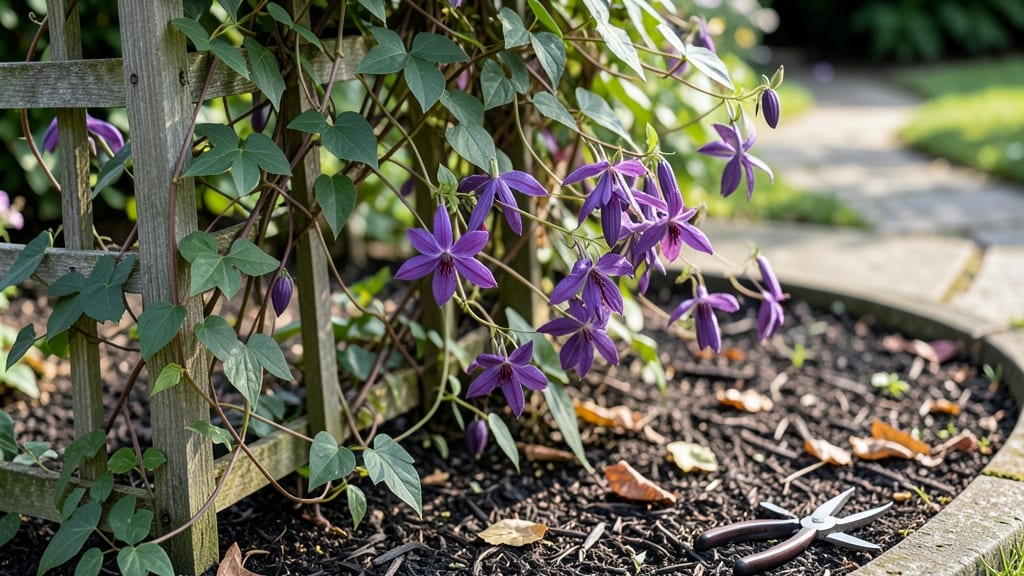
That purple climbing flower draped over your arbor could be the showstopper your Pacific Northwest garden deserves—year-round color that hums with bees and butterflies. 🌿 I’ve watched clematis vines transform bare winter branches into cascades of lavender blooms, while morning glories turn fences into living tapestries by summer.
The secret isn’t just choosing the right vine—it’s pairing it with the perfect support structure and companion plants.
Start with clematis ‘Jackmanii’ for bold purple blooms that thrive in partial shade, or morning glories for fast-growing, seasonal drama in sunny spots. Wisteria’s fragrant purple clusters need more space but reward with breathtaking vertical impact.
Pair them with silver foliage plants like lamb’s ear or deep green shrubs like boxwood to make the purple pop even harder.
Imagine your trellis bursting with color from late spring through fall, then carrying on with evergreen foliage or winter interest. The best part? These climbers attract pollinators like crazy—your garden becomes a buzzing, blooming ecosystem. Let’s design a climbing display that steals the show without stealing your weekends.
Whether you’re working with a small balcony or a sprawling backyard, the right trellis, pruning schedule, and plant combo will turn your space into a purple paradise. We’ll cover the easiest varieties for beginners and the showiest for experienced gardeners—plus how to keep them healthy through PNW’s damp winters.
📚 In This Guide
- What you need
- Instructions
- Tips and common mistakes
- Wrapping up and next steps
What you need
- ● Climbing flower plants: 3–5 purple varieties (e.g., Clematis ‘Jackmanii’, Passiflora incarnata, or Thunbergia alata—choose based on your space and sunlight).
- ● Potting soil: 1–2 bags (50 lbs each) of well-draining, organic potting mix (amend with perlite or compost for PNW’s wet winters).
- ● Containers or in-ground space: Containers: 3–5 large pots (15–20 gallons) with drainage holes (terracotta or fabric grow bags work best).
- ● In-ground: A sunny, sheltered spot with 6+ hours of light and a trellis, arbor, or fence (8+ ft tall for vigorous climbers like Clematis).
- ● Fertilizer: 1 bag of balanced, slow-release fertilizer (10-10-10) or organic options (fish emulsion, worm castings).
- ● Mulch: 2–3 bags of wood chips or straw to retain moisture and regulate soil temp.
- ● Hand trowel and pruning shears (sterilized with rubbing alcohol).
- ● Garden gloves (to protect from thorns or rough vines).
- ○ Trellis or climbing support: Optional but highly recommended—bamboo stakes, wire mesh, or decorative arbors (ensure they’re sturdy for heavy blooms!).
- ● Drip irrigation or watering can (climbers need consistent moisture, especially in PNW’s dry summers).
- ● Epsom salt (1 lb) for magnesium boost (helps prevent yellowing leaves).
- ○ Pollinator-friendly companions: Optional—plant lavender, bee balm, or salvia nearby to attract more bees and butterflies!
- ● Sunlight: 6+ hours of direct sun daily (morning sun + afternoon shade works for some varieties).
- ● Water access: A hose or water source near your planting area.
- ● Knowledge of pruning: Research when and how to prune your specific purple climber (e.g., Clematis prunes in early spring, while Passiflora prunes after flowering).
- ● Patience: Some climbers (like Clematis) take 1–2 years to reach full blooming potential!
Step-by-step guide for planting and maintaining a Pacific Northwest climbing flower garden
Here’s how to create a thriving vertical display that keeps blooms coming all season.
🌱 Step 1: Choose the Right Climbing Flower Varieties for Your Region
For the Pacific Northwest’s mild, wet climate, opt for hardy climbers like clematis (e.g., ‘Jackmanii’ or ‘Nelly Moser’), purple wisteria (if you have space for its mature size), or morning glories for annual color. Clematis thrives in partial shade, while wisteria needs full sun—both tolerate the region’s damp winters better than tropical vines.
I always check the USDA hardiness zone for my plants. Most PNW climbers handle zones 5-8, so if you’re in Seattle or Portland, you’re in luck. For bold purple hues, clematis ‘Vyvyan Pennell’ or purple passionflower are standout choices. Avoid fussy tropical vines like bougainvillea—they’ll struggle with our cool summers.
🪴 Step 2: Prepare the Support Structure and Planting Site
Install a sturdy trellis, arbor, or fence before planting—climbing flowers hate being transplanted once established. For clematis, a 5-6 foot tall trellis with horizontal wires works best. Secure it firmly; these vines can weigh 20-30 pounds when laden with blooms. I use galvanized metal or cedar for longevity in damp climates.
Dig a hole twice as wide as the root ball but only as deep as the container’s base. Amend the soil with 1-2 inches of compost mixed into the bottom of the hole. Pacific Northwest soil is often dense and acidic—clematis prefers slightly alkaline soil (pH 6.5-7.5). Test your soil and add pelletized lime if needed to raise pH.
☀️ Step 3: Plant and Stake for Strong Growth
Place the plant so the top of the root ball sits 1-2 inches below soil level—this prevents crown rot in wet winters. Gently spread roots outward and backfill with native soil mixed with 1 part compost. Water deeply to settle the soil, then add a 2-3 inch layer of mulch (avoid wood chips near stems—they retain too much moisture).
Install 2-3 stakes or a small cage around the plant to support early growth. Climbing flowers need guidance until their tendrils or aerial roots grip the trellis. For clematis, I tie the main stems loosely to the trellis with soft garden twine in a figure-eight pattern. Avoid tight ties—they’ll strangle the stems as they thicken.
💧 Step 4: Water and Fertilize for Year-Round Blooms
Water deeply 2-3 times per week for the first month, then taper to once a week once established. Pacific Northwest summers can be dry, but overwatering is worse—soggy soil invites root rot. Check moisture by sticking your finger 2 inches into the soil; if it’s dry, water until it’s damp but not saturated.
Feed with a balanced 10-10-10 fertilizer in early spring and again after the first flush of blooms. For clematis, I switch to a low-phosphorus (5-10-10) formula in summer to encourage more flowers than foliage. Avoid high-nitrogen fertilizers—they’ll give you leaves instead of blooms. Deadhead spent flowers regularly to prolong the season.
✂️ Step 5: Prune and Train for Season-Long Color
Prune clematis in early spring before new growth starts. Cut back last year’s stems by 1/3 to encourage bushier growth. For wisteria, prune after flowering to shape the vine and remove weak growth. Always use clean, sharp pruners—dull blades tear stems, inviting disease.
Train vines along the trellis by tying new growth to the structure every 4-6 inches. This prevents tangled messes and ensures even blooming. In fall, apply a 2-3 inch layer of mulch to insulate roots through winter. Most PNW climbers are hardy, but extra protection helps in cold snaps below 20°F.
Tips & tricks for Pacific Northwest purple climbing flowers
Here's what nobody tells you about keeping these vibrant vines thriving in our unique climate.
Climate-Specific Planting: In the Pacific Northwest's damp winters, plant clematis and wisteria in locations with afternoon shade to prevent fungal issues. The morning sun helps dry dew quickly, while afternoon shade protects delicate blooms from scorching. For morning glories, full sun works best—they'll reward you with more vibrant purple flowers. Remember, our cool summers mean these plants need consistent moisture but excellent drainage to prevent root rot.
Support System Secrets: When installing your 5-6 foot trellis for clematis, bury the posts at least 12 inches deep and use concrete anchors for heavy vines. I've seen too many trellises collapse under 20-30 pound vines during summer storms! For wisteria, consider a cable system that allows the vine to grow upward naturally without forcing it into rigid patterns. The key is creating a structure that complements the vine's natural growth habit rather than restricting it.
Soil pH Management: Our native Pacific Northwest soil is naturally acidic, but clematis thrives in slightly alkaline conditions (pH 6.5-7.5). Test your soil before planting and amend with pelletized lime if needed. I recommend testing again after 6 months to ensure you've achieved the right balance. Over-amending can be just as harmful as under-amending, so aim for gradual adjustments. For containers, use a pre-mixed alkaline potting soil to avoid pH fluctuations.
Winter Protection Strategy: While most PNW climbers handle temperatures down to 20°F, adding a 2-3 inch layer of straw mulch around the base provides extra insulation. For young plants or particularly sensitive varieties, wrap the trellis structure itself with burlap to create a microclimate. I've found that even hardy clematis benefit from this protection during prolonged cold snaps below 20°F, especially if they're planted against north-facing walls where cold air collects.
Pro Tips for Purple Climbing Flower
- Here's what nobody tells you about keeping these vibrant vines thriving in our unique climate.
- Climate-Specific Planting: In the Pacific Northwest's damp winters, plant clematis and wisteria in locations with aft...
- Support System Secrets: When installing your 5-6 foot trellis for clematis, bury the posts at least 12 inches deep an...
Frequently asked questions
What’s the best time to plant purple climbing flowers in the Pacific Northwest?
For Clematis or Wisteria (two popular purple climbers), plant in early spring or fall when soil is cool but workable. Spring planting gives roots time to establish before summer heat, while fall allows them to settle before winter. Avoid planting in mid-summer—the heat can stress young plants.
Do purple climbing flowers attract bees and butterflies year-round?
Most purple climbers, like Clematis or Honeysuckle, bloom in spring and summer, drawing pollinators then. However, evergreen varieties (e.g., Lonicera) provide winter interest and may still offer nectar when other flowers fade. Pair with native PNW plants like Salal for year-round wildlife support.
How do I train a purple climbing flower to grow on a trellis or fence?
Use soft ties (like garden twine or Velcro straps) to gently guide vines along the trellis. For aggressive climbers like Wisteria, prune in late winter to control spread. Clematis benefits from a 3-part support system: a sturdy post, horizontal bars, and vertical strings for twining. Avoid metal trellises—opt for wood or plastic to prevent vine damage.
Why are my purple climbing flowers wilting or turning yellow?
Yellowing leaves often signal overwatering or poor drainage. Ensure pots/beds have well-draining soil (mix in perlite or sand). Wilting can also mean underwatering—check soil moisture 1–2 inches deep. Fungal issues (like powdery mildew) may appear in humid PNW climates; improve airflow and treat with neem oil if needed.
What are some low-maintenance purple climbing flowers for beginners?
Start with these hardy, low-fuss options:
- Clematis ‘Jackmanii’ – Classic purple blooms, thrives in partial shade.
- Honeysuckle ‘Hot Chocolate’ – Fragrant, drought-tolerant, and deer-resistant.
- Morning Glory ‘Heavenly Blue’ – Fast-growing annual (great for summer color).
- Passionflower ‘Purple Haze’ – Unique flowers, drought-resistant once established.
Wrapping up and next steps
Transforming your Pacific Northwest garden into a vibrant pollinator paradise with purple climbing flowers isn’t just possible—it’s rewarding! 🌸 From the striking Clematis to the hardy Morning Glory, these plants bring year-round color, support local ecosystems, and add drama to any space.
Whether you’re a seasoned gardener or just starting, the key is choosing the right variety, providing proper care, and embracing the beauty of nature’s hard work.
Ready to take the next step? Start small—pick one purple climber, plant it with confidence, and watch your garden (and pollinators!) thrive. Happy gardening! 🌿