
Flowers
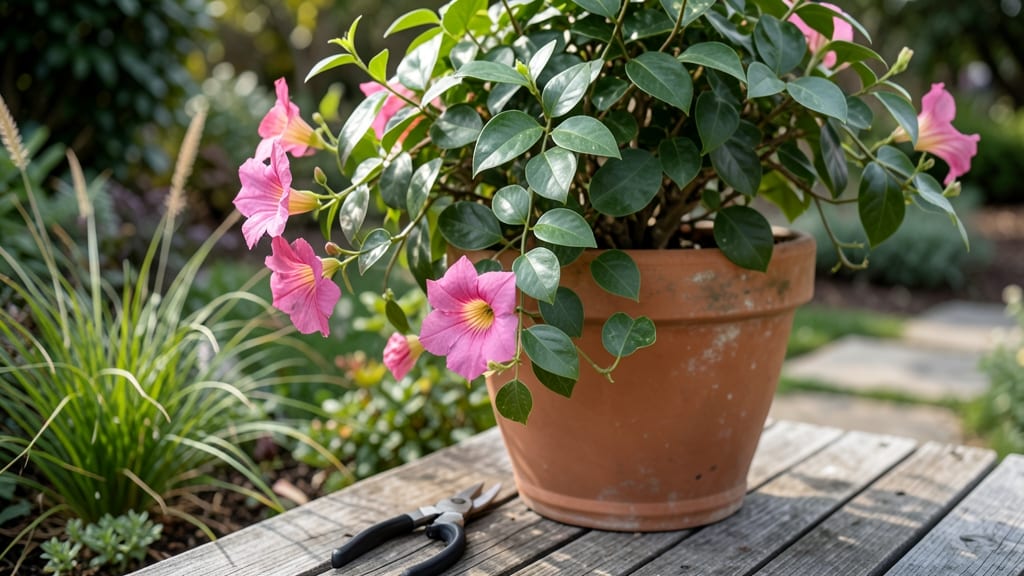
Caring for mandevilla flowers starts with understanding their sun-drenched, tropical nature—these vines thrive when you mimic their native climate with bright light and occasional humidity boosts. 🌿 I’ve grown them for years, and the secret isn’t complicated: they reward patience with bold, trumpet-shaped blooms that last from spring through frost, even in containers.
The key is balancing their love of warmth with simple adjustments for cooler months, so they never skip a season.
You’ll need well-draining soil, a pot with drainage holes (or a sunny spot in the ground), and a watering can—no fancy tools required. Mandevillas hate soggy roots, so let the top inch dry between waterings, and fertilize lightly every 4-6 weeks during growing season.
Pruning after blooms fade keeps them bushy and encourages more flowers, while winter care is just about protecting them from hard freezes.
What you’ll end up with is a plant that looks like it belongs in a tropical paradise, not your backyard. The glossy leaves and clusters of pink, red, or white flowers make them the star of any patio or balcony, and they’re tougher than they look—even beginners see results fast.
The only trade-off? They’re not cold-hardy, so winter prep is non-negotiable if you live in chilly zones.
Whether you’re growing them in pots you can winter indoors or digging them into the ground for summer, the effort pays off in months of vibrant color. Let’s get those vines thriving—no green thumb required, just a little attention to their basic needs.
📚 In This Guide
- What you need
- Instructions
- Tips and common mistakes
- Wrapping up and next steps
What you need
- ● Well-draining potting mix (10-15 lbs) – Use a blend of cactus/succulent mix (60%) and perlite or orchid bark (40%) for aeration.
- ● Pot with drainage holes – 12-16" diameter (terracotta or ceramic preferred).
- ● Slow-release fertilizer (e.g., 10-10-10 or 14-14-14) – 1-2 lbs per plant for the growing season.
- ● Watering can with a rose attachment – For gentle, deep hydration.
- ● Pruning shears – Sharp, clean pair to trim dead blooms or leggy stems.
- ● Humidity tray or pebble tray – Keeps air moist in dry climates.
- ● Mulch (orchid bark or pine needles) – Retains moisture and mimics tropical conditions.
- ● Grow lights (LED, full-spectrum) – If indoors with <10 hours of sunlight.
- ● Epsom salt (magnesium sulfate) – 1 tbsp/month in water for green, vibrant foliage.
Step-by-step guide to cultivating thriving Mandevilla vines
Here's the method that keeps my Mandevillas blooming nonstop—no fuss, just vibrant growth.
🪴 Step 1: Select the Right Container and Soil Mix
Mandevillas thrive in well-draining containers with 5-7 gallons capacity per plant—this ensures roots stay aerated and never waterlogged. I use terracotta pots because they wick away excess moisture through the walls, which prevents root rot. Avoid plastic unless it has drainage holes; Mandevillas hate soggy roots.
Fill the bottom 2 inches with orchid bark or perlite for drainage. Then add a lightweight potting mix blended with 20% coconut coir or peat moss to retain moisture without compacting. The mix should feel like a damp sponge—not wet, not dry. Press it down gently so the surface is firm but not packed.
☀️ Step 2: Position for Maximum Sunlight and Shelter
Mandevillas demand full sun—that means 6+ hours of direct sunlight daily. Place them in a south- or west-facing spot where they’ll bask in warmth. If you’re in a hot climate, provide afternoon shade to prevent leaf scorch; you’ll notice leaves curling or turning yellow if it’s too intense.
Here’s the thing—Mandevillas are tender perennials and cannot tolerate frost. Bring them indoors before temperatures dip below 50°F at night. I keep mine on a sunny patio during summer and move them to a bright, unheated garage or sunroom in winter. A grow light can supplement if natural light drops below 12 hours daily.
💧 Step 3: Water Deeply and Strategically
Water only when the top 1-2 inches of soil feel dry—stick your finger in to check. Mandevillas store water in their thick stems, so they drought better than they tolerate soggy soil. When you water, soak thoroughly until water runs out the drainage holes. Empty the saucer afterward to prevent root rot.
In summer, you’ll water every 2-3 days, but cut back to once a week in winter when growth slows. Overwatering is the #1 killer—wilting leaves that stay soft (not crisp) signal root rot. If this happens, stop watering and let the soil dry completely before resuming.
✂️ Step 4: Prune for Bushier Growth and More Blooms
Pruning isn’t just about shaping—it’s about encouraging more flowers. After the first flush of blooms, cut back leggy stems by ⅓ to promote branching. Use clean, sharp pruners and make cuts just above a leaf node (the bump where leaves grow). This ensures new growth emerges from the right spot.
Deadhead spent blooms weekly to redirect energy into new flowers. Pinch off the flower stem just above the next set of leaves. If your Mandevilla gets too tall or top-heavy, stake it with a soft bamboo cane tied loosely with twine. Never prune in late summer—new growth won’t harden off before winter.
🌿 Step 5: Feed and Protect for Year-Round Blooms
Feed every 4-6 weeks with a balanced, water-soluble fertilizer (10-10-10 or 20-20-20) diluted to half strength. I skip winter feedings—Mandevillas rest then. You’ll see darker green leaves and more buds when they’re getting enough nutrients. Flush the soil monthly with plain water to prevent salt buildup from fertilizer.
Watch for aphids or spider mites, which love the sap of Mandevillas. Spray infested areas with neem oil or insecticidal soap at the first sign of sticky leaves or fine webbing. A strong spray knocks off pests without harming the plant. Keep an eye out for bud drop—this usually means too much water, not enough light, or sudden temperature swings.
Tips & tricks for perfect Mandevilla flower care
These simple strategies will help you keep your Mandevillas blooming beautifully with minimal effort.
Container and Drainage: The 5-7 gallon container size is perfect because it gives roots enough space while preventing waterlogging. If you're using a larger pot, add extra orchid bark or perlite to the bottom to maintain that crucial 2-inch drainage layer. I've found that terracotta pots actually work better than plastic because their porous nature helps regulate soil moisture—just be sure to choose ones with drainage holes.
Sunlight Strategy: That 6+ hours of direct sunlight is non-negotiable, but here's what I do in hot climates: I place my Mandevillas in morning sun and move them to partial shade after 2 PM. This prevents leaf scorch while still giving them plenty of light. If you notice leaves curling or turning yellow, it's a clear sign they're getting too much midday heat.
Watering Wisdom: The finger test for the top 1-2 inches of soil is brilliant, but I've learned to go deeper in summer heat. Check moisture down to 3 inches—Mandevillas store water in their stems, so they can handle slightly drier soil than you might expect. When watering every 2-3 days in summer, I always soak until water runs out the bottom, then wait 10 minutes before returning saucers to catch any excess.
Pruning Precision: That ⅓ cut back after the first flush of blooms is key for bushier growth, but timing matters. I always prune right after blooming ends, not before. For the weekly deadheading, I use my fingers to pinch off spent blooms—it's faster than pruners and prevents those little cuts from potentially introducing bacteria. The soft bamboo cane staking is a game-changer for tall varieties, but I always tie it loosely so the plant can still sway slightly in the wind.
Pro Tips for Mandevilla Flower Care
- These simple strategies will help you keep your Mandevillas blooming beautifully with minimal effort.
- Container and Drainage: The 5-7 gallon container size is perfect because it gives roots enough space while preventing waterlogging.
- Sunlight Strategy: That 6+ hours of direct sunlight is non-negotiable, but here's what I do in hot climates: I place my Mandevillas in morning sun and move them to partial shade after 2 PM.
Frequently asked questions
Got questions about keeping your Mandevilla blooming beautifully? Here are some of the most common concerns—and their easy solutions!
How often should I water my Mandevilla?
Water your Mandevilla when the top 1-2 inches of soil feel dry—usually 2-3 times per week in warm weather. In cooler months or containers, reduce to once a week. Overwatering is the #1 killer, so always check moisture before watering. Pro Tip: Use well-draining soil and pots with drainage holes!
Can Mandevilla survive winter outdoors?
Nope! Mandevillas are tropical and can’t handle frost. In cold climates, move pots indoors before temps drop below 50°F (10°C). If you must leave them outside, use a heated greenhouse or wrap the pot in bubble wrap. Bonus: Prune lightly in early spring to encourage bushier growth!
Why are my Mandevilla leaves yellowing?
Yellow leaves usually mean overwatering or poor drainage. Check for:
- Soggy soil → Let it dry out and repot if needed.
- Cold roots → Keep in warm spots (60-80°F).
- Nutrient deficiency → Fertilize lightly with a balanced 10-10-10 mix.
How do I encourage more blooms?
Mandevillas love sun + food! Place in morning sun or partial shade (avoid harsh afternoon rays). Feed with a bloom-boosting fertilizer (like 10-30-20) every 4-6 weeks during growing season. Deadhead spent blooms to prompt new flowers—and don’t forget to prune leggy stems!
Can I grow Mandevilla from cuttings?
Take 4-6 inch cuttings from healthy stems in spring/summer. Remove lower leaves, dip in rooting hormone, and plant in moist perlite or sand. Keep warm and humid (like a plastic bag over the pot) until roots form in 2-4 weeks. Pro Tip: Use a heating mat to speed up rooting!
What’s the best alternative if I can’t grow Mandevilla?
If your climate is too harsh, try these low-maintenance bloomers:
- Bougainvillea – Drought-tolerant & vibrant.
- Plumbago – Thrives in heat and partial shade.
- Petunia – Annual but prolific bloomer.
- Ixora – Tropical look with tougher cold tolerance.
Wrapping up and next steps
Caring for mandevilla flowers is a rewarding journey that brings vibrant beauty to your space with just a little attention! 🌸 With the right balance of sunlight, water, and occasional pruning, these tropical darlings will thrive year-round—even as houseplants or container stars. Remember, patience and consistency are your best friends.
Now that you’re armed with expert tips, why not take the next step? Start with a single plant, experiment with propagation, or even share your newfound knowledge with fellow plant lovers. Your green thumb is about to shine brighter than ever!