
Flowers
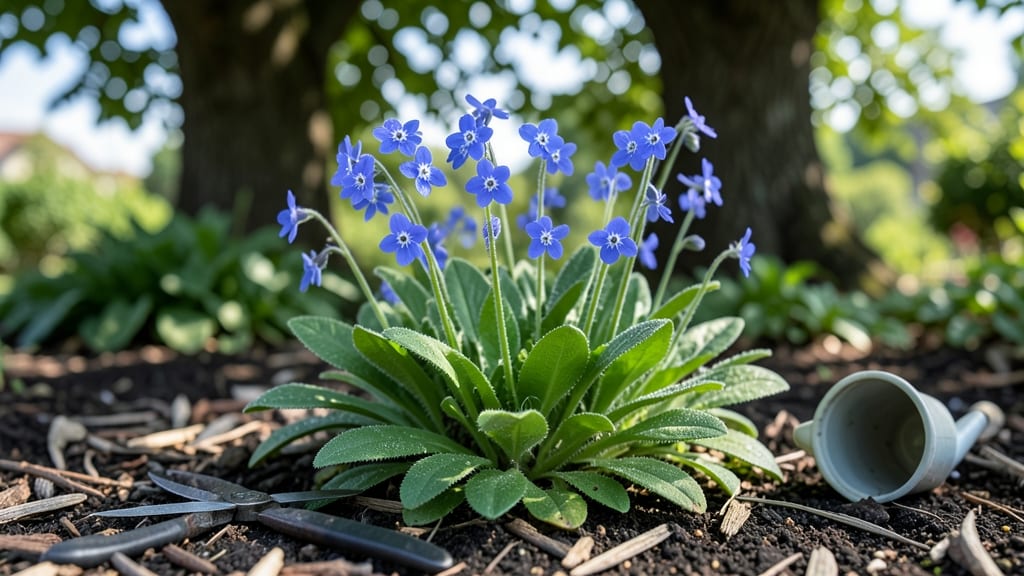
Proper forget-me-not flower care ensures their sky-blue blooms arrive right when spring feels hesitant—delicate Myosotis are nature’s reminder to cherish the little things, thriving in cool mornings and moist soil. patience; they reward you with weeks of blooms that no other shade plant can match.
Unlike sun-loving flowers, these thrive where others give up, turning shady corners into pockets of color.
You’ll need partial shade (3-6 hours of morning sun), well-draining but moisture-retentive soil, and a spot where they won’t compete with aggressive roots. Forget-me-nots are tougher than they look—once established, they bounce back from neglect, though they do appreciate consistent moisture and occasional deadheading.
The secret to their longevity? Mimicking their native woodland edges: damp but not soggy, cool but not frozen.
By midsummer, you’ll have a carpet of tiny blue stars that hum with pollinators, their foliage staying lush even when other shade plants wilt. Prune spent blooms to encourage more flowers, and in fall, let the seed heads form for next year’s surprise volunteers.
They’re equally happy in garden beds, window boxes, or even as container plants—just keep them cool.
Forget-me-nots are the ultimate low-maintenance shade star, but they do have one quirk: they spread like groundcover if left unchecked. Use them as edging, in rock gardens, or tucked between taller perennials where they’ll spill over container edges.
The more you grow, the more you’ll understand why gardeners swear by them for their effortless charm.
📚 In This Guide
- What you need
- Instructions
- Tips and common mistakes
- Wrapping up and next steps
What you need
- ● Seeds or seedlings: Choose Myosotis seeds (annual or perennial varieties) or healthy nursery-grown plants. Pro tip: 💡 Opt for perennial types if you want long-term blooms!
- ● Well-draining potting soil: 1–2 gallons (for pots) or enough to fill a garden bed. Mix in peat moss or perlite (10–20%) for aeration.
- ○ Containers (optional but helpful): 4–6" pots for seedlings (if starting indoors)
- ● 8–12" containers for mature plants (1 plant per 6" of diameter)
- ● Slow-release fertilizer: 5–10-5 or 10-10-10 blend (1 tbsp per plant or per 1 sq ft of garden bed).
- ● Mulch: 1–2 inches of organic mulch (e.g., shredded bark or straw) to retain moisture.
- ● Gloves: A pair of lightweight gardening gloves to protect your hands.
- ● Trowel or small shovel: For planting and soil amendments.
- ● Watering can or hose with a gentle spray nozzle: Forget-Me-Nots love consistent moisture but hate soggy roots!
- ● Pruning shears: Sharp scissors to trim dead blooms and encourage new growth.
- ○ Sunlight meter (optional): To confirm your space gets partial to full shade (2–6 hours of indirect light).
- ○ Shade cloth (optional): Lightweight fabric (30–50% shade) for hotter climates.
Step-by-Step guide for cultivating healthy forget-me-not blooms
These delicate blue beauties reward patience with months of cheerful color—here’s how to keep them thriving.
🌱 Step 1: Choose the Perfect Planting Location
Forget-me-nots adore partial to full shade, making them ideal for woodland gardens, under trees, or north-facing borders. Select a spot with dappled sunlight—they’ll tolerate 2-4 hours of morning sun but wilt in hot afternoon rays. I always test a location by observing how much light it receives between 10 AM and 2 PM before committing.
The soil should drain well but retain moisture—sandy loam works best. Amend heavy clay with 2-3 inches of compost to improve aeration. Forget-me-nots hate soggy roots, so avoid low-lying areas where water pools after rain. A slight slope ensures excess moisture drains away naturally.
💧 Step 2: Plant at the Right Depth and Spacing
Set young transplants no deeper than their root ball—burying the crown too far encourages rot. Space them 8-12 inches apart in rows 12-18 inches apart to allow airflow and prevent fungal diseases. I use my fingers to create small holes just wide enough to cradle the roots without crowding.
Gently firm the soil around each plant to eliminate air pockets, then water deeply to encourage root contact with the surrounding earth. Forget-me-nots establish slowly, so keep the soil consistently moist (not soggy) for the first 4-6 weeks after planting. You’ll know they’re settled when new leaves appear—bright green and slightly wrinkled at the edges.
☀️ Step 3: Maintain Ideal Growing Conditions
Water forget-me-nots at the base of the plant rather than overhead to prevent fungal spores from splashing onto leaves. Aim for 1 inch of water per week, adjusting for rain—drought stress causes buds to drop prematurely. Mulch with 1-2 inches of organic mulch (like shredded bark) to conserve moisture and suppress weeds, but keep it 2 inches away from stems to avoid rot.
Fertilize lightly in early spring with a balanced 10-10-10 formula at half strength. Too much nitrogen produces lush foliage but fewer blooms. Deadhead spent flowers regularly to encourage continuous blooming—pinch off faded blooms at the base where the stem meets the leaf. This redirects energy to new buds rather than seed production.
✂️ Step 4: Overwinter and Renew for Next Season
Forget-me-nots are hardy perennials in USDA zones 3-9, but they benefit from a light mulch layer (2-3 inches) in winter to protect roots from freezing. In colder climates, I add a thin layer of straw over the mulch for extra insulation. Avoid heavy mulching in spring—remove excess once new growth appears to prevent rot.
Divide mature clumps every 3-4 years in early spring to rejuvenate plants. Dig up the entire clump, separate into 3-4 inch sections with roots attached, and replant immediately. This prevents overcrowding and ensures vigorous blooms. Forget-me-nots self-seed readily, so thin seedlings in spring to maintain spacing—leave the strongest 2-3 per cluster for best results.
Tips & tricks for perfect forget-me-not blooms
These cool-season beauties reward patience with vibrant blooms—here’s how to avoid common pitfalls and maximize their potential.
Lighting Insight: The 2-4 hours of morning sun mentioned in Step 1 is crucial because afternoon sun can scorch their delicate leaves. I’ve learned the hard way that even partial exposure to hot afternoon rays causes leaves to yellow and buds to drop prematurely. If your garden only gets afternoon shade, consider placing forget-me-nots near a northern-facing wall or under deciduous trees that provide summer shade.
Soil Preparation Strategy: When amending heavy clay with 2-3 inches of compost as suggested in Step 1, I recommend working it into the top 6 inches of soil rather than just mixing it in. This creates a deeper root zone that retains moisture while preventing compaction. Forget-me-nots develop shallow root systems, so well-aerated soil prevents root rot—a common issue in dense clay.
Planting Depth Caution: The instructions emphasize planting no deeper than the root ball, but I’ve found that even slight variations in depth make a difference. Use your finger to gently press the soil around the roots until it’s firm but not compacted. This ensures good root-to-soil contact while preventing crown rot from over-deep planting. The first 4-6 weeks after planting are critical for establishing strong roots.
Watering Technique: While the 1 inch of water per week guideline is helpful, I’ve discovered that forget-me-nots actually prefer slightly more frequent watering during their first growing season. Instead of waiting for a full week, water every 4-5 days with about ½ inch each time. This mimics their natural moisture preferences in cool, shaded environments and prevents the stress that leads to bud drop.
Pro Tips for Forget Me Not Flower Care
- These cool-season beauties reward patience with vibrant blooms—here’s how to avoid common pitfalls and maximize their potential.
- Lighting Insight: The 2-4 hours of morning sun mentioned in Step 1 is crucial because afternoon sun can scorch their delicate leaves.
- Soil Preparation Strategy: When amending heavy clay with 2-3 inches of compost as suggested in Step 1, I recommend working it into the top 6 inches of soil rather than just mixing it in.
Frequently asked questions
Got questions about keeping your Myosotis (forget-me-nots) happy? You’re not alone! Here are some of the most common concerns—plus quick fixes to keep your cool-season bloomers thriving in shade.
How often should I water forget-me-not flowers?
Water forget-me-nots regularly—about 1 inch per week—but avoid soggy soil. These shade-lovers prefer consistent moisture, especially during their first growing season. Let the top inch of soil dry out between waterings to prevent root rot. Pro tip: Mulch around the base to retain moisture and cool roots!
Can forget-me-nots survive winter?
Yes! Forget-me-nots are perennial hardy plants, thriving in USDA zones 3–9. In mild climates, they’ll regrow in spring. In colder areas, cut back dead foliage in late fall and protect with a light layer of mulch. Bonus: Their early spring blooms are a welcome splash of blue before other flowers wake up!
Why aren’t my forget-me-nots blooming?
Lack of blooms often means too much shade, over-fertilizing, or poor soil. Ensure they get partial shade (4–6 hours of light), feed lightly with a balanced fertilizer in early spring, and amend soil with compost. Troubleshoot: Deadhead spent blooms to encourage more flowers!
Are forget-me-nots toxic to pets?
Yes, they’re mildly toxic to dogs and cats due to pyrrolizidine alkaloids. Symptoms (if ingested) may include drooling, vomiting, or loss of appetite. Keep pets away from the garden or opt for pet-safe alternatives like Lobelia or Violas if you’re concerned.
How do I propagate forget-me-nots?
Divide mature clumps in early spring or fall for easy propagation. Dig up the plant, separate the roots gently, and replant divisions 6–12 inches apart. You can also grow from seeds—sow them outdoors in fall or start indoors 6–8 weeks before your last frost. Patience pays off!
What’s the best companion plant for forget-me-nots?
Pair them with shade-tolerant perennials like heuchera, astilbe, or ferns for a lush, low-maintenance border. Avoid competitive plants (e.g., aggressive ground covers) that steal nutrients. Design tip: Their delicate blooms contrast beautifully with hostas or bleeding hearts!
Wrapping up and next steps
Caring for forget-me-not flowers is a rewarding journey—these delicate bloomers bring charm to shaded gardens with minimal fuss! 🌸 By providing well-draining soil, consistent moisture, and a touch of patience, you’ll enjoy their vibrant blue hues season after season.
Whether you’re a seasoned gardener or a beginner, their cool-season resilience makes them a perfect addition to any garden.
Ready to watch your forget-me-nots flourish? Start by planting them in early spring or fall, and soon you’ll be surrounded by a sea of cheerful blooms. Happy gardening! 🌿