
Flowers
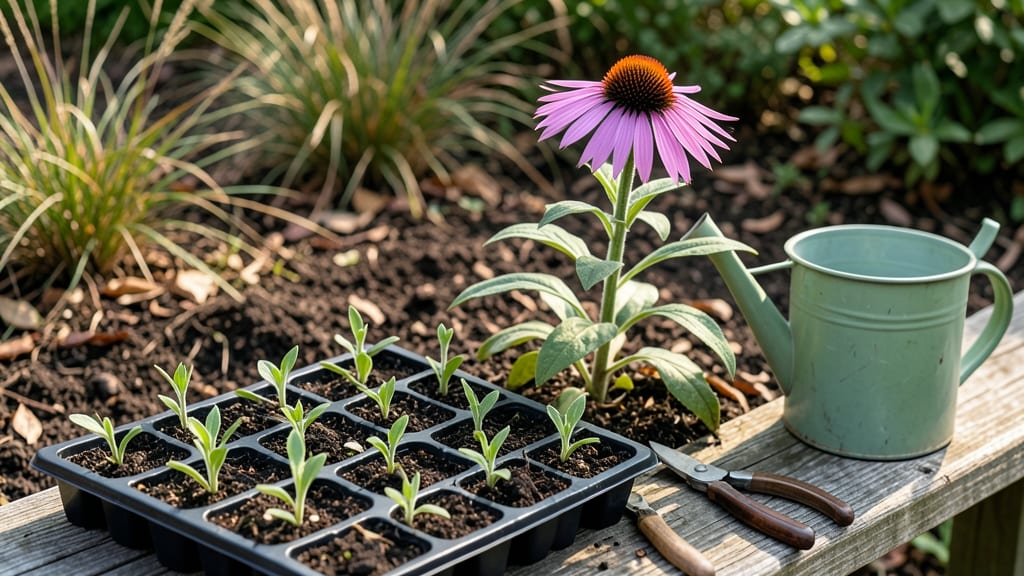
Planting echinacea flower seeds unlocks a garden that hums with bees, butterflies, and bold purple blooms from early summer through frost. 🌿 I’ve grown them from seed for five years now, and there’s nothing like watching those first daisy-like faces pop up in spring—especially when they return year after year with minimal effort.
The secret lies in mimicking their native prairie conditions: loose soil, full sun, and patience for germination.
You’ll need just three things to start: a sunny patch (at least 6 hours of light daily), a well-draining soil mix, and a sprinkle of seeds planted ¼ inch deep in early spring.
Most people give up too soon—echinacea seeds can take 10-21 days to sprout, but once they do, they’re tough as nails. The real magic happens when you let them self-seed; my garden now has volunteer plants popping up everywhere.
By midsummer, you’ll have 3-4 foot tall stalks crowned with 3-4 inch blooms that pollinators can’t resist. The flowers stay vibrant even after frost, providing late-season nectar when other gardens have gone quiet. Plus, they’re deer-resistant and drought-tolerant once established—perfect for low-maintenance gardens.
Whether you’re filling a sunny border or restoring a pollinator haven, echinacea delivers bold color, easy care, and wildlife benefits with almost no trade-offs. Let’s get those seeds in the ground so you can enjoy the show next summer.
📚 In This Guide
- What you need
- Instructions
- Tips and common mistakes
- Wrapping up and next steps
What you need
- ● Echinacea flower seeds: Choose a variety like Echinacea purpurea (purple coneflower) or Echinacea pallida (pale purple coneflower). Buy 20-50 seeds for a small patch or 100+ seeds for a full garden bed.
- ● Seed-starting mix: A lightweight, well-draining potting mix (e.g., 50% peat moss, 30% perlite, 20% compost). Use about 2-3 gallons for starting seeds indoors.
- ● Growing containers: For indoor starts: 4-6 inch biodegradable pots (1-2 per seed) or a seed tray with cell inserts.
- ● For direct sowing: Well-draining garden soil (amend with compost if needed).
- ● Watering can or spray bottle: A fine-mist spray nozzle keeps seeds moist without disturbing them.
- ○ Gloves: Protect your hands from soil and prickly stems (optional but recommended!).
- ● Trowel or small shovel: For planting seeds ¼ inch deep in soil.
- ● Plant labels: Mark varieties with biodegradable labels to track growth.
- ○ Heat mat (optional): Speeds up germination if starting seeds indoors in cooler climates.
- ● Grow lights or sunny windowsill: Provide 6-8 hours of light daily for indoor seedlings.
- ● Sunlight: Full sun (6+ hours daily) for outdoor planting.
- ● Climate: Start seeds 6-8 weeks before the last frost (or direct sow in spring or fall in USDA Zones 3-9).
- ● Patience: Germination takes 10-21 days—keep soil consistently moist!
- ● 🌱 Soak seeds overnight in warm water to soften hard seed coats and boost germination.
- ● 🔥 Thin seedlings to 12-18 inches apart once they sprout to prevent overcrowding.
- ● ✨ Deadhead spent blooms to encourage more flowers and prolong the season!
How to grow echinacea flowers for maximum blooms and pollinator support
Here's the straightforward method I use to establish hardy echinacea plants that thrive year after year.
🌱 Step 1: Choose the Right Location and Prepare the Soil
Echinacea thrives in full sun—select a spot that receives at least 6-8 hours of direct sunlight daily. These plants have deep root systems, so avoid shallow or compacted soil. Amend the soil with 2-3 inches of compost to improve drainage and fertility, especially if your native soil is heavy clay.
Loosen the top 12 inches of soil with a garden fork to encourage root penetration. Echinacea dislikes soggy roots, so if your site has poor drainage, consider planting on a slight mound or in raised beds. A slightly alkaline to neutral pH (6.5-7.5) works best—test your soil if unsure.
🌱 Step 2: Sow Seeds at the Correct Depth and Spacing
Plant echinacea seeds ¼ inch deep—they need light to germinate, so don’t bury them too deeply. Space seeds 12-18 inches apart to allow mature plants room to develop their broad, bushy habit. I like to sow 2-3 seeds per spot and thin to the strongest seedling later—this accounts for uneven germination.
Keep the soil consistently moist but not waterlogged until germination, which typically occurs in 10-21 days. A light mulch of straw or shredded leaves helps retain moisture and suppress weeds. Avoid pressing the soil too firmly after planting—echinacea roots need air to establish.
☀️ Step 3: Provide Consistent Care for Strong Stems and Blooms
Once seedlings reach 3-4 inches tall, thin them to 6-8 inches apart to prevent overcrowding. Water deeply once a week during dry spells, focusing on the base of the plant to avoid wetting the foliage—this reduces disease risk. Echinacea is drought-tolerant once established, but young plants need steady moisture.
Fertilize lightly in early spring with a balanced, slow-release fertilizer (10-10-10) to support root and stem growth. Avoid high-nitrogen fertilizers, which promote leafy growth at the expense of flowers. You’ll see the first blooms in year two, but patience pays off—mature plants produce 3-5 inch daisy-like flowers that attract bees, butterflies, and hummingbirds.
✂️ Step 4: Prune and Maintain for Year-Round Health
After the first frost, cut back the entire plant to 2-3 inches above the ground. This encourages new growth from the base and prevents disease in the crown. In early spring, remove any dead or damaged stems before new shoots emerge. Echinacea is perennial, so proper pruning keeps it vigorous for decades.
Divide mature clumps every 3-4 years in early spring to rejuvenate the plant. Dig up the root ball, separate into sections with 3-5 stems each, and replant immediately. This prevents overcrowding and ensures continuous blooms. Mulch around the base with 2-3 inches of organic mulch to protect roots in winter and conserve moisture in summer.
Tips & tricks for perfect echinacea flower growth
Here's what I've learned after years of growing these hardy pollinator magnets—simple tweaks that make all the difference.
Sunlight Strategy: While 6-8 hours of sun is ideal, echinacea can handle up to 10 hours in cooler climates. In hotter regions, provide afternoon shade during peak summer months to prevent stress. I've noticed plants in full sun produce slightly larger blooms, but they still thrive with morning sun and afternoon shade.
Soil Preparation Secret: The 2-3 inches of compost recommendation is perfect, but I take it a step further by mixing in a handful of perlite for every 12 inches of amended soil. This improves drainage without compromising fertility, which is especially important if you're working with heavy clay. The roots will thank you with better penetration and fewer rot issues.
Germination Timing: Those 10-21 days for germination can feel like an eternity, but patience pays off. I've found that keeping seeds in a mini greenhouse or under a clear plastic dome speeds up germination to the lower end of that range. Just remember to remove the cover once sprouts appear to prevent damping off.
Watering Wisdom: The once-weekly watering guideline works well, but I adjust based on rainfall. In my experience, echinacea plants show signs of drought stress when leaves start curling—this is your cue to water deeply. Overwatering is worse than underwatering, so always check soil moisture 2 inches below the surface before adding more water.
Pro Tips for Echinacea Flower Seeds
- Here's what I've learned after years of growing these hardy pollinator magnets—simple tweaks that make all the difference.
- Sunlight Strategy: While 6-8 hours of sun is ideal, echinacea can handle up to 10 hours in cooler climates.
- Soil Preparation Secret: The 2-3 inches of compost recommendation is perfect, but I take it a step further by mixing in a handful of perlite for every 12 inches of amended soil.
Frequently asked questions
Got questions about growing echinacea from seeds?
You’re not alone! Here are answers to the most common queries—from planting to troubleshooting—so you can confidently grow these vibrant pollinator magnets.
How long does it take for echinacea seeds to germinate?
Echinacea seeds are slow starters! Expect germination in 4–6 weeks under ideal conditions (consistent moisture, warmth ~70°F, and indirect light). Pro tip: Soak seeds overnight before planting to speed up the process. Patience is key—these seeds aren’t in a rush!
Can I plant echinacea seeds in fall or winter?
Yes, but with caution! Echinacea seeds need cold stratification (4–6 weeks in the fridge) to break dormancy. Plant them in late fall (after the first frost) or winter in mild climates (Zones 7–10). Cover lightly with soil and mulch to protect them. Spring planting is easier for beginners!
Will echinacea seeds attract bees and butterflies right away?
Not immediately—first-year plants focus on roots and may produce minimal blooms. By year two or three, they’ll burst into color, becoming a pollinator powerhouse. Choose purple coneflower varieties (like ‘Magnus’) for the fastest bee appeal!
What if my echinacea seeds don’t sprout?
Don’t panic! Try these fixes:
- Check moisture: Keep soil consistently damp (not soggy).
- Test viability: Soak seeds in water—sinkers are likely viable.
- Adjust light: Move trays to a bright, indirect spot (avoid direct sun).
- Buy fresh seeds: Echinacea seeds lose potency after 1–2 years.
Are there echinacea varieties better for seed-growing?
Some varieties are hardier for beginners:
Variety
Why It’s Great
‘Green Envy’
Compact, disease-resistant, and fast-growing.
‘White Swan’
Unique white blooms and tolerates partial shade.
‘Hot Papaya’
Vibrant orange-pink flowers and heat-tolerant.
Wrapping up and next steps
Growing echinacea flower seeds is a rewarding way to attract pollinators, boost your garden’s resilience, and enjoy stunning blooms from early summer through fall. 🌻 With minimal effort and the right conditions, these hardy perennials will thrive for years—adding color, life, and even medicinal benefits to your space.
Ready to dive in? Start by gathering your seeds and soil, then follow the steps above to plant with confidence. Your future garden visitors will thank you!
💡 Pro Tip: Once established, echinacea practically plants itself—cut back spent blooms in late winter to encourage even more vibrant growth next season!