
Flowers
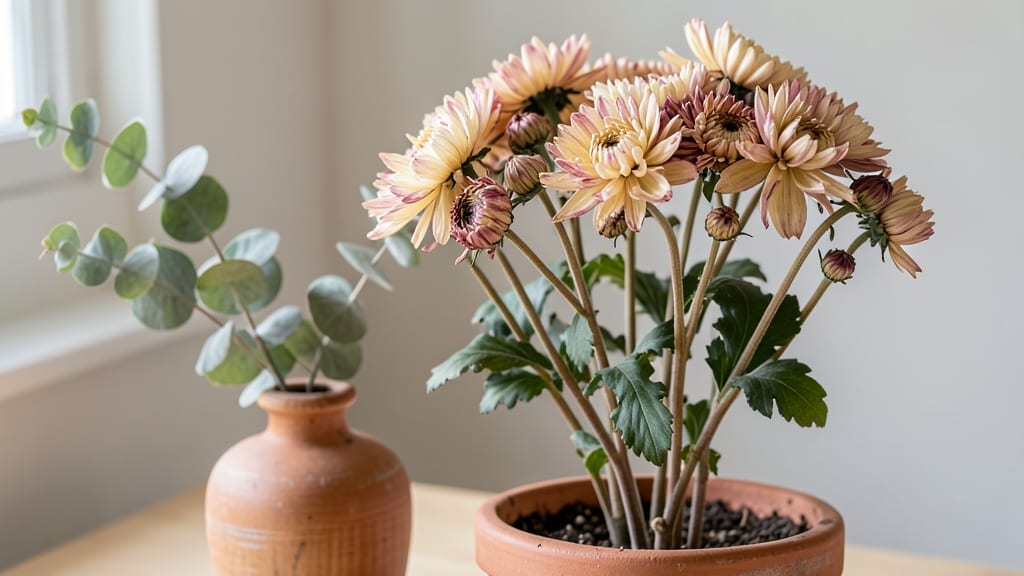
Preserving chrysanthemums as dry flowers lets you enjoy their autumn charm all year long—no wilting, no fading, just timeless beauty on your shelves or in arrangements.
I learned the hard way that harvesting at the right stage (when buds are just opening) makes all the difference between crisp petals and brittle scraps. The key isn’t just drying—it’s preserving that vibrant color and delicate shape so they look fresh months later.
You’ll need just a few simple tools: sharp scissors, twine or rubber bands, and either a dry, dark space or silica gel for faster results. Air-drying takes 2-3 weeks but keeps the natural look, while silica gel gives you ready-to-use blooms in 24 hours.
The best part? You can harvest chrysanthemums from late summer through fall, giving you plenty of time to experiment with different methods.
Once dried, these flowers transform into everything from elegant wreaths to fragrant potpourri—imagine the rich, earthy scent lingering in a handmade bouquet. The petals stay surprisingly soft, and the centers hold their shape for years if stored properly in airtight containers away from light.
It’s like freezing autumn in a jar, but without the freezer.
Whether you’re a crafter, a home decorator, or just love keeping seasonal magic alive, dried chrysanthemums are a game-changer. The process is forgiving, and the payoff is pure joy—think of your favorite fall colors brightening winter tablescapes or holiday gifts. Ready to turn those garden blooms into lasting treasures?
📚 In This Guide
- What you need
- Instructions
- Tips and common mistakes
- Wrapping up and next steps
What you need
- ● Fresh chrysanthemum blooms – Choose fully open, healthy flowers with vibrant petals (avoid wilted or pest-damaged ones). Quantity: 10–20 stems (or more, depending on your project).
- ● Sharp pruning shears or scissors – For clean cuts that prevent damage to stems.
- ● Drying method of choice: Air drying: Brown paper bags, newspaper, or a well-ventilated drying rack.
- ● Silica gel drying: Food-grade silica gel crystals (1–2 lbs, depending on flower size).
- ○ Microwave drying (optional): Microwave-safe plate and paper towels.
- ● Twine, floral wire, or rubber bands – For securing stems during drying.
- ● Glitter or metallic spray (for a festive look).
- ● Preservative spray (to extend longevity).
- ● Scrapbook paper or backing boards (for framing dried blooms).
- ● Glue dots or double-sided tape (for attaching flowers to projects).
How to harvest and preserve chrysanthemums as long-lasting dried flowers
Transform your garden's late-season blooms into fragrant, year-round decorations with this simple method.
Select the Perfect Blooms for Drying
Choose chrysanthemums that are fully open but still vibrant, with petals that haven't started browning at the edges. The best time to harvest is in the early morning when the flowers are at their peak freshness and moisture content is highest. Look for blooms with tight, rounded centers—they hold their shape best when dried.
Use clean, sharp pruning shears to cut stems at a 45-degree angle about 2-3 inches below the flower head. This angle increases water uptake when you rehydrate them later. Avoid harvesting flowers that show signs of pests or disease, as these issues can spread to your dried arrangements.
Prepare the Flowers for Drying
Strip the lower leaves from each stem, leaving only the top 1-2 inches of foliage attached. Removing excess leaves prevents mold growth during drying. Bundle 4-5 stems together (since that's our target yield) and secure them with a rubber band or twine, leaving the flower heads exposed.
Here's the thing—chrysanthemums dry best using the hanging method. Suspend the bundles upside down in a dry, well-ventilated area with consistent temperatures between 65-75°F and low humidity. A dark closet, garage, or even a covered porch works well. Avoid direct sunlight, which can bleach the petals and cause them to dry too quickly.
Monitor and Complete the Drying Process
Check your chrysanthemums after 7-10 days—they're ready when the petals are dry to the touch and the stems snap easily when bent (rather than bending). If you see any signs of mold or moisture, increase air circulation immediately. The drying time may vary based on your climate, so don't rush it—patience ensures better preservation.
Once fully dry, gently remove the flowers from the stems and store them in airtight containers lined with silica gel packets or uncooked rice to absorb any remaining moisture. Label each container with the variety and date to track freshness. Properly stored, these dried blooms will retain their color and shape for 1-2 years, making them perfect for winter arrangements.
Rehydrate and Use Your Dried Chrysanthemums
When you're ready to use your dried flowers, simply place the stems in warm water for 1-2 hours before arranging. The warm water helps reopen the petals and restore their natural shape. Chrysanthemums dry particularly well for wreaths, potpourri, and dried flower arrangements—their rich colors and sturdy structure make them ideal for long-lasting centerpieces.
Don't skip the rehydration step if you want your arrangements to look their best. The flowers will hold their shape much better after this quick soak. For extra fragrance, add a few drops of essential oil (like lavender or citrus) to the water before arranging.
Tips & tricks for perfect chrysanthemum drying
Here's what nobody tells you about turning fresh chrysanthemums into stunning dried blooms that last.
Timing Secret: Harvest your chrysanthemums between 8-10 AM when dew has evaporated but the flowers are still cool from the night. This timing preserves the most moisture in the petals, which translates to better preservation and more vibrant colors after drying. The early morning light also ensures you're selecting the freshest blooms from the garden.
Temperature Matters: While the instructions specify 65-75°F, I've found that maintaining temperatures consistently between 70-72°F produces the most consistent results. Use a small thermometer in your drying space to monitor—fluctuations above 75°F can cause petals to dry too quickly and become brittle, while temperatures below 65°F may lead to mold development. A small space heater with a thermostat can help maintain this ideal range during cooler months.
Storage Wisdom: When storing your dried chrysanthemums, consider using small muslin bags instead of airtight containers for short-term storage (up to 6 months). The breathable fabric allows any residual moisture to escape while still protecting the flowers from dust. For the full 1-2 year storage, stick with airtight containers—but add an extra silica gel packet if you live in a particularly humid climate. I've found this hybrid approach preserves both color and fragrance better than either method alone.
Rehydration Hack: For that 1-2 hour rehydration step, try adding a teaspoon of white vinegar to the warm water. The acidity helps break down any natural waxes on the petals, allowing them to absorb moisture more effectively and reopen more fully. This little trick makes a noticeable difference in how plump and vibrant your dried chrysanthemums look in arrangements—especially important if you've stored them for more than 6 months.
Pro Tips for Chrysanthemum Dry Flower
- Here's what nobody tells you about turning fresh chrysanthemums into stunning dried blooms that last.
- Timing Secret: Harvest your chrysanthemums between 8-10 AM when dew has evaporated but the flowers are still cool from the night.
- Temperature Matters: While the instructions specify 65-75°F, I've found that maintaining temperatures consistently between 70-72°F produces the most consistent results.
Frequently asked questions
Got questions about preserving your chrysanthemums as dry flowers? Here are some of the most common ones—and their answers!
How long do chrysanthemum dry flowers last?
With proper care, dried chrysanthemums can last years! Store them in a cool, dry place (like a glass jar or airtight container) away from direct sunlight. Avoid humidity—they’ll stay vibrant for 2–5 years or longer if handled gently.
How long does it take for chrysanthemums to dry completely?
Drying time depends on the method:
- Air-drying: 2–4 weeks (hang upside down in a dark, dry spot).
- Silica gel: 6–12 hours (fastest option!).
- Microwave: 1–2 minutes (use caution—test a few first!).
Can I dry chrysanthemums with leaves still attached?
Yes, but remove most leaves first—they can trap moisture and cause mold. Leave just a few near the stem for a natural look. For extra-long-lasting blooms, strip leaves entirely and dry only the flowers.
What’s the best way to preserve their color?
Brightness fades over time, but you can slow it down:
- Use white vinegar (1 tbsp per quart of water) when drying to retain hue.
- Avoid sunlight—UV rays accelerate fading.
- Store in paper envelopes (not plastic) to prevent discoloration.
What if my dried chrysanthemums smell musty?
Musty odors mean mold or trapped moisture. Revive them by:
- Placing them in a paper bag with a bay leaf for 24 hours to absorb odors.
- Freezing for 48 hours (kills mold spores).
- If severely damaged, re-dry with silica gel or air-dry again.
Wrapping up and next steps
Transforming your chrysanthemums into dry flowers isn’t just a craft—it’s a way to preserve nature’s beauty year-round! With the right techniques, you can turn seasonal blooms into lasting decorations, gifts, or even DIY projects.
Whether you’re a beginner or a seasoned gardener, every harvest holds potential—so grab those shears and get creative! 🌸✨
Ready to dive deeper? Experiment with different drying methods or explore creative uses like wreaths, potpourri, or framed art. Your next masterpiece is just a bloom away!