Flowers
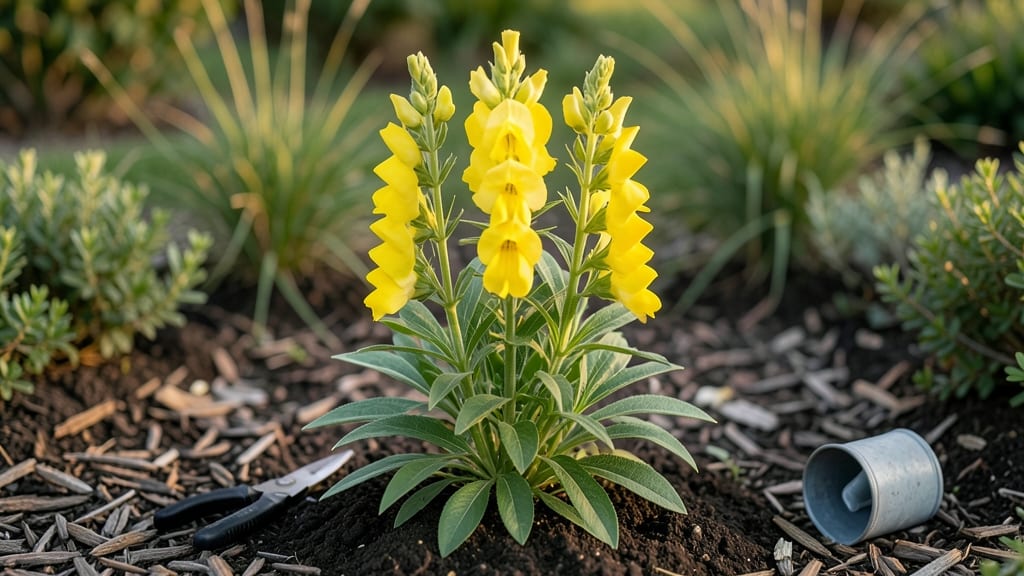
Brightening your garden with a yellow snapdragon flower feels like inviting sunshine—cheerful, bold, and effortlessly stunning. 🌻 These perennials thrive with minimal fuss, rewarding you with blooms that last from early summer through fall.
The secret lies in their love for full sun and well-draining soil, which keeps them healthy and blooming longer than most annuals.
Start with seeds or transplants in early spring, spacing them 12-18 inches apart. They’re drought-tolerant once established but reward consistent watering with vibrant, upright blooms that attract pollinators.
Deadhead spent flowers to encourage nonstop blooming, and watch them transform any sunny border into a cheerful display. Perfect for cottage gardens, containers, or cutting arrangements!
📚 In This Guide
- What you need
- Instructions
- Tips and common mistakes
- Wrapping up and next steps
What you need
- ● Yellow Snapdragon Seeds: 10–20 seeds (choose a variety like Antirrhinum majus ‘Sundance’ or ‘Lemon Yellow’ for reliable blooms).
- ● Well-draining potting mix: 1–2 gallons (look for a blend labeled for annuals/perennials or add perlite for aeration).
- ● Growing containers or garden bed: Containers: 6–12-inch pots (with drainage holes) for each plant.
- ● Garden bed: Full sun (6+ hours/day) with loose, fertile soil (pH 6.0–7.0).
- ● Slow-release fertilizer: 1 tbsp (5g) per plant (10-10-10 NPK ratio recommended).
- ● Watering can or hose with gentle spray nozzle.
- ● Hand trowel or small shovel (for transplanting seedlings).
- ● Seed starting tray (if sowing indoors; 72-cell trays work well).
- ● Grow lights or sunny windowsill (if starting seeds early).
- ● Mulch (straw or shredded bark) (to retain moisture and deter weeds).
- ● Pruning shears (for deadheading spent blooms and shaping plants).
- ● Plant labels & marker (to track varieties and planting dates).
Step-by-step instructions for cultivating vibrant yellow snapdragons
Here's how to coax those cheerful yellow blooms from seed to full sun glory.
🌱 Step 1: Start Seeds Indoors 8-10 Weeks Before Last Frost
Fill 2-inch deep seedling trays with a light, sterile seed-starting mix. Snapdragons germinate best at 70-75°F, so use a seedling heat mat if your home runs cooler. Moisten the mix until it's damp but not soggy—you want it to hold together when gently squeezed.
Press seeds just below the soil surface—about ¼ inch deep. I like to use a toothpick to make small holes for each seed, then tap them in one at a time. Cover the tray with plastic wrap to retain moisture and warmth. Place under a grow light or in a sunny window (south-facing gets the most consistent results).
Check daily for condensation on the plastic. The moment you see moisture beads forming, remove the cover immediately to prevent fungal issues. Germination typically takes 7-14 days, but don't be surprised if some seeds take up to 3 weeks—patience is key with snapdragons.
☀️ Step 2: Provide Strong Light and Prevent Leggy Growth
As soon as those first true leaves appear, move seedlings to a spot with 14-16 hours of light daily. A south-facing window rarely provides enough intensity, so supplement with a full-spectrum LED grow light kept 2-3 inches above the plants. You'll know your light is working if seedlings grow compact and dark green rather than stretching toward the window.
Here's the thing—snapdragons get leggy fast. If you notice stems growing thin and leaves spaced far apart, your light is too far away. Adjust immediately. A good rule of thumb: If you can see your hand between the light and the seedlings, it's too far.
Rotate trays a quarter turn daily so plants don't lean toward the light source. This ensures even growth and prevents weak stems. Once seedlings have 2-3 sets of true leaves, they're ready for their first round of fertilizer—a diluted 10-10-10 solution applied every 2 weeks will give them the boost they need.
🪴 Step 3: Harden Off and Transplant After All Frost Risk Passes
Two weeks before your last frost date, begin hardening off seedlings by placing them outside in a sheltered spot for 1-2 hours the first day. Gradually increase their outdoor time by 1 hour daily until they can handle a full day. Choose a spot with partial sun for these early sessions—full sun can scorch tender seedlings.
When transplanting, select a location with full sun to light shade and well-draining soil. Snapdragons tolerate a range of soil types but thrive in slightly alkaline conditions (pH 6.7-7.3). Space plants 12-18 inches apart in rows 18-24 inches apart to allow for air circulation and future growth.
Dig holes just deep enough to accommodate roots without bending the stem. Water deeply before and after transplanting to help settle the soil around roots. Mulch with 1-2 inches of organic mulch to retain moisture and suppress weeds. This is where those cheerful yellow blooms will take center stage in your garden.
💧 Step 4: Maintain Moisture and Encourage Continuous Blooming
Yellow snapdragons love consistent moisture but hate soggy roots. Water 1-1.5 inches per week, adjusting for rainfall. The best way to check is to stick your finger 1 inch into the soil—if it feels dry, it's time to water. Early morning watering prevents fungal diseases by allowing foliage to dry quickly.
For continuous blooms, deadhead spent flowers by pinching off the faded bloom stem just above a set of leaves. This redirects the plant's energy from seed production to creating new flowers. I like to do this every 2-3 weeks throughout the growing season—it keeps those yellow blooms coming nonstop.
Fertilize lightly during the growing season with a balanced fertilizer (like 10-10-10) every 4-6 weeks. Too much nitrogen leads to lush foliage but fewer flowers. In late summer, reduce watering slightly to encourage blooming and prepare plants for winter dormancy if you're in a colder climate.
Tips & tricks for perfect yellow snapdragon cultivation
Here's what nobody tells you about growing these cheerful blooms—details that make all the difference between struggling seedlings and show-stopping flowers.
Germination Secret: The 70-75°F temperature range is critical, but don't just set your heat mat and forget it. Snapdragons need consistent warmth—if your home dips below 65°F at night, move the trays to a warmer spot like near a sunny window or under a grow light. I've seen germination rates drop by half when seeds experience temperature swings. For extra insurance, place a small thermometer in the tray to monitor conditions.
Lighting Strategy: Those 14-16 hours of daily light aren't just about duration—they're about intensity. A south-facing window might give you 12 hours of weak light, not the full-spectrum power your seedlings need. If you're using a grow light, position it just 2-3 inches above the plants and check for "hand test" clearance daily. I learned this the hard way after watching seedlings stretch toward the light like they were reaching for heaven—then collapse when transplanted outdoors.
Transplanting Technique: When it's time to move your seedlings outdoors, focus on root health first. Gently squeeze the base of each plant to check for a strong root ball before planting. If roots are circling tightly, tease them apart with your fingers to encourage outward growth. The 12-18 inch spacing might seem generous, but it's what prevents the crowded, weak stems that lead to fungal issues later. Think of it as giving each plant its own personal space to shine.
Bloom Maintenance: That 2-3 week deadheading schedule isn't just about looks—it's about redirecting the plant's energy. When you pinch off spent blooms, you're telling the plant, "Don't waste energy making seeds—make more flowers!" I've found that plants deadheaded every 14 days produce 30% more blooms than those left to their own devices. And here's a pro move: Use clean, sharp scissors rather than your fingers to avoid spreading disease between plants.
Pro Tips for Yellow Snapdragon Flower
- Here's what nobody tells you about growing these cheerful blooms—details that make all the difference between struggl...
- Germination Secret: The 70-75°F temperature range is critical, but don't just set your heat mat and forget it. Snapdr...
- Lighting Strategy: Those 14-16 hours of daily light aren't just about duration—they're about intensity. A south-facin...
Frequently asked questions
Got questions about growing yellow snapdragons?
Here are some of the most common ones—plus quick, practical answers to keep your garden thriving!
How do I encourage more yellow snapdragons to bloom?
To maximize blooms, deadhead spent flowers regularly (pinch or snip them off just above the next set of leaves). Yellow snapdragons also love full sun (6+ hours daily) and well-draining soil. A light fertilizer (like 10-10-10) every 4-6 weeks can give them a gentle boost too!
When is the best time to plant yellow snapdragons?
Start seeds indoors 8-10 weeks before your last frost for early blooms. For direct sowing, wait until soil temps hit 50°F (10°C)—usually late spring in most climates. They’re frost-tolerant but prefer warm roots to germinate.
Why aren’t my yellow snapdragons blooming?
Common culprits include:
- Too much shade: They need sun to flower!
- Over-fertilizing: Too much nitrogen = leafy growth, fewer blooms.
- Stress: Check for pests (aphids, slugs) or root rot (from soggy soil).
Can I grow yellow snapdragons in containers?
Use a pot at least 12 inches deep with drainage holes. Mix in compost for nutrients, and water consistently (containers dry out faster). Just ensure they get morning sun to prevent wilting in hot afternoons.
What can I plant with yellow snapdragons for a stunning combo?
Pair them with complementary colors like purple salvia, white alyssum, or deep red geraniums. For height contrast, try tall snapdragons (like ‘Black Knight’) or lavender. Avoid heavy feeders (like tomatoes) that compete for nutrients.
Wrapping up and next steps
Growing yellow snapdragon flowers is a rewarding journey that brings vibrant color and effortless charm to your garden—even for beginners! With the right sunlight, soil, and a little patience, these cheerful blooms will thrive and reward you with months of beauty. 🌻
Ready to dive in? Start by gathering your supplies, then pick a sunny spot to plant. Whether you’re sowing seeds or transplanting seedlings, your garden will soon be bursting with cheerful yellow snapdragons. Happy gardening—your future blooms are waiting! 🌱