Flowers
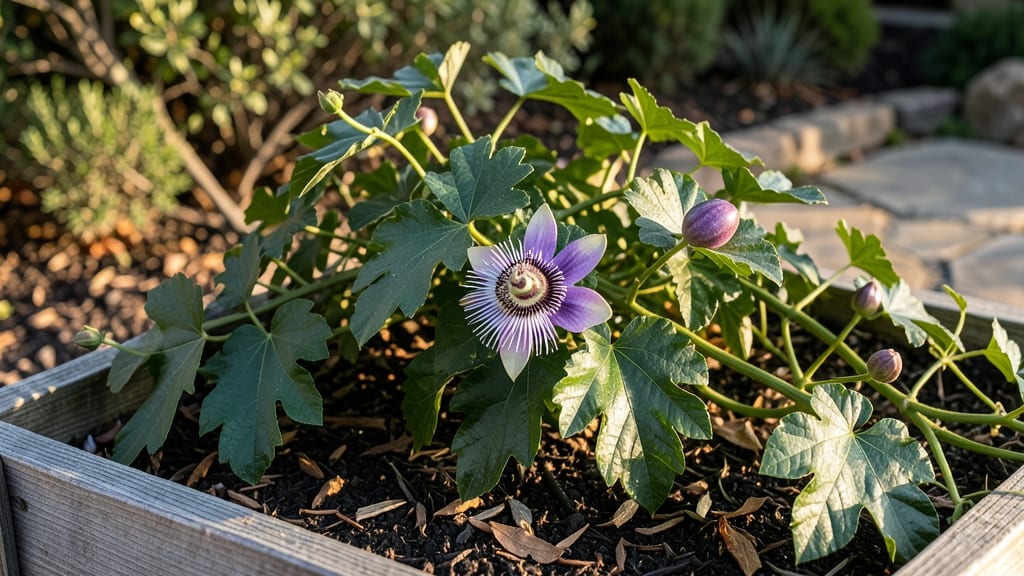
Growing Frederick passion flower in the Pacific Northwest means you’re getting a vine that’s tougher than most—its silvery foliage and deep purple blooms thrive where other passionflowers wilt. I’ve watched mine climb a trellis every summer, its leaves shimmering like frost-kissed glass even in our damp climate.
The key isn’t coddling it; it’s giving it the right balance of sun, water, and space to stretch.
This variety handles our USDA zones 7-9 like a champ, but it still needs a few things to flourish: well-draining soil (mix in compost if yours is heavy), morning sun and afternoon shade, and a sturdy support—think arbors, fences, or even large containers.
Water it deeply once a week unless we’re in a heatwave, and you’ll avoid the root rot that plagues other passionflowers. Prune back in early spring to encourage bushier growth and more blooms.
By mid-summer, you’ll be rewarded with 3-inch-wide blooms that look like they belong in a tropical greenhouse, not your backyard. The vines grow aggressively—up to 15 feet in a season—so plan for that space.
And here’s the best part: hummingbirds and butterflies will flock to it, turning your trellis into a living pollinator magnet.
If you’ve struggled with other passionflowers, Frederick is the one that actually delivers. It’s more forgiving than most, handles our wet winters better, and still puts on a show. Start with a single vine, and you’ll be hooked—just like I was after my first year.
📚 In This Guide
- What you need
- Instructions
- Tips and common mistakes
- Wrapping up and next steps
What you need
- ● Passion flower plants: 1–3 Passiflora 'Frederick' vines (bare-root or potted, available at nurseries or online).
- ● Well-draining soil: Mix 1 part native soil with 1 part compost (or coconut coir for moisture retention). For heavy clay soils, add 1 part perlite or sand to improve aeration.
- ● Fertilizer: Balanced fertilizer (10-10-10) – 1 tbsp per plant at planting time.
- ● Slow-release organic fertilizer (e.g., fish emulsion or worm castings) – 1 application in early spring.
- ● Mulch: 2–3 inches of wood chips or straw to retain moisture and regulate soil temperature.
- ● Support structure: Trellis, arbor, or fence (6+ feet tall) – Passion vines can grow 15–20 feet in ideal conditions!
- ○ Twine or soft ties (optional, for guiding young vines).
- ● Garden tools: Trowel or spade
- ● Pruners (sterilized)
- ○ Gloves (optional, but passion flower vines can have tiny irritating hairs!).
- ● Watering can or hose with a gentle spray nozzle – Passion flowers prefer consistent moisture but hate soggy roots.
- ● Sunlight access: A south- or west-facing location with 6+ hours of sunlight daily (PNW’s partial shade is fine in summer!).
- ○ Frost protection (optional): Burlap or frost cloth for young plants in early spring/fall.
- ● Row covers if your zone drops below 20°F (-7°C).
- ● 🌡️ Test your soil! Passion flowers thrive in slightly acidic to neutral pH (6.0–7.5). Use a soil test kit if unsure.
- ● ✨ Container growing? Use a 15+ gallon pot with drainage holes and a fast-draining mix.
- ● 🔥 Deadhead spent blooms to encourage more flowers (but leave some for edible fruit if desired!).
How to cultivate Frederick passion flower in Pacific Northwest gardens
This hardy vine thrives with the right approach—here’s how to coax its stunning blooms in our damp, mild climate.
Select the Perfect Planting Site
Frederick passion flower loves partial shade but tolerates morning sun—critical in the PNW’s humid summers. Choose a location with 6 hours of filtered light daily and protection from afternoon sun, which can scorch tender leaves. Avoid low-lying spots where cold air pools, as this vine struggles with frost pockets.
Test your site by observing nearby plants: if rhododendrons or ferns thrive there, your passion flower will too. The soil should drain well but retain moisture—amend heavy clay with 2-3 inches of compost to improve aeration. I always dig in a handful of well-rotted leaf mold to mimic the vine’s native woodland understory.
Prepare Soil for Optimal Growth
This vine dislikes soggy roots but won’t tolerate dry soil either. Mix 3 cubic feet of peat moss into the planting hole to improve moisture retention without compacting. The ideal soil pH for Frederick passion flower is 6.0-7.0—test your garden soil and amend with elemental sulfur if needed to lower pH or wood ash to raise it.
Work the amendments into the top 12 inches of soil—deeper isn’t better. Tap the soil lightly after amending to eliminate air pockets, then water deeply to settle everything. The surface should feel like a damp sponge, not a mud puddle. I like to add a slow-release organic fertilizer (10-10-10) at planting time to give roots a nutrient boost.
Plant and Support the Vine Correctly
Dig a hole twice as wide as the root ball but only as deep as the container’s base. Position the vine so the top of the root ball sits 1 inch below soil level—this prevents stem rot while encouraging strong root establishment. Gently tease apart any circling roots before placing the plant in the hole.
Install a 5-foot trellis or sturdy arbor immediately—passion flowers hate being transplanted later. Secure the main stem with soft ties to guide growth upward. Water thoroughly after planting, then mulch with 3 inches of shredded bark to conserve moisture and suppress weeds. Avoid piling mulch against the stem, which can cause rot.
Water and Feed for Consistent Blooms
Keep the soil evenly moist but never waterlogged—this vine’s roots need oxygen. Water deeply once a week during dry spells, aiming for 1 inch of water per week. You’ll know you’re doing it right when the top 2 inches of soil feel dry to touch between waterings. Overhead watering encourages fungal diseases, so use a soaker hose at the base instead.
Feed with a balanced liquid fertilizer (like fish emulsion) every 4-6 weeks during growing season. Stop fertilizing in late summer to allow the vine to harden off for winter. I’ve found that compost tea sprayed on leaves boosts bloom production—just apply it on cool mornings to prevent leaf burn.
Prune and Winter-Protect for Long-Term Health
Prune in early spring before new growth begins. Remove any dead or crossing stems, then cut back last year’s growth by one-third to encourage bushier, more productive vines. Never prune in fall—this stimulates tender new growth that won’t survive winter. I also trim back any leggy growth that forms in summer, redirecting energy into flower production.
In the PNW’s mild winters, Frederick passion flower typically survives outdoors, but young plants benefit from 6 inches of mulch around the base. Older vines handle our winters fine, but a light frost cloth over the trellis during hard freezes prevents damage. The key is keeping roots insulated while allowing airflow—never smother the plant with thick mulch.
Tips & tricks for thriving Frederick passion flower vines
Growing Frederick passion flower in the Pacific Northwest requires a few strategic adjustments to our unique climate. These insights will help you avoid common pitfalls and maximize your vine's potential.
Light Balance: The 6 hours of filtered light specified in Step 1 is crucial, but don't assume any shady spot will work. I've seen vines struggle in spots with less than 5 hours of light—watch for pale, leggy growth as a warning sign. For maximum blooms, position your trellis where morning sun hits the leaves directly, while afternoon light filters through nearby trees. This mimics the vine's native woodland understory conditions perfectly.
Soil Science: When amending soil with 3 cubic feet of peat moss in Step 2, don't just dump it in the hole. Spread it evenly across the planting area and work it into the top 12 inches using a broadfork—this prevents compaction that can suffocate roots. The key is creating a loose, airy soil structure that mimics the vine's natural habitat. I've found that adding a handful of worm castings to the peat moss mix gives an extra nutrient boost without overfeeding.
Trellis Timing: Installing that 5-foot trellis immediately after planting (as mentioned in Step 3) is non-negotiable, but here's why it matters more than you might think. Passion flowers are aggressive climbers and will twist around anything available if not properly guided. Without immediate support, stems develop weak, spiral growth patterns that struggle to support heavy blooms. Use soft plant ties that won't cut into the stem as it thickens—nylon stockings or cotton strips work best.
Watering Wisdom: The 1-inch weekly watering guideline in Step 4 is perfect for our climate, but timing matters more than volume. Water in the early morning so leaves have all day to dry—this prevents the fungal issues common in our damp summers. I've found that mulching with the specified 3 inches of shredded bark creates a moisture reservoir that reduces watering frequency by about 20%, while also keeping roots cool during our hot spells.
Pro Tips for Frederick Passion Flower
- Growing Frederick passion flower in the Pacific Northwest requires a few strategic adjustments to our unique climate....
- Light Balance: The 6 hours of filtered light specified in Step 1 is crucial, but don't assume any shady spot will wor...
- Soil Science: When amending soil with 3 cubic feet of peat moss in Step 2, don't just dump it in the hole. Spread it ...
Frequently asked questions
Got questions about growing Frederick passion flower in the Pacific Northwest? You’re not alone!
Here are answers to the most common queries from gardeners navigating this tropical beauty in cooler climates.
How cold can Frederick passion flower tolerate?
The Frederick passion flower (Passiflora × freemanii) is hardy to USDA Zones 7-10, meaning it can survive brief dips to 10°F (-12°C). However, in the PNW’s wet winters, protection is key—use frost blankets or grow it in containers to move indoors. Young vines are more vulnerable, so prioritize shelter for the first few years!
How long does it take for Frederick passion flower to bloom?
With patience and care, expect first blooms in 2–3 years from seed or a year from a nursery-grown plant. Frederick passion flower thrives in full sun (6+ hours/day) and well-draining soil—skip the shade if you want those stunning, fragrant flowers by summer’s end!
Can I grow Frederick passion flower in containers?
Absolutely!
Containers are ideal for PNW gardeners, as they let you move vines indoors during winter. Use a 15–20 gallon pot with drainage holes, a lightweight potting mix, and a trellis for support. Pro tip: Fertilize monthly in spring/summer with a balanced 10-10-10 formula for lush growth.
What pests should I watch for with Frederick passion flower?
Keep an eye out for aphids, spider mites, and whiteflies—common in humid PNW summers. Neem oil or insecticidal soap works wonders for mild infestations. Prevention tip: Prune regularly to improve airflow, and remove damaged leaves to deter pests before they take hold.
How do I protect my vine from Pacific Northwest rain?
While Frederick passion flower loves humidity, excess moisture can rot roots. Ensure pots have drainage holes and avoid soggy soil. If planting in-ground, raise beds slightly or amend clay soil with compost. Bonus: A mulch layer (2–3 inches) helps regulate moisture and keeps roots cozy!
Wrapping up and next steps
Growing Frederick passion flower in the Pacific Northwest is a rewarding journey that brings vibrant beauty and resilience to your garden. With the right soil, sunlight, and care, these stunning vines will thrive—adding tropical charm even in cooler climates. 🌿
Ready to watch your passion flower flourish? Start by planting your vine in early spring and keep an eye on its progress. Before you know it, you’ll be enjoying fragrant blooms and delicious fruit! Happy gardening! 🌸