Flowers
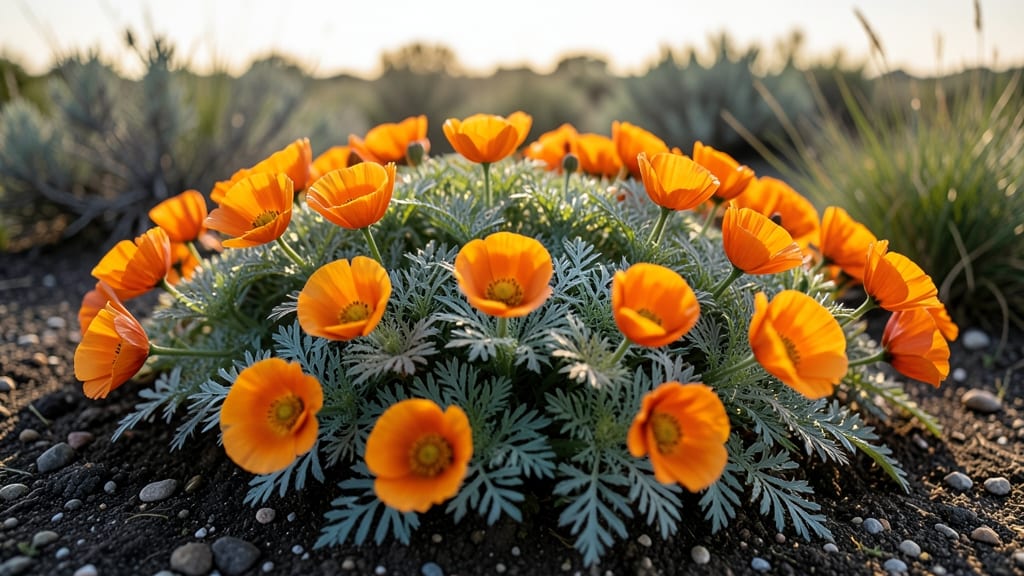
That California poppy’s orange flower still glows in my memory—swaying in golden waves along a coastal highway, as if the sun itself had spilled into petals. physical form. These drought-tolerant beauties thrive where other flowers struggle, making them the perfect low-maintenance star for borders, meadows, or containers.
Pair them with lavender for a purple-and-orange contrast that hums with bees, or mix in salvia for vertical interest. Their 12-18 inch height works beautifully in mass plantings or as edging, while their delicate, cup-shaped flowers add texture that lasts from spring through summer.
The secret? Plant them in well-draining soil and give them full sun—they’ll reward you with weeks of effortless color.
Imagine your garden in late May when the first blooms appear, then fading into golden hues as summer progresses. The poppies create a natural tapestry that changes with the light, looking especially magical at dusk.
They self-seed happily, too, so once established, they’ll keep multiplying without your help—just like nature intended.
Works in rock gardens, wildflower mixes, or even as a living ground cover. Let’s bring that California charm to your space—here’s how to make it happen.
📚 In This Guide
- What you need
- Instructions
- Tips and common mistakes
- Wrapping up and next steps
What you need
- ● Seeds: California poppy seeds (orange, yellow, or mixed) – 1 packet (approx. 500-1,000 seeds)
- ● Orange-flowering companion seeds (e.g., California buckwheat (Eriogonum fasciculatum) or orange marigold (Tagetes)) – 1 packet (50-100 seeds)
- ● Soil: Well-draining cactus/succulent mix or native soil blend (avoid heavy clay)
- ● Containers or Garden Space: Small pots (4-6 inches deep) – 2-4 containers (if starting indoors)
- ● Sunny garden bed (full sun, 6+ hours/day) – 6-12 sq. ft. area
- ● Tools: Garden trowel or small hand shovel
- ● Watering can with a fine rose nozzle
- ○ Gloves (optional, for handling soil)
- ● Slow-release flower-specific fertilizer (low-nitrogen, 5-10-5 ratio)
- ● Mulch (gravel or pebbles to retain moisture and deter weeds)
- ● Pollinator-friendly markers or stakes for labeling plants
- ● Seed-starting tray (if germinating indoors)
- ● Drip irrigation kit (for consistent watering in dry climates)
How to create a thriving California poppy and orange flower pollinator garden
Sun-loving blooms like California poppies and orange flowers attract bees, butterflies, and hummingbirds—here’s how to design a vibrant, low-maintenance haven.
Choose the Right Sunny Location
California poppies (Eschscholzia californica) and orange-flowering plants like California fuchsia (Epilobium canum) thrive in full sun, needing at least 6-8 hours of direct sunlight daily. Scan your yard for the brightest, driest spot—these plants despise soggy soil and will sulk in shade.
Here’s the thing—avoid areas where water pools after rain. Poppies especially hate "wet feet." If your soil drains poorly, consider raised beds or mounds to improve airflow. A south- or west-facing exposure gives the most consistent blooms, but even an east-facing spot will work if the sun is strong.
Prepare the Soil for Drought-Tolerant Blooms
These plants prefer well-draining, sandy, or gravelly soil—think of the native California hills where they evolved. Amend heavy clay by mixing in 1-2 inches of coarse sand or perlite per square foot of bed. I like to spread a 3-inch layer of compost first to feed roots without compacting the soil.
Skip the fertilizer—poppies and orange flowers are light feeders. Too much nitrogen produces lush foliage but fewer blooms. Instead, work in bone meal (1/2 cup per 10 sq ft) at planting time for slow-release phosphorus, which encourages strong root systems. Test your soil’s pH—these plants prefer neutral to slightly alkaline (6.5-7.5).
Plant Seeds or Transplants at the Right Time
For direct sowing, scatter seeds 1/4 inch deep in early spring (March-April) or fall (September-October). Poppy seeds are tiny—mix them with sand first to avoid clumping. Space seeds 6-12 inches apart (closer for a wildflower meadow look). Water gently but avoid disturbing the soil surface.
If using transplants, dig holes twice as wide as the root ball to encourage root spread. Poppies dislike root disturbance, so handle seedlings carefully. Water deeply after planting to settle the soil, then let it dry out—these plants hate consistent moisture. Mulch lightly with 1 inch of gravel or pebbles to deter weeds without smothering roots.
Water Sparingly and Encourage Blooms
Once established, California poppies and orange flowers are drought-tolerant, but they need deep, infrequent watering during their first growing season. Water once a week (or less in rainy climates) until the soil is 4-6 inches deep and dry to the touch. Overwatering causes rot and weak stems.
To prolong blooming, deadhead spent flowers by snipping stems 1/2 inch above the base. This redirects energy to new buds. Poppies often self-seed prolifically—let some seeds drop for next year’s display, but thin crowded areas in early spring. Fertilize only if leaves look pale, using a balanced 10-10-10 formula at half strength in early spring.
Protect and Maintain for Season-Long Color
These plants are deer-resistant but may attract slugs in damp conditions. Set out beer traps or diatomaceous earth if you spot damage. Avoid pesticides—bees and butterflies are your garden’s pollinators, not pests. Prune leggy stems in late summer to encourage bushier growth.
In late fall, cut back dead foliage but leave seed heads for winter interest. Poppies often resprout from the base in mild climates. If your region freezes, mulch lightly with 2 inches of straw to protect roots. With minimal care, your garden will burst with orange, yellow, and cream blooms from spring through summer.
Tips & tricks for perfect California poppy and orange flower pollinator gardens
Creating a thriving pollinator garden takes more than just planting seeds—it's about mimicking their natural habitat with precision. These details make all the difference between a modest display and a vibrant ecosystem teeming with life.
Location Precision: When selecting that sunny spot, pay special attention to microclimates in your yard. The 6-8 hours of direct sunlight requirement is non-negotiable, but subtle differences matter. I've noticed that west-facing areas often get the most intense afternoon sun, which California poppies particularly love for their brightest blooms. If your yard has multiple sun exposures, prioritize the western side for the most dramatic displays.
Soil Science: The soil preparation in Step 2 is where many gardeners go wrong by over-amending. While the 1-2 inches of coarse sand or perlite is crucial for drainage, don't overdo it—too much sand can create pockets where water pools. I recommend mixing the sand evenly through the top 6 inches of soil rather than just spreading it on the surface. This creates consistent drainage throughout the root zone, which is especially important during our occasional heavy rains.
Planting Strategy: For direct sowing, I've found that the 1/4-inch depth recommendation works best when the soil temperature reaches at least 60°F. Cold soil can cause seeds to rot before germinating. To test soil temperature, simply place a thermometer in the soil at planting depth for an hour. You can also speed up germination by soaking poppy seeds in water for 24 hours before planting—this mimics natural spring rains and often results in more uniform germination.
Watering Wisdom: The once-a-week watering guideline assumes average spring conditions, but your watering schedule should adapt to your local climate. In coastal areas with frequent mist, you might extend this to every 10-14 days once established. The key is always checking that 4-6 inches of soil remains dry—stick your finger in the soil at that depth to test. This deep watering encourages roots to grow downward, creating more resilient plants that can handle our occasional drought periods.
Pro Tips for California Poppy Orange Flower
- Creating a thriving pollinator garden takes more than just planting seeds—it's about mimicking their natural habitat ...
- Location Precision: When selecting that sunny spot, pay special attention to microclimates in your yard. The 6-8 hour...
- Soil Science: The soil preparation in Step 2 is where many gardeners go wrong by over-amending. While the 1-2 inches ...
Frequently asked questions
Got questions about growing and caring for California poppies and orange flowers? We’ve got answers!
Here are some of the most common queries gardeners have when bringing these vibrant blooms into their sunny spaces.
When is the best time to plant California poppies and orange flowers?
For Eschscholzia californica (California poppy), plant seeds in early fall or late winter—just before the first warm rains. Orange flowers like Calendula officinalis or Coreopsis thrive when sown in spring after the last frost. Both love well-draining soil and full sun!
How often should I water these flowers?
California poppies are drought-tolerant once established—water deeply but infrequently (every 2–3 weeks). Orange flowers like Calendula prefer consistent moisture, especially during blooming season. Overwatering can cause root rot, so let soil dry between waterings.
Are these flowers really great for pollinators?
Both California poppies and orange blooms like Coreopsis are pollinator magnets. Their bright colors and nectar-rich flowers attract bees, butterflies, and hummingbirds. For extra buzz, plant them alongside lavender or sunflowers.
What do I do if my California poppy isn’t blooming?
If your poppies are growing but not flowering, they might need more sun (6+ hours daily) or a light trim to encourage new growth. Over-fertilizing can also reduce blooms—these wildflowers thrive in lean soil. Try deadheading spent blooms to prompt reblooming!
Can I grow California poppies in containers?
Yes! Use a well-draining potting mix and a container with drainage holes. Dwarf varieties like ‘Pride of California’ work well in pots. Pair them with other sun-loving annuals like marigolds or zinnia for a pop of color on patios or balconies.
Wrapping up and next steps
Creating a vibrant pollinator haven with California poppies and orange flowers is a rewarding way to support local ecosystems while adding stunning color to your garden. 🌸 These cheerful blooms attract bees, butterflies, and hummingbirds, turning your outdoor space into a thriving sanctuary.
Whether you’re a seasoned gardener or just starting, every small step—like choosing the right soil or spacing plants properly—makes a big difference!
Ready to take the next step? Start small: plant a few California poppies or orange blossoms this season and watch your garden transform into a buzzing, beautiful oasis. Happy gardening! 🌞